Non-hole lead-seal screws need an interface review that documents how sealing attaches without a through-hole head pattern, rather than copying hole-route checklists.
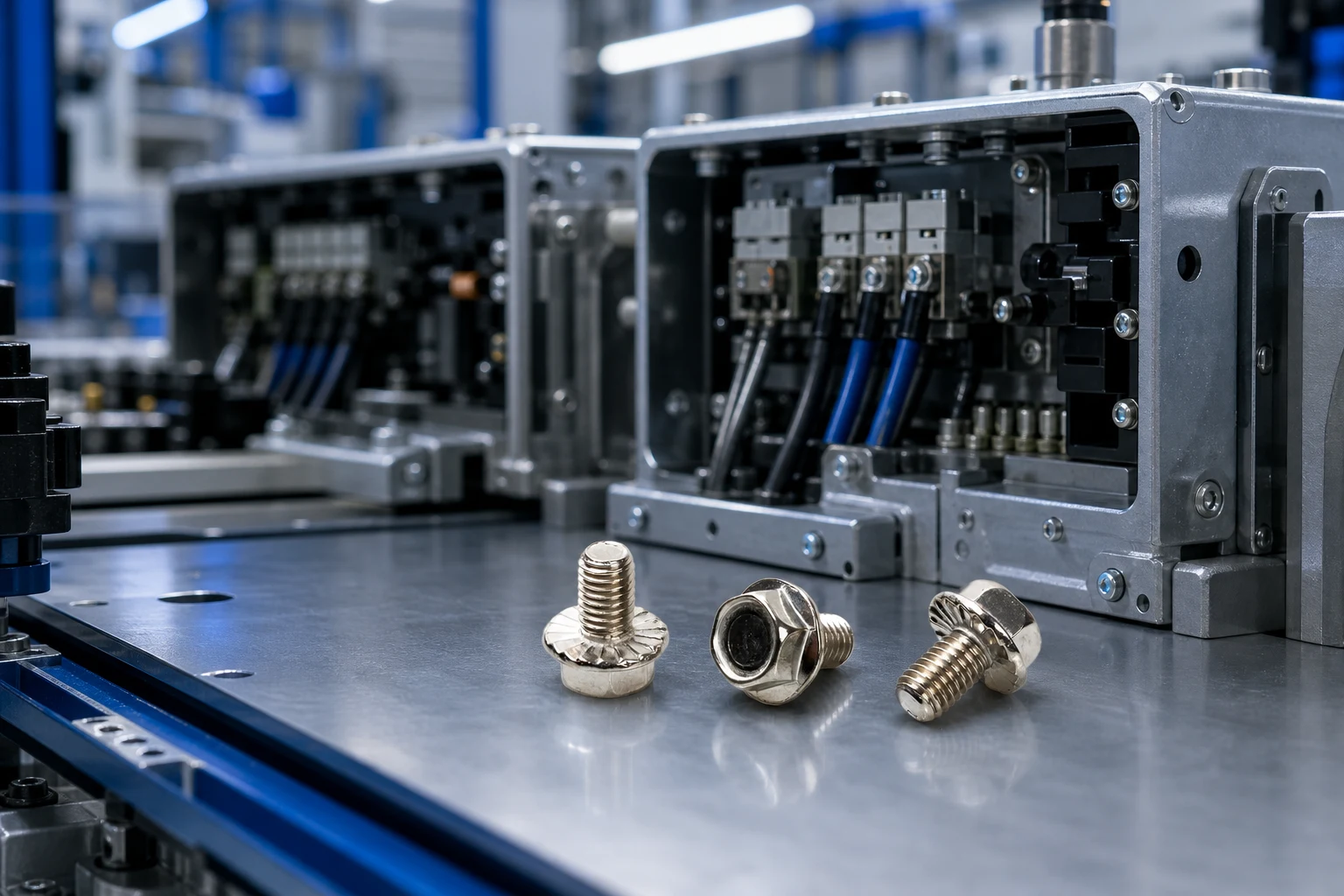
Name the cover revision, the seal attachment method shown for the non-hole head, and the approval owner. Avoid importing double-hole or four-hole routing questions that belong to other articles.
A non-hole product page supports navigation; it does not invent an attachment method missing from the drawing.
Focus on head form, seal attachment note, tool access, and inspection without assuming wire passes through head holes.
| Interface field | What to record | Send with quote |
|---|---|---|
| Cover revision | Drawing controlling the non-hole seal screw location | Yes |
| Head / seal interface | How sealing attaches when no head hole is present | Yes |
| Drive / install access | Tool path for seating the non-hole head | Yes |
| Adjacent clearance | Covers or terminals that limit head envelope | Yes |
| Acceptance owner | Who confirms the interface matches the drawing | Yes |
Do not fill blanks with sealing-performance or material claims.

A sample can show head form and how a seal feature sits without holes. Photograph the interface, mark it to the revision, and list unverified attachment notes.
If the sample implies a hole pattern the drawing does not show, treat that as a mismatch, not a silent upgrade.
Provide the same revision, interface fields, quantities, destination, and open points to every supplier. Keep undecided attachment methods labeled open.
Route geometry alternatives to the approval owner rather than resolving them inside price-only comparisons.
Important: Do not release a purchase description for non-hole lead seal screw interface when the controlling drawing, interface, or approval owner is still open; keep misfit risk visible in the RFQ. — Source: ISO standards catalogue.
This interface review does not prove sealing integrity, tamper resistance, torque, load, corrosion performance, certification, or lifecycle. Those outcomes need product-specific evidence and the system owner’s validation path.
Fit Boundary: pause when the non-hole attachment method, access path, or approval owner is unknown.

When interface inputs are ready, use the TNHO non-hole lead seal screw product page. The page confirms a related non-hole lead-seal screw destination; it does not replace the drawing or create unlisted lead times.
Send with quote / RFQ bullets:
– Cover revision and non-hole interface note
– Drive access and adjacent clearance
– Quantities, destination, and open points
– Approval owner for alternatives
Send the controlled drawing and RFQ inputs. For non-hole interface navigation, open TNHO products then continue with Electrical Fasteners: Some Basic Information.
Confirm cover revision, seal attachment method, access, and approval owner.
No. Non-hole interfaces need their own attachment notes without assuming head holes.
No. Samples support observation; the drawing controls the interface.
No. Performance needs project-specific evidence.
Pause when the non-hole attachment method is undefined.
Use the verified non-hole product route with the interface package.

 TNHO
TNHO 


