The choice of threadlocker vs lock washer depends on the joint, installation process, service environment and maintenance requirements. Neither option is a universal replacement for adequate clamp load and a sound load path. Anaerobic threadlocker acts within the threaded interface under specified preparation and cure conditions. Mechanical locking hardware acts through a defined geometry and contact arrangement, and different washer designs should not be treated as interchangeable. Begin by identifying whether the problem is rotational loosening, loss of clamp force without rotation, or another failure. Then compare qualified methods on the actual fasteners and assembly, using acceptance criteria defined before testing.
A screw can lose clamp force through settlement, deformation or time-dependent changes without backing out. Preventing rotation may not correct that mechanism. Inspect the joint stack, bearing surfaces and installation history before selecting an added locking feature. Otherwise, a visible retention device can disguise a connection that still fails its functional requirement.
Rotational self-loosening is a different concern. Joint motion under service loads can create conditions that permit relative rotation. The classic SAE paper on vibration-related self-loosening provides a research basis for distinguishing this mechanism. The specific excitation, joint geometry and installed condition still need to match the application being evaluated.
Record evidence rather than naming the remedy first. Was rotation observed? Did the installation meet its defined procedure? Was the bearing surface damaged or a compliant layer compressed? Were the wrong parts used? A root-cause review can reveal that a changed stack or tightening process is needed before either threadlocker or mechanical locking hardware is considered.
Anaerobic threadlocking adhesives are applied to a specified threaded connection and develop their securing effect under appropriate assembly and cure conditions. Formulation, surfaces, clearance, preparation and temperature can affect the process. Do not choose a compound by color alone or assume that every liquid, patch and preapplied treatment uses the same chemistry or curing route.
ASTM D5363-16(2024) provides a specification framework for single-component anaerobic adhesives used for locking, sealing and retaining assemblies. Its classification is not a design approval for an unspecified joint. The actual product data and application procedure must define compatibility, preparation, curing and environmental limits.
Think through the production sequence. Parts may be tightened before the adhesive has developed its required properties, moved during curing, or exposed to contaminants. A well-chosen material can still perform poorly when the process is uncontrolled. Document application quantity and location through the approved instructions, and identify the required state before the assembly enters service.
A split spring washer, toothed washer and paired wedge-locking arrangement do not work through identical interfaces. Their effectiveness depends on the particular design, material, mating surfaces and installed condition. An observation about one design should not be extended to every mechanical retention method merely because the hardware is sold under a similar category name.
The NASA Fastener Design Manual discusses locking approaches and limitations of conventional lock-washer arrangements. Use that engineering context to question unsupported universal claims. It does not mean that all mechanical locking hardware is ineffective, nor does it approve a particular commercial washer for the customer’s application.
Adding a washer changes the stack. Check available screw length, thread engagement, bearing area, seating and tool access. If the hardware relies on contact with a mating face, that surface is part of the design. Do not assume that paint, a soft panel, a separate washer or a different finish preserves the intended mechanism without review.
| Decision factor | Anaerobic threadlocker | Mechanical locking washer | Evidence to compare |
|---|---|---|---|
| Interface | Specified adhesive within mating threads | Defined geometry at specified bearing contacts | Actual parts, surfaces and clearances |
| Process controls | Preparation, application and cure | Orientation, stack and seating | Controlled installation record |
| Joint changes | Potential effect on tightening behavior | Added thickness and bearing arrangement | Approved clamp-load and engagement review |
| Environment | Formulation-specific exposure limits | Hardware and interface-specific limits | Representative conditioned tests |
| Maintenance | Defined removal, cleaning and reapplication route | Design-specific reuse or replacement rule | Authorized service procedure |
The comparison gives purchasing questions, not a universal ranking. No assumed vibration rating, removal torque, cure time or reuse count is supplied.
An adhesive or changed bearing interface can affect the relationship between installation torque and clamp force. A torque value qualified for dry untreated parts may not represent an adhesive-coated thread or a revised washer stack. Keep the installation specification tied to the exact configuration and condition being purchased.
Do not judge retained joint function from removal torque alone. Resistance to turning an adhesive-secured fastener is not the same measurement as the force still clamping the joint. Define both when both matter. A joint can resist unscrewing while having lost a required clamp force through another mechanism.
Review tightening equipment and production variation. Operators should not compensate for an unfamiliar feel by applying extra turns or raising torque. If a new retention method changes the process response, establish the approved installation and verification route before releasing it to production. Keep any changes to tools, sequences or parts documented.

Compare candidate methods using the same relevant joint geometry, loads, motion and environment. State the installed condition, adhesive cure state or hardware orientation, and the functional endpoint. If each candidate is tested under different conditions, the comparison can reflect the test setup instead of the retention method.
ASTM D5649-15(2023) addresses comparative torque-strength assessments of adhesives on threaded fasteners. Such data can support adhesive evaluation, but it is not a complete vibration or retained-clamp-force qualification of the customer’s assembly. Match each test to the question it can actually answer.
Keep baseline and individual results. Observe rotation, clamp-force behavior and the defined assembly response where relevant. Preserve failures and deviations instead of reporting only the most favorable sample. The acceptance method and sampling plan should be agreed before testing so that marginal or contradictory results receive consistent treatment.
Maintenance access may determine which method is practical. Define permitted tools, removal conditions and the risk to surrounding parts. Do not prescribe a universal heating method to remove an adhesive: electrical assemblies, polymers and coatings may impose separate restrictions. Use the approved product and service instructions.
After disassembly, decide what must be replaced, cleaned, inspected or reapplied. A reused mechanical component or previously treated thread should not be assumed equivalent to its initial condition. Give service teams a clear rule and identify the parts or consumables needed to restore the qualified configuration.
Combining adhesive and locking hardware also requires review. Two methods used together are not automatically better than either alone. The combined stack, friction, application sequence and maintenance route can differ from the qualified single-method configuration. Treat it as a defined design option rather than an informal production improvement.
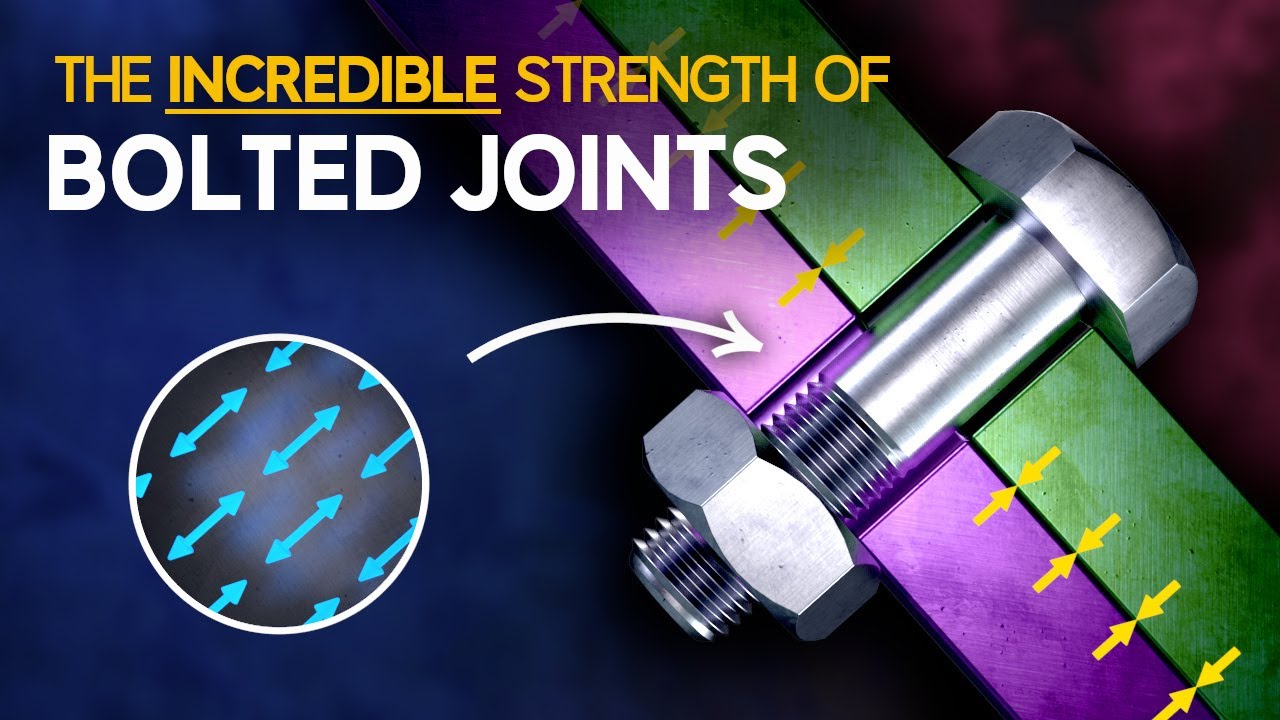
The Efficient Engineer’s video explains how bolted joints carry load and why the connection’s force state matters. It supports the distinction between a sound clamped joint and an added retention feature. It does not rank threadlocker formulations or qualify a washer design for a particular assembly.
Provide the drawing, joint stack, mating materials, finishes, installation method, service conditions and maintenance expectations. Ask for the exact adhesive specification or hardware design, process instructions, relevant test configuration, traceability and permitted substitutions. A generic “anti-loosening” statement cannot identify which parts and conditions the supplier actually evaluated.
TNHO’s hex-socket screw family includes different geometries and preapplied thread treatments. The pictured blue patch is not proof of a liquid anaerobic formulation or a curing process. The vibration-loosening guide gives diagnostic context, while the torque–tension guide and clamp-load testing guide support installation and validation review.

A useful comparison report identifies the actual decision. For example, one candidate might satisfy the functional test but require a cure period incompatible with the production sequence. Another might fit the maintenance requirement but change the available thread engagement. Keep those constraints beside the test results so purchasing does not replace the selected method with a superficially similar alternative.
Document approved exceptions and the evidence needed to close them. If a coating, washer orientation or preparation step was not represented in the test, state that limitation before release. The final approval should name the complete configuration and process, not merely the broad category “threadlocker” or “lock washer.”
No. Compare the defined methods on the actual joint, including process, exposure, function and maintenance requirements.
Not automatically. Investigate the stack and installation mechanism; preventing rotation and preserving clamp force are different questions.
Only with an approved basis. Thread and bearing conditions can change, so review the process for the new configuration.
No. Obtain the treatment specification and instructions. Color alone cannot establish chemistry, activation, curing or performance.

 TNHO
TNHO