Break-off tamper screws leave a remnant condition after shear; that leftover geometry must be recorded as RFQ inputs rather than inferred from a tamper-proof label.

Start from the cover or meter interface that remains after the break-off feature shears. Name the revision, the accessible inspection side, and who decides whether a remnant is acceptable. A slot-drive break-off product description can help locate a family, but it does not define leftover head height or service access.
Keep confirmed shear-feature notes separate from open remnant questions so procurement does not treat a prior seal screw as proof of the next remnant envelope.
Capture shear feature, remnant envelope, inspection path, and disposal or retention notes as explicit fields.
| Remnant RFQ field | What to record | Send with quote |
|---|---|---|
| Cover revision | Drawing controlling the break-off screw location | Yes |
| Shear / break feature | Callout or note describing the intentional break point | Yes |
| Remnant envelope | Allowed leftover head or stub clearance after shear | Yes |
| Inspection access | Side used to verify remnant after installation | Yes |
| Remnant disposition | Retain, remove, or leave as-designed if stated | Yes |
Do not invent torque-to-break, security performance, or material claims to fill blanks.
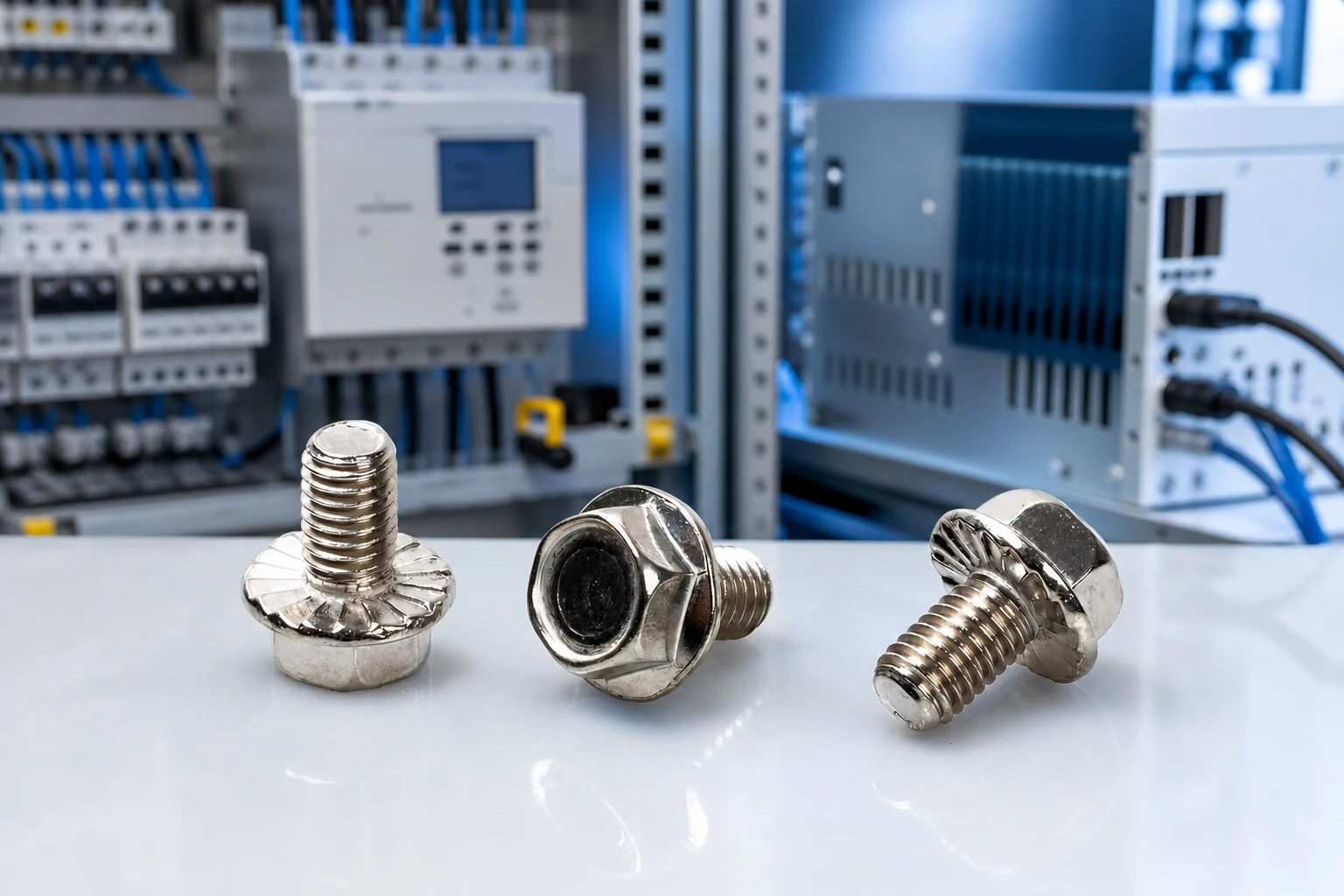
A broken sample can show how a remnant looks after shear under one trial condition. It cannot rewrite the drawing note or prove that a different cover will clear the leftover feature. Mark photographed remnants against the revision and list unverified clearances.
If the sample remnant conflicts with the cover envelope, escalate to the drawing owner before releasing a purchase description.
Provide every supplier the same revision, remnant fields, quantities, destination, and open points. When remnant disposition is undecided, label it open instead of allowing each quote to assume a different leftover condition.
Record supplier alternatives beside the remnant question they answer so comparisons stay auditable.
Important: Do not release a purchase description for break-off tamper screw remnant handling when the controlling drawing, interface, or approval owner is still open; keep misfit risk visible in the RFQ. — Source: ISO standards catalogue.
This RFQ guide does not establish tamper resistance, shear load, torque-to-break, corrosion behavior, sealing integrity, certification, or lifecycle. Those outcomes require product-specific evidence and the validation selected by the assembly owner.
Fit Boundary: pause when remnant envelope, inspection access, or disposition ownership is missing. A narrow remnant package is more useful than a generic tamper-proof slogan.
When remnant inputs are ready, start with the TNHO break-off tamper-proof screws with slot drive. Navigation confirms a related break-off tamper-proof screw route; it does not create an unlisted remnant dimension or security rating.
Send with quote / RFQ bullets:
– Cover revision and break-feature note
– Remnant envelope and inspection access
– Disposition instruction if defined
– Quantities, destination, and open points
Send the controlled drawing and RFQ inputs. For remnant-handling navigation, open TNHO products then continue with Electrical Fasteners: Some Basic Information.
Record shear feature, leftover envelope, inspection access, and disposition ownership.
No. Remnant geometry must come from the controlled drawing and acceptance owner.
No. Samples support observation; they do not rewrite the drawing.
No. Security and compliance need project-specific evidence.
Pause when remnant envelope or inspection access is undefined.
Use the verified break-off slot-drive product route with the remnant package.

 TNHO
TNHO 


