Across numerous sectors–especially, but not exclusively, in areas such as construction, engineering, electronics and automotive manufacturing–spacers are essential components that contribute significantly to every project where they’re used. The importance of the small and frequently neglected parts is that they provide precision, functionality, durability and stability to every product that uses them. An understanding of spacers, as well as the various types of spacers, their materials, and specific uses for all different kinds of applications will help both the professional and the do-it-yourselfer with their projects by better appreciating spacers and learning more about their function. This article will discuss spacers as well as provide additional resources to further the reader’s knowledge about the role of spacers in various applications.
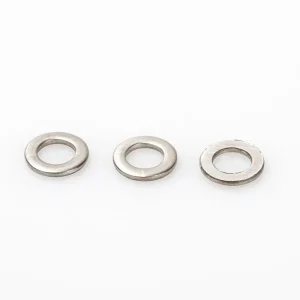
In essence, a spacer is a mechanical or structural component that has been designed to create and hold a precise distance or gap between two objects. Spacers will usually be small in size and will typically act as spacers or fillers for various types of projects. Providing both functional and aesthetic benefits, spacers can be used in many applications, including to create space between components of an electronic device and to provide proper spacing between two or more structural elements in a construction environment.
Diversity and adaptability stem from the ability to customize spacers as they can be made in various shapes, lengths, thicknesses, and materials for almost every type of application. Spacers may be used to align components, hold components in place, or enhance operational efficiency — either way, spacers are critical for assembly and manufacturing operations.
A spacer’s main function is to enhance the spatial relationship among components or materials. Below we’ll take a look at how spacers are applied across the major fields.
All types of construction projects require either permanent or temporary spacers which are key to achieving uniformity, stability and accuracy. Concrete spacers, for instance, provide the required equal spacing between the rebar and formwork so that when the concrete foundation sets it will be durable and the rebar will be properly embedded to prevent corrosion. They can also serve as barriers to provide separation between different types of materials reducing the chance of wear or deterioration through time.
It is common practice for various parts of an automobile to use spacing to be able to function correctly together. Spacers are widely utilized in the fields of automotive suspension, automotive brake assemblies and automotive engine mounts. For example, rubber spacers will prevent two pieces of metal from grinding against one another, while providing a damping effect for an improved ride, as well as providing for a longer lasting vehicle.
Due to the continuously decreasing size of electronics, the use of spacers is critical in arranging items in very small areas. Spacers are used to separate circuit boards from their housing to prevent shorts or electrical discharges caused by the circuit board being installed too closely to the housing and to ensure adequate airflow. Achieving precise distances between these components is essential to maximize your electronic product’s lifespan and determine how well the electronic product will function.
Spacers can be used in various areas of your home, including furniture assembly, home improvement projects, or simply to level out furniture. By serving as a method of providing perfect alignment, spacers ensure not only structural reliability but also visual attractiveness.
Spacers come in a wide array of types, each suited to different use cases. Common types include:
Lightweight, inexpensive, and corrosion-resistant, these can be used in many applications where the amount of stress placed on the item isn’t sufficient enough to require a heavy-duty strength. Common examples would include electronics, furniture and basic construction tasks.
Metal spacers are a good choice for applications where strength and durability are needed. Examples of materials used to make metal spacers include:
Metal spacers are commonly used in high-stress situations, such as with industrial equipment and in the assembly of vehicles.
For applications where cushioning and vibration dampening are needed, rubber or elastomeric spacer materials are excellent in these types of applications. This is why rubber (or elastomer) spacers are often found in automotive applications such as the engine and suspension systems of vehicles. Rubber spacers also help to minimize noise, as well as provide protection for fragile equipment and buildings against potential damage due to vibrations.
Ceramic and glass spacers are used in limited applications, including; scientific equipment and high voltage electronics as electrical insulators for extreme temperature environment. These materials are ideal candidates for use in locations where there is significant variation in operating temperature and/or where it is critical to prevent the transfer of electricity.
The spacers performance and appropriateness for particular uses are affected by their compositional characteristics. The most often used materials are:
Various kinds of plastics including PVCs (polyvinyl chlorides), nylons and polycarbonates plus other manufactured plastics can be used as lighter, chemically resistant (to a certain degree) spacers that can be used where the risk is low.
For many different applications, metals like aluminum or brass have been utilized quite extensively. Metals like aluminum or brass also have excellent durability and provide support to items made out of metal.
Natural and synthetic rubber products are great when flexibility, cushioning, grip, or vibration dampening are needed.
Silicone and neoprene are very common materials because of their great durability and temperature tolerance.
Ceramics possess good electrical insulating properties, and due to their ability to withstand elevated temperatures, they can be used in advanced electronics and industrial kilns.
Selecting the right spacer for your project involves assessing several factors:
1. Application Requirements: Identify the purpose of the spacer, including, for example, alignment, support, or insulation.
2. Weight Capabilities: If you’re working on a project that includes heavy pieces, such as manufacturing or automotive, use either a metal or heavy-duty material for your spacer.
3. Environmental Conditions: The material for the spacer should be selected based on the environmental conditions it will be exposed to, including but not limited to, moisture, temperature and chemicals.
4. Dimensions and Shape: Ensure you have selected the appropriate dimensions to ensure proper fit and provide compatibility for your work.
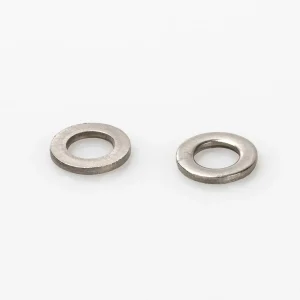
Mechanical spacers are designed to create and maintain separations or distance between mechanical items.
They help with their operation, provide support to hold the mechanical items aligned, and add to their life. Mechanical spacers have many applications such as construction, electronics, and automotive engineering.
Numerous industries, including construction, automotive and electronics, use spacers for the following reasons: to align parts; support structures; increase airflow and drainage; and absorb shock.
There are numerous materials that could be used to make spacers, including plastics metals robust materials. The choice of a specific type will depend on what is needed for that application.
Spacers Spacers are relatively small components that have a huge impact across many different types of industries. Spacers help provide stability for entire structures, enhance efficiency, and provide protection from wear for parts and components. Different types and materials are available for spacers to meet their wide range of uses. Even though there are many different uses, spacers are used to perform simple but very important functions in construction, automotive, electronic, and numerous other industries/fields. Knowing the role of spacers, their classifications, and the materials used to manufacture them helps allow for the selection of spacers that are best suited for your individual application, providing you with the highest level of reliability and durability in meeting the requirements of your projects.

 TNHO
TNHO 


