A nylon patch Torx screw cleaning boundary separates removable contamination from the intentionally applied locking feature. Identify the coating, the supplier-approved cleaning method, and the condition required at assembly before using solvents, brushes, heat, or ultrasonic equipment. A blue patch is not ordinary dirt, and its color alone does not identify the polymer formulation, qualified chemical resistance, or permitted reuse. If cleaning changes the patch appearance or thread condition, hold the affected parts for review. Do not scrape away the material to make installation easier or assume that a screw which still turns freely retains its specified locking behavior.
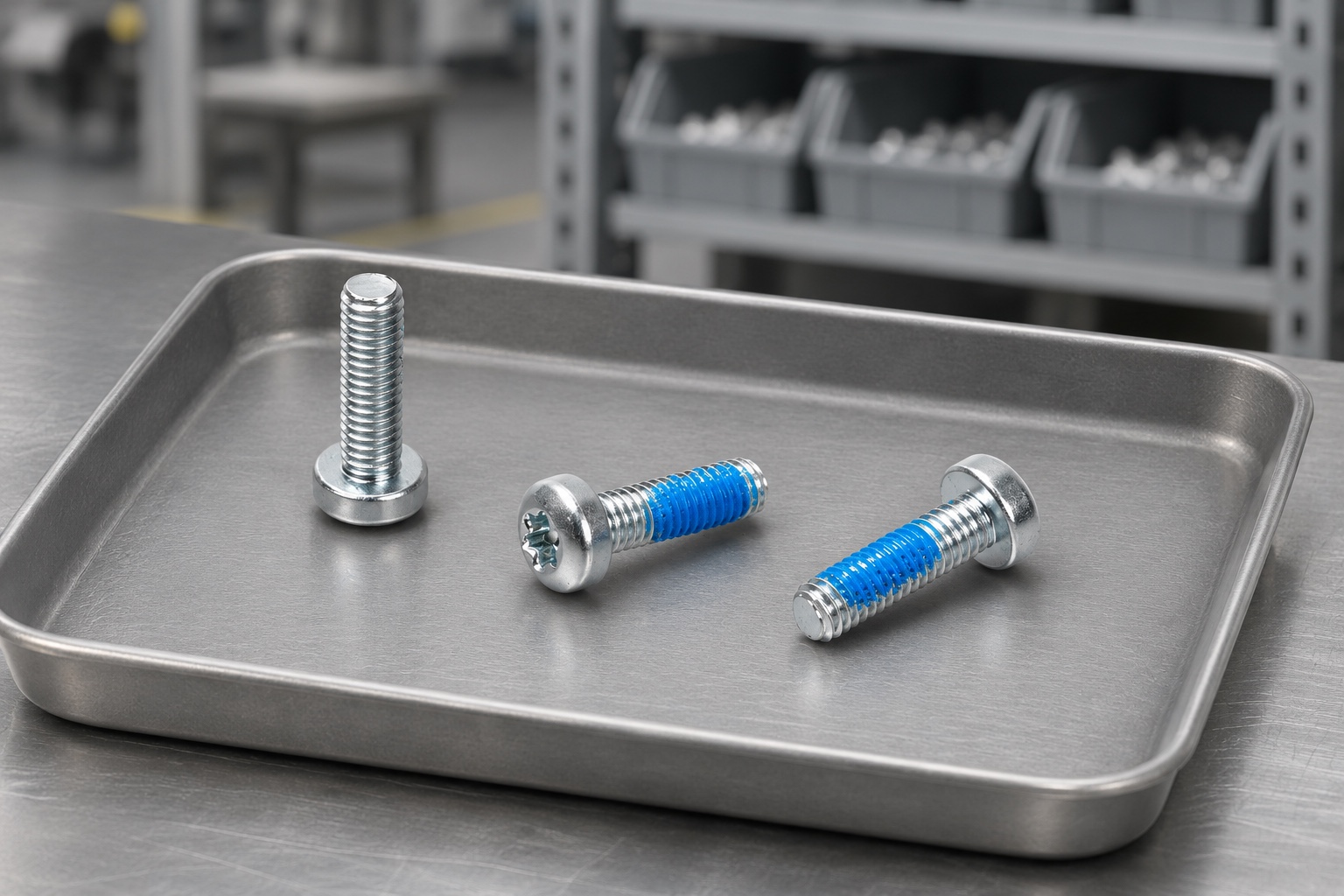
The TNHO Torx screw range includes pan-head, flange-head, and cylindrical-head forms, with M3, M4, and M6 listed among its sizes and optional nylon patch treatment. This article uses the photographed pan-head Torx variant with a blue thread patch. The source image labels it M3×10; that label helps locate the reference photograph but does not replace the purchasing drawing or create an independent SKU.
Confirm the ordered variant, finish, patch specification, and lot before deciding how to clean it. A general product family can contain several substrate materials and finishes. The fact that one photograph is silver does not establish a stainless grade, coating thickness, or compatibility with a particular wash chemistry. Ask for the information tied to the supplied part rather than transferring a statement from another product.
Keep the drive recess and the thread treatment distinct in the work instruction. Both may need examination, but their risks differ. Residue inside the Torx recess can affect full driver engagement. The patch is intended to interact with the mating thread, so removing or redistributing it can change the assembled condition. A single instruction to clean the entire screw thoroughly is too ambiguous.
The coating processor ND Industries explains inert thread locking as plastic compression that generates resistance during thread engagement. It distinguishes this mechanism from reactive adhesive systems. That distinction explains why a dry patch should not automatically be treated as an uncured chemical residue. This mechanism description does not establish that the TNHO screw uses an ND-branded formulation.
Avoid generalizing from the word threadlocker. A liquid adhesive, a pre-applied reactive coating, and an inert polymer patch can have different handling instructions. A solvent that removes one material may affect another differently, and satisfactory appearance after washing is not a performance test. Identify which system is actually specified before choosing a process.
A useful cleaning boundary therefore states which material must remain, which contamination may be removed, and which features are inspected afterward. If the specification identifies a proprietary coating, use its own process information. If the formulation is unspecified, resolve that uncertainty through the supplier before putting an entire delivery through a new cleaning cycle.
Inspect representative parts while preserving their lot identity. Note whether the concern is loose dust, visible chips, packaging transfer, oil, discoloration, or material accumulated at the drive recess. Photograph the condition under repeatable lighting. Compare against the approved incoming condition, not against an arbitrary preference for brighter metal.
Consider where the contamination could have entered. A container used for several screw types can introduce debris and obscure whether a coating has changed. A greasy handling glove can transfer oil to a previously accepted sample. A dirty driver can pack residue into the recess during an assembly trial. Cleaning the screw alone will not address a continuing upstream source.
Do not diagnose chemical damage from color alone. An intact-looking blue region may still need a process review after an unapproved wash, while harmless variation may be acceptable under a defined coating specification. Preserve a retained unprocessed sample whenever evaluating a cleaning change so that before-and-after comparisons remain meaningful.
This table is a process planning aid. It does not approve a solvent, concentration, exposure time, temperature, or reuse count for the illustrated part.
| Observed condition | Question to resolve | Controlled response |
|---|---|---|
| Loose packaging particles | Can they be removed without disturbing the patch? | Use only the agreed removal method and reinspect |
| Oil or unknown film | Is it intentional protection or foreign contamination? | Identify it before selecting wash chemistry |
| Material inside the Torx recess | Does it prevent full engagement or indicate tool contamination? | Isolate affected parts and inspect the recess and driver |
| Patch visibly scraped or displaced | Was the part processed or previously installed? | Hold for coating-specific disposition |
| Different blue color between deliveries | Are the formulation and process revision unchanged? | Compare lot records and approved reference criteria |
| Unexpected resistance during assembly | Is the issue patch drag, thread damage, or alignment? | Stop and investigate; do not remove the patch as a shortcut |
Record the decision as a process requirement, including who can authorize exceptions. Operators should not need to choose a solvent or decide whether a partially damaged patch is adequate while the line waits. Define an escalation route and provide separate containers for accepted, unprocessed, and uncertain material.
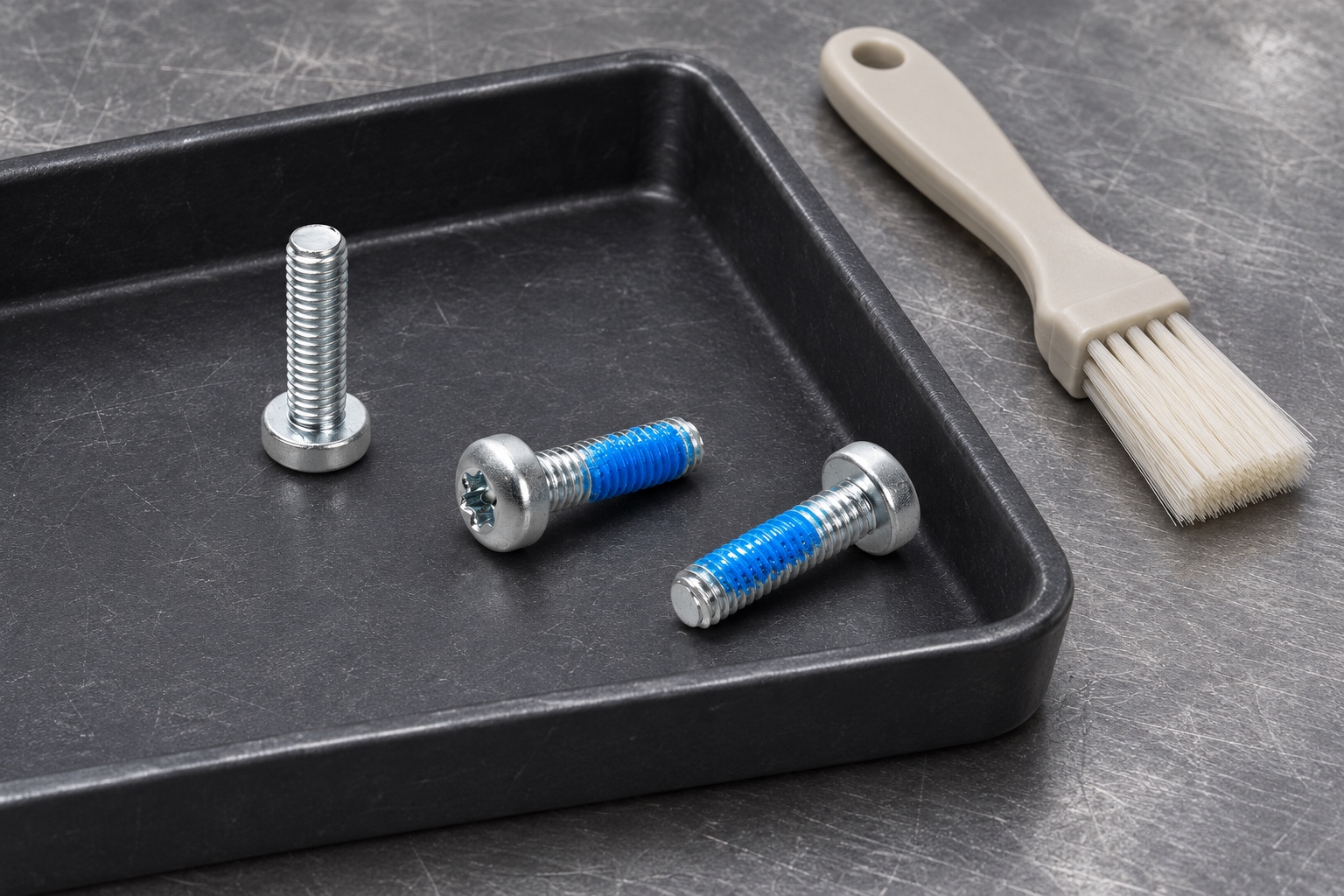
Place the selected lot in a clean tray and keep brushes, wipes, and containers from other work away from it. The illustrated brush is shown separately as a process-planning aid; its presence is not approval to brush the nylon patch. Select any actual cleaning implement for compatibility with the coating and finish.
Do not mix cleaned and uncleaned parts without a visible status change. If trials use several methods, identify each sample group and its exposure history. Retain the original supplier label with the trial record. Otherwise a successful assembly can later be attributed to the wrong wash condition, making the trial difficult to reproduce.
Limit handling quantities to what can remain identified. An open bulk container passed between assembly and cleaning stations creates opportunities for parts to acquire different histories. Use a documented transfer method and keep rejected material physically apart. These simple controls are often more useful than adding an elaborate visual inspection to an already mixed batch.
A cleaning change can affect more than surface appearance. The fastener finish, intentional lubrication, patch condition, and mating thread condition all belong in the review. Confirm whether existing tightening instructions assumed the original supplied condition. Do not transfer a torque setting from a different wash or lubricant without the responsible engineer’s approval.
Where the drawing or purchase specification calls for locking-performance evidence, test representative processed parts with the intended mating thread and acceptance method. Record the thread condition and the required installation or removal measures. Do not invent universal performance limits from an online description of nylon patches.
If a measurement informs acceptance, the NIST uncertainty guidance provides background on evaluating the confidence attached to the result. It does not specify a locking torque for this product. Choose a method that can support the actual tolerance and document what was measured, rather than reporting a tool display as self-explanatory proof.
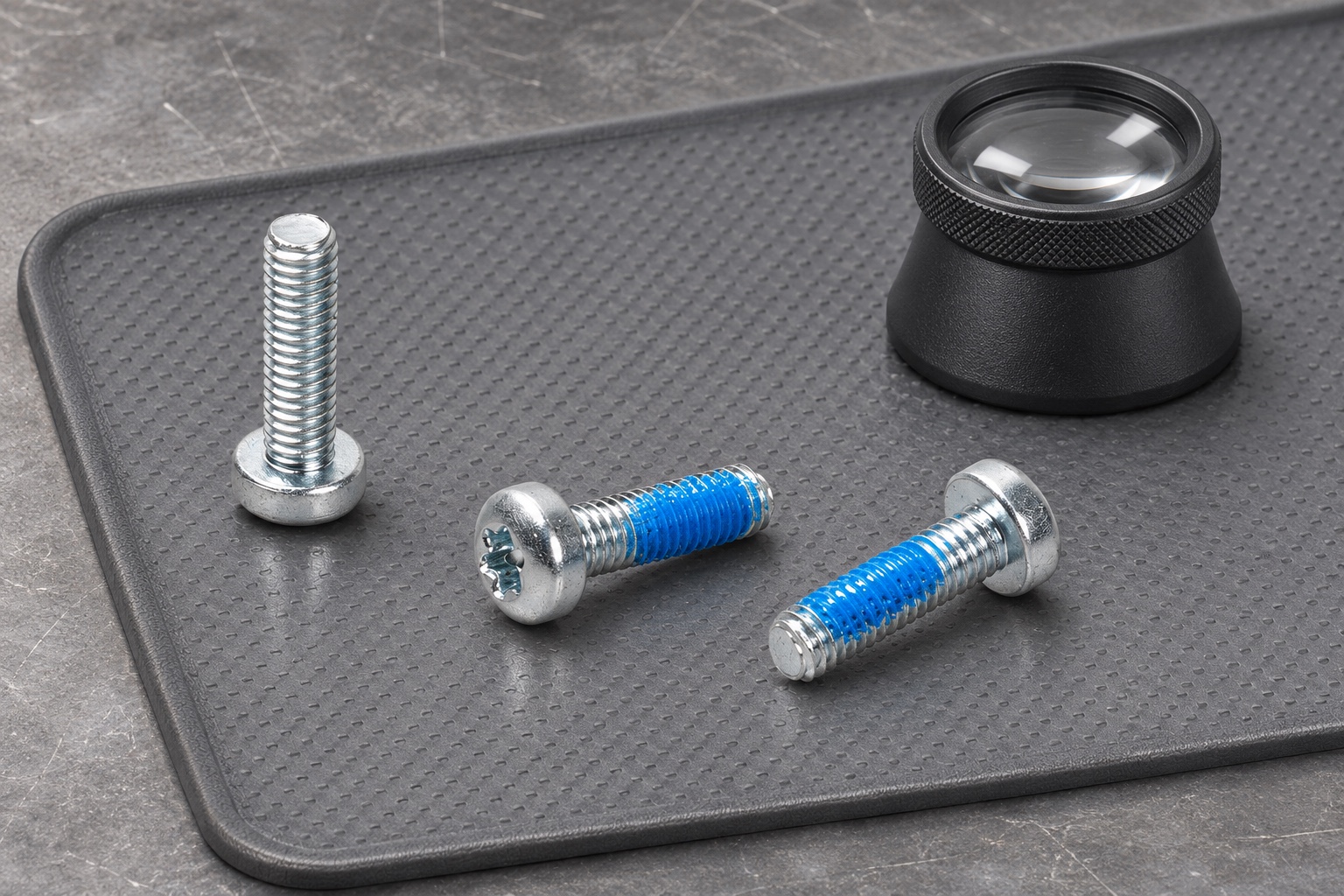
Quarantine the affected lot and reconstruct its process history. Identify the cleaning chemical, equipment, exposure conditions, rinsing and drying method, and whether the parts were assembled afterward. Keep any unprocessed comparison sample. An incomplete history should be recorded as incomplete rather than reconstructed from assumptions.
Ask the coating supplier or responsible engineer for a disposition specific to that history. Possible outcomes may include additional evaluation, authorized reprocessing, or replacement. Do not assume that applying a second material over the original patch restores the approved condition. Adding liquid threadlocker introduces another system and may create a different assembly requirement.
Maintain the hold until the acceptance basis is clear. A sample that appears undamaged cannot, by itself, validate all parts subjected to an unknown process. If the customer approves a revised cleaning route, incorporate it into the controlled instruction and explain how previously processed inventory will be distinguished from new deliveries.
Provide the screw drawing, Torx drive details, finish, intended patch region, coating-performance requirements, and the proposed downstream cleaning process. Ask which parts of the process have been evaluated for the supplied coating. Include exposure and drying conditions rather than simply naming the chemical family.
Request clear identification of any reuse requirement. ND Industries’ FAQ distinguishes reuse behavior between adhesive-coated and inert-patch systems; it does not grant a universal number of cycles for every nylon-patched screw. The TNHO part requires its own acceptance basis. A service instruction should state whether removal triggers replacement or a defined evaluation.
For broader joint selection, use the threaded fastener reference guide. The screw cam-out prevention guide addresses drive engagement, while fastener packaging requirements helps define how an accepted condition is preserved. Cleaning should connect these stages without silently changing the supplied product.
The NPTEL lecture below introduces threaded fastener geometry and mechanical function. It supports the distinction between the drive, threads, and seating interface; it does not demonstrate chemical compatibility or certify the illustrated patch.

No. Color is not a complete formulation or compatibility specification. Identify the actual coating and obtain a cleaning method applicable to the supplied part, finish, and intended exposure conditions.
Do not remove the intended locking feature as a troubleshooting shortcut. Stop and check alignment, mating-thread condition, part identity, and the specified installation behavior. Hold damaged or uncertain parts for a defined disposition.
No. Visual examination can identify obvious changes, but process compatibility and required locking behavior need their own evidence. Preserve processing records and use the applicable acceptance method for the specific coating system.
Reuse depends on the coating, processing history, mating thread, service requirement, and acceptance specification. Do not adopt another supplier’s cycle count. Follow the approved instruction for the particular joint and supplied fastener.

 TNHO