Knurled knob stud thread protection should preserve the thread lead, the long threaded section, and the connection between the stud and knob through packing, transfer, and assembly preparation. Keep the stud from striking other parts or carrying unsupported handling loads, and retain the identity of each variant. Select packaging that supports the actual component without gripping or contaminating the threads. Examine suspect damage before installation rather than forcing the stud into a mating part. The required acceptance limits and any cleaning or rework method must come from the product drawing and approved handling procedure.
The TNHO knurled knob fastener family includes more than one component form. The reference used here shows black cylindrical knurled knobs with long silver-colored threaded studs and flat-looking ends. A hexagonal recess is visible in one knob face. This is the illustrated threaded-stud form, not a sharp piercing needle.
The source label contains M4, but it does not supply a complete thread, stud length, knob material, finish specification, or attachment-strength requirement. The black appearance of the knob is not evidence of a particular polymer or coating. Obtain the drawing for the supplied variant before defining packaging or inspection.
Keep different stud lengths and knob forms distinguishable. Two components may use similar heads while presenting different exposed thread lengths. A tray that protects one variant can leave another protruding or place pressure on its thread lead, so verify the arrangement with representative parts.
List the features that could be affected by handling: the thread lead, thread crests, long stud alignment, knob exterior, drive recess if relevant, and the connection between head and stud. Define the required delivered condition for each through the applicable specification.
A package can prevent parts from being lost while still allowing them to strike one another. Check how the components move during ordinary transfer, unpacking, and replenishment. The objective is to preserve the required product condition, not simply to fit the highest quantity into a convenient container.
The NASA fastener procurement and storage standard record provides context for traceability and storage controls. Its mission-hardware scope does not qualify this TNHO product or impose a particular packaging method on it. Use the product and application requirements to define the actual protection needed.
Choose a pocket, sleeve, tray, or other agreed arrangement that accommodates the complete stud and knob. Check the support points and the clearance around the thread lead. Packaging that holds the knob securely but leaves the stud exposed to impact may not preserve the required condition.
Avoid using the threaded section as an improvised gripping or suspension feature unless the approved packaging design calls for it. A tight pocket, rough opening, or unsupported protrusion can create a handling problem during removal even when the part was undamaged at receipt.
Review the direction in which an operator removes the component. The arrangement should allow controlled access to the knob and support of the long stud where needed. If removing one item requires dragging its thread across other parts, revise the presentation or transfer method rather than relying on unusually careful handling every time.
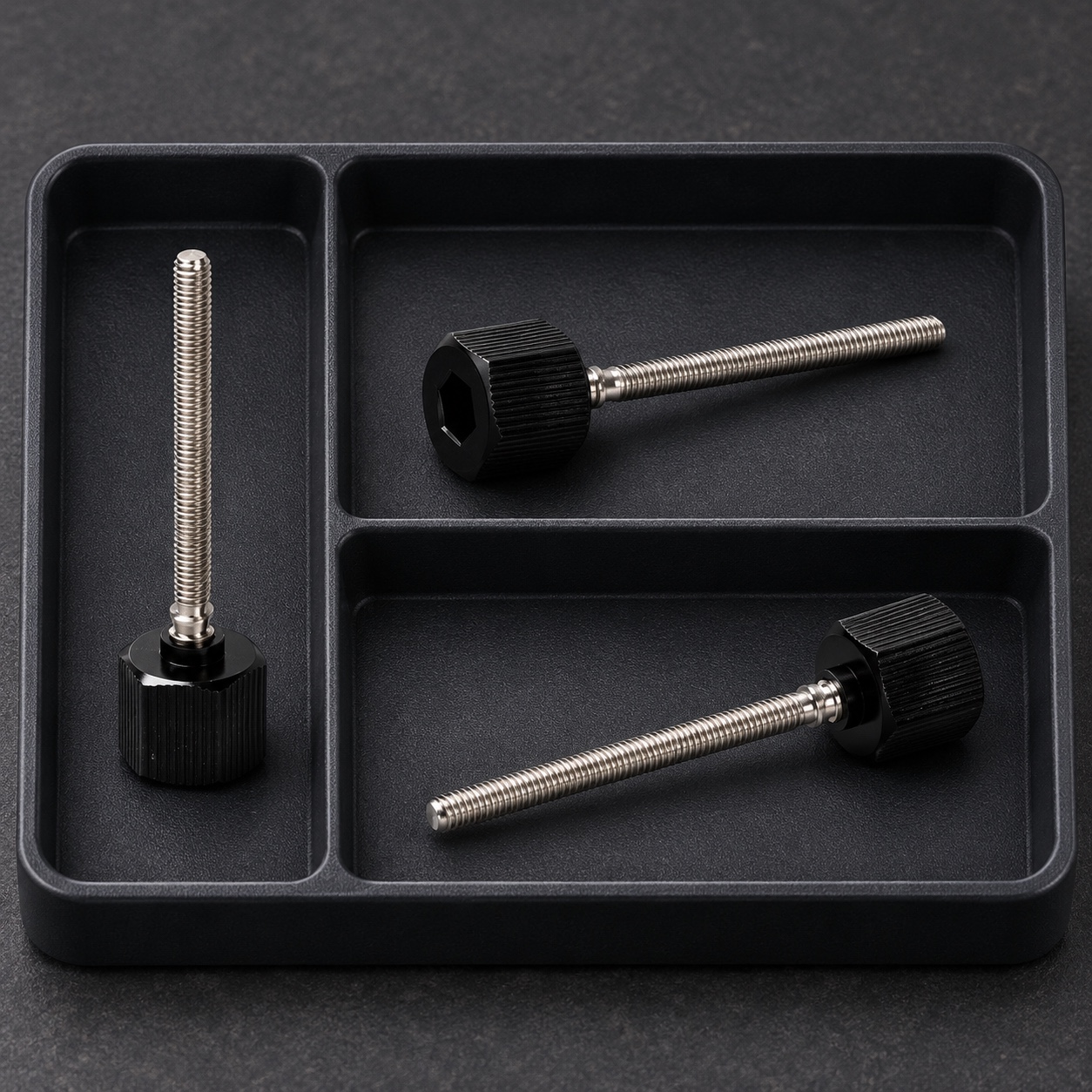
The separated tray in the illustration represents a planning arrangement. It is not evidence of a completed shipping test or an approved packaging design for a specific shipment.
| Feature or stage | Condition to examine | Required decision |
|---|---|---|
| Thread lead | Tip clearance and possible impact paths | How the entry region remains protected |
| Long threaded section | Contact with dividers, adjacent parts, and container edges | Suitable support and separation |
| Knob exterior | Contact pressure and presentation for removal | Acceptable surface condition and handling access |
| Knob-to-stud connection | Loads introduced by packing and unpacking | Approved support and handling method |
| Identification | Variant and lot information after transfer | How identity stays with the components |
| Assembly preparation | Cleanliness and visible damage checks | Acceptance, hold, or escalation route |
Use the table to review the delivered arrangement with the supplier. A statement that parts are packed safely is difficult to verify. A description of the protected features, support points, and transfer method gives receiving inspection something concrete to compare.
Confirm that the selected packaging material does not create unacceptable contamination or surface transfer under the intended conditions. Identify any protective oil, coating, or other supplied surface condition before adding wipes, adhesive labels, sleeves, or cushioning in contact with the product.
Do not apply tape directly to threads as an informal retention method. If adhesive contact is part of a proposed packaging design, obtain approval for the material, contact location, removal method, and final condition. An improvised label can make identification easier while creating another preparation task at assembly.
Keep packaging cleanliness and component cleaning separate. A dirty tray should be corrected through its own handling process. Cleaning every stud after transfer may not resolve a continuing contamination source and may change the condition assumed by the assembly instruction.
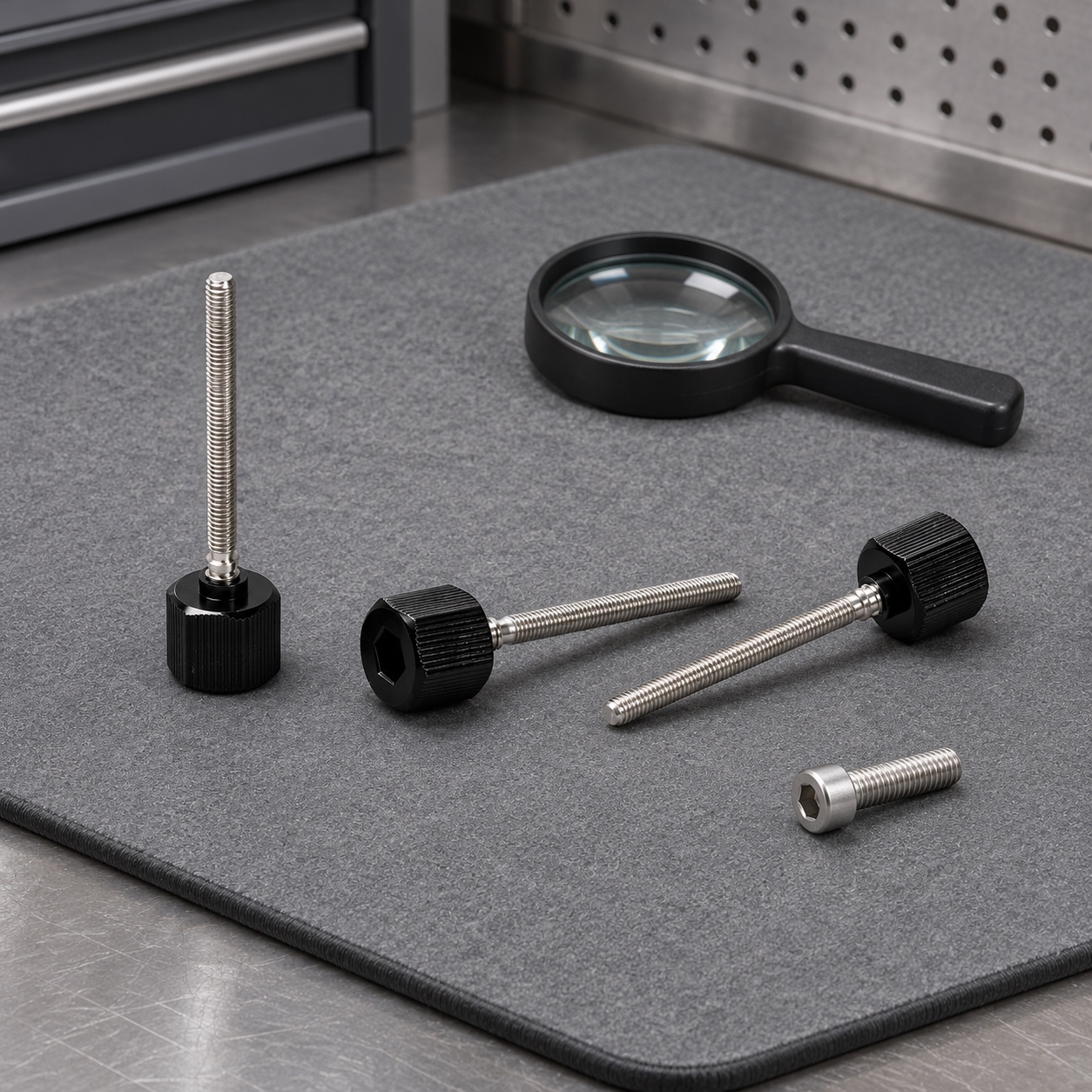
Examine the lead and visible thread surfaces under suitable lighting. Look for impact marks, flattened areas, adhered debris, and other conditions that require disposition under the drawing. Preserve the identity of the affected component and record where the condition was observed.
Use the required dimensional or thread inspection when appearance alone cannot resolve the question. The NIST measurement uncertainty guidance provides background for evaluating confidence in a measured result. It does not establish a universal allowable dent or thread-damage limit for this stud.
Keep inspection and rework distinct. Filing a lead, chasing a thread, straightening the stud, or changing the knob attachment can alter the product. Such actions require an approved process and the relevant reinspection. A smoother-looking part is not automatically an acceptable one.
If the stud does not enter the mating feature as expected, stop and check identity, alignment, thread designation, contamination, and visible condition. Establish whether the problem follows one component, one mating feature, or a particular transfer batch. Keep the original evidence available for review.
Do not use the knob to force an uncertain thread pair together. The available hand grip or visible drive recess does not define an allowable installation load. Follow the actual assembly instruction, including any requirements concerning the attachment between knob and stud.
Separate the disposition of the affected part from the investigation of the packaging route. Replacing one damaged component can restore an individual assembly task, but it does not show whether other components in the delivery experienced the same handling condition. Review the representative scope before releasing uncertain inventory.
Use the intended stud variant, container, fill quantity, transfer method, and unpacking procedure for a representative evaluation. Include the actual way parts move between receiving, storage, and assembly. A stationary tray photograph cannot establish the performance of a transport route.
Agree acceptance before the evaluation. Record the product features examined, the method, the condition before and afterward, and any required handling or transport tests. Keep the claim limited to the conditions represented. Do not present an editorial image or an informal bench demonstration as evidence that the product passed a shipping qualification.
If the container, part length, fill arrangement, or packaging material changes, assess whether the earlier evidence still applies. A small dimensional change can affect the contact and protrusion conditions that the protection arrangement was designed to control.
Provide the component drawing, exposed-thread features requiring protection, accepted delivery condition, packaging arrangement, and identification requirements. Include how parts will be replenished at assembly so that protection does not end when the original shipping container is opened.
Ask the supplier to identify packaging assumptions and any proposed alternatives. If the product family includes pointed pins as well as threaded studs, name the selected form clearly. A generic knob-fastener description can otherwise lead to unsuitable packaging or an incorrect sample.
For broader procurement context, read the custom fastener RFQ guide. The fastener packaging guide covers the wider supply-chain question, while knurled pin adjustment repeatability addresses a different functional review. Keep product identity and intended use clear when comparing these related topics.
The NPTEL lecture below introduces threaded-fastener geometry and function. It helps identify the thread and seating features being protected. It does not establish a packaging test, knob material, or installation limit for this specific threaded-stud product.

Evaluate the actual contact and impact conditions through the approved packaging review. Secure retention of the knob does not automatically protect an exposed thread lead or unsupported long stud.
No. Confirm the material and finish through the product drawing and supply requirements. Appearance alone is insufficient evidence for a polymer, coating, or compatibility claim.
Treat filing or other repair as rework requiring authorization and reinspection. Preserve the original condition for review rather than assuming that an improved appearance establishes conformity.
It is only the observation actually made on the selected sample. Packaging acceptance should address the specified features, representative handling conditions, and agreed evaluation rather than relying on one informal fit.

 TNHO