A SEMS screw replacement equivalence review should compare the complete preassembled fastener, not only its nominal thread and length. Identify the screw, drive, shank, threaded extent, washer types, washer dimensions, supplied condition, and the joint requirements that the original assembly was selected to satisfy. A replacement with the same thread can still change seating, engagement, tool access, or the under-head stack. Record every difference and obtain approval before substitution. A successful hand-fit or a similar photograph does not establish equivalence for the intended equipment and service conditions.
The TNHO three-in-one preassembled screw family includes several head and washer arrangements. This article uses the long silver-colored form with a hexagonal cross-recessed head, a long smooth shank region, a shorter threaded end, and both spring and flat washers. The source image labels the variant M6×80.
That label is not a complete fastener assembly specification. It does not establish material grade, finish, every washer dimension, retention behavior, or a tightening procedure. The photograph number is a source identifier, not a formal SKU or a substitute for the controlled drawing.
Distinguish this form from a two-in-one fastener carrying only one washer or a fully threaded screw with a different head. The visible smooth region and washer stack are relevant product features. Do not remove them from the equivalence review because the replacement’s nominal thread appears to match.
Identify the joint, clamped components, mating thread, assembly access, and any service requirements. Obtain the original part specification and the current equipment drawing. A replacement inquiry should explain the actual application rather than asking only for an equivalent M6 screw.
Keep the original selection requirements distinguishable. Thread engagement, seating, tool access, component retention during handling, and specified joint performance are separate questions. Decide which evidence is needed for each one before reviewing proposed alternatives.
NASA’s Fastener Design Manual provides general threaded-joint context. It does not establish interchangeability between this TNHO assembly and another supplier’s product. The actual drawings and application requirements govern the comparison.
Check the head form, drive type, relevant tool dimensions, length convention, smooth-shank region, thread designation, and usable threaded extent. Identify the features that locate or contact other components. A different head profile can affect access even when a loose sample enters the mating thread.
Compare the length using the correct measuring references. The overall appearance of a long screw does not establish how much usable thread will reach the receiving feature after the complete stack is assembled. Account for the actual under-head arrangement and clamped components.
Keep a different surface treatment or material as an explicit difference. A similar silver appearance does not establish a matching alloy, strength requirement, coating, or friction condition. Request evidence tied to the supplied replacement rather than relying on the color of a product image.
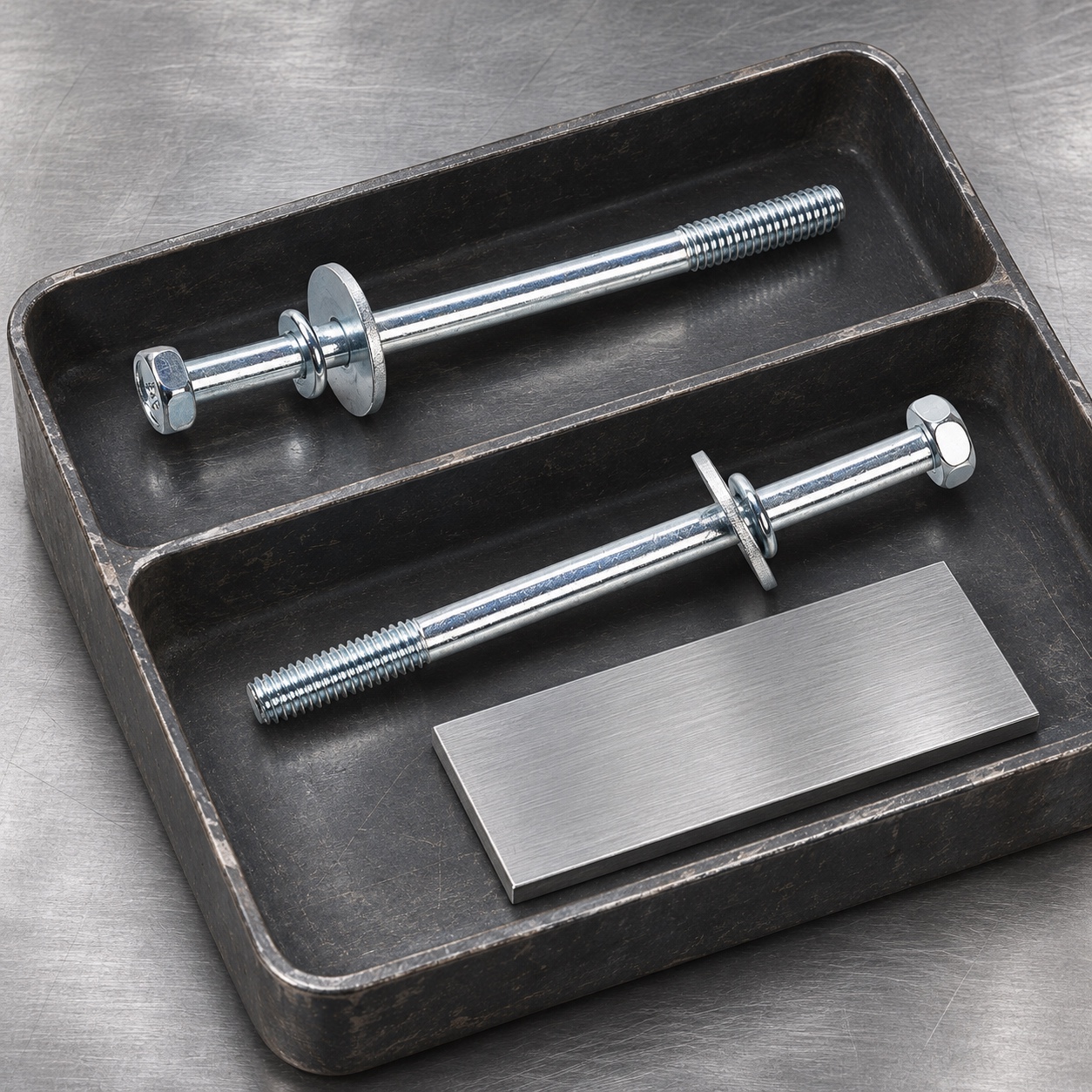
Identify the flat washer and spring washer separately and compare their required types, dimensions, order, and supplied condition. Confirm any retention or movement requirement through the assembly specification. A static photograph cannot establish that the washers behave as required during handling or tightening.
Do not replace the stack with separate loose washers without an approved comparison. That change can affect the supplied configuration, handling process, and assembled relationship. It may be acceptable through an engineering decision, but it should remain identifiable as a reviewed alternative.
A vendor description such as three-in-one is useful for category recognition but may not define every required feature. Obtain a drawing or controlled assembly description showing exactly which components are delivered together and which requirements are checked at supply.
The following table contains comparison fields rather than assumed acceptance values. Actual tolerances, material requirements, and performance limits must come from the application and part specifications.
| Comparison area | Original requirement | Replacement evidence to obtain |
|---|---|---|
| Screw identity | Drawing, revision, thread, length convention | Corresponding controlled specification |
| Head and drive | Geometry and approved tool arrangement | Access and engagement comparison |
| Shank and thread | Smooth region and usable threaded extent | Installed projection and engagement review |
| Washer components | Types, dimensions, order, supplied condition | Complete preassembled-stack description |
| Material and finish | Required grade, treatment, and documentation | Evidence for the supplied part, not appearance |
| Functional requirements | Defined joint and service acceptance | Applicable evaluation for any relevant difference |
Record a difference even when it appears beneficial. A larger washer or stronger-sounding material is not automatically equivalent; it changes the configuration being approved. The review should establish compatibility with the actual joint rather than rank parts by a general marketing description.
The NASA fastener procurement and storage standard record provides background on maintaining hardware traceability. Its mission-hardware scope does not qualify this replacement. The relevant practical control is to retain the connection between each sample, its specification, and the result reported for it.
Keep original and proposed replacement assemblies distinguishable. Record supplier, drawing, revision, lot, and any processing or assembly history required by the evaluation. Do not combine different alternatives in one unmarked sample tray and attempt to reconstruct their identities after a trial.
Use a consistent comparison record. Separate confirmed matches, known differences, missing evidence, and the final approval decision. A field left unresolved should remain visible rather than being converted into an assumed match simply because the sample appears to work.
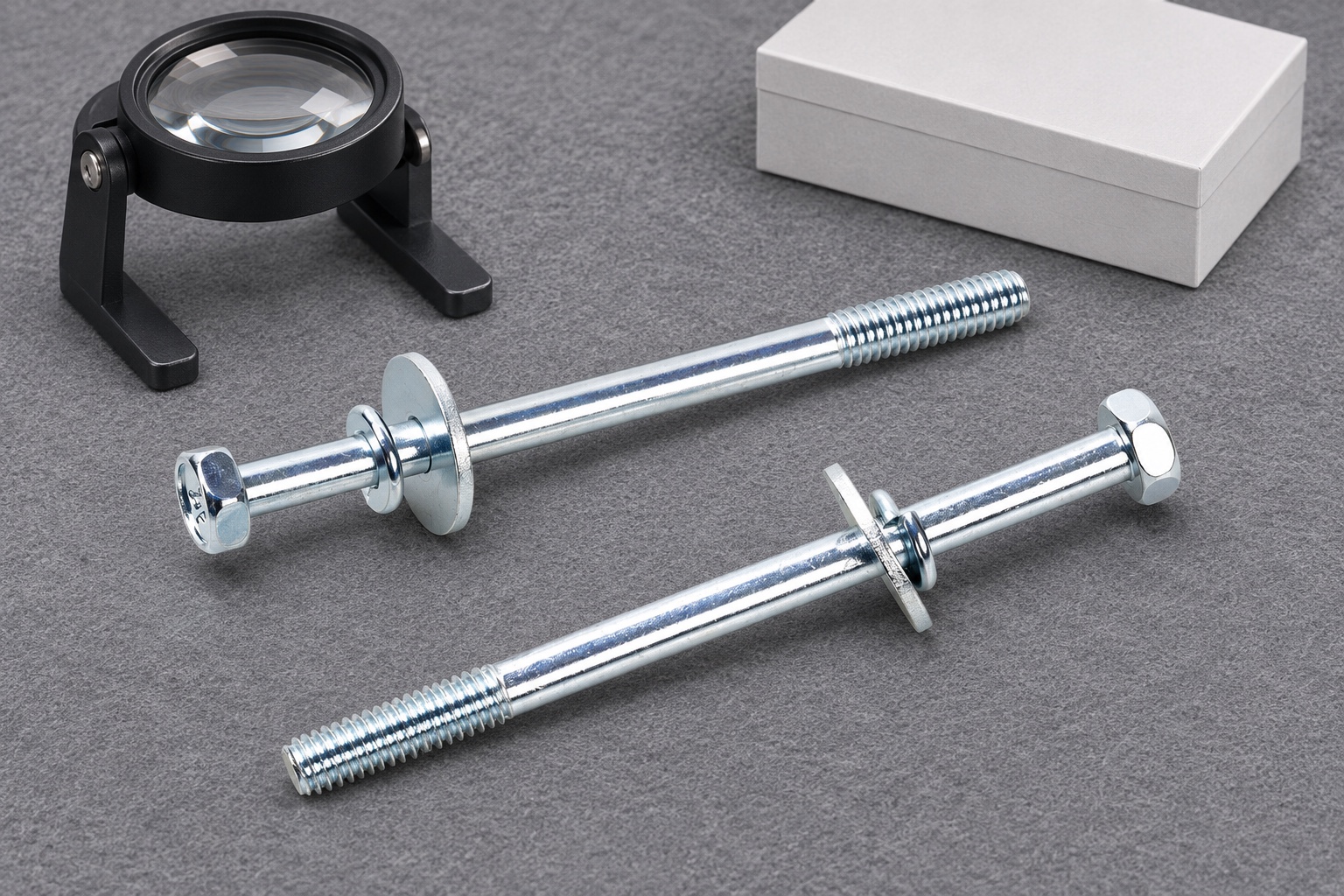
Use representative clamped components, mating thread, and tooling when the review requires an assembly trial. Include the actual installation stage and neighboring hardware that controls access. A loose fastener beside a coupon is an illustration, not evidence of an accepted installed replacement.
Define the purpose and acceptance of the trial before assembly. A fit check, seating observation, engagement verification, and a functional test can answer different questions. Keep the result limited to the conditions and requirements actually evaluated.
NPTEL’s design-for-assembly module provides context for considering component shape and assembly process together. Apply that principle to the replacement configuration rather than treating the new screw and washers as independent catalog items.
If the replacement seats differently, interferes with a component, or shows unexpected tightening behavior, stop and retain the configuration. Record which feature or stage differs from the approved process. Check identity, stack, tool arrangement, engagement, and surface condition before assigning a cause.
Do not improve the fit by removing a washer, grinding a feature, or changing lubricant informally. Such modifications create another proposed configuration and can conceal the reason the original replacement failed the comparison. Evaluate the revised proposal through the same approval process.
Keep modified trial samples separate from unmodified supply. A successful modified sample should not lead purchasing to order the original unmodified part under the same assumption of equivalence. Document what was changed and which configuration was actually accepted.
For example, a supplier may offer the same nominal thread and length with a different smooth-shank extent. Review where the thread begins relative to the washer stack and the mating component, rather than accepting the offer from its label alone. A second proposal may preserve the screw but use a different washer outside diameter. That is a different comparison involving the bearing envelope and nearby features. Keeping these cases distinct makes the equivalence decision specific enough to reproduce.
Once an alternative is approved, update the required part identification and the relevant assembly or service records. State whether the approval is general, application-specific, or limited to an identified batch through the organization’s change process.
Provide receiving inspection with the fields needed to distinguish the accepted assembly. A shortened supplier description should not remove the washer type, head form, threaded extent, or another feature that controlled the decision. Keep the approved drawing available when a future reorder is placed.
If the supplier later changes a washer source, finish, geometry, or assembly process, use the agreed change-control requirements to determine whether review is needed. An equivalent part should remain equivalent to the approved configuration, not merely continue to carry a similar catalog name.
For broader selection, read the SEMS screws versus separate washers guide. The combination screw washer-order review addresses stack definition, while fastener reuse concerns a separate service decision. Apply those topics to the exact replacement and equipment requirements.
The NPTEL lecture below introduces threaded-fastener geometry and function. It helps distinguish the screw, bearing surfaces, and mating thread. It does not establish replacement equivalence, a tightening setting, or a qualified service life for this TNHO assembly.

No. Compare head and drive, shank and thread extent, washer stack, material, finish, and the actual joint and service requirements. Record and approve relevant differences before substitution.
No automatic equivalence is established. Review the complete supplied and installed configuration, handling requirements, and applicable acceptance evidence through the approved substitution process.
It supports only the observation made. Seating, engagement, access, tightening, and required performance need their own applicable checks and evidence for the actual configuration.
No. Keep them identifiable as modified configurations. Document the change and approval so that purchasing, receiving, and assembly use the part that was actually evaluated and accepted.

 TNHO