Clinch nut replacement panel damage review should establish the original fastener type, the condition of the parent sheet and hole, and the approved repair or replacement route before another nut is installed. A new nut fitting into the opening does not prove that the panel can still provide the required retention. Preserve the failed condition, identify the relevant drawing, and obtain a disposition for the complete joint. Do not enlarge the hole, install a different fastener, or repeat the original pressing operation without an approved basis for the altered panel condition.
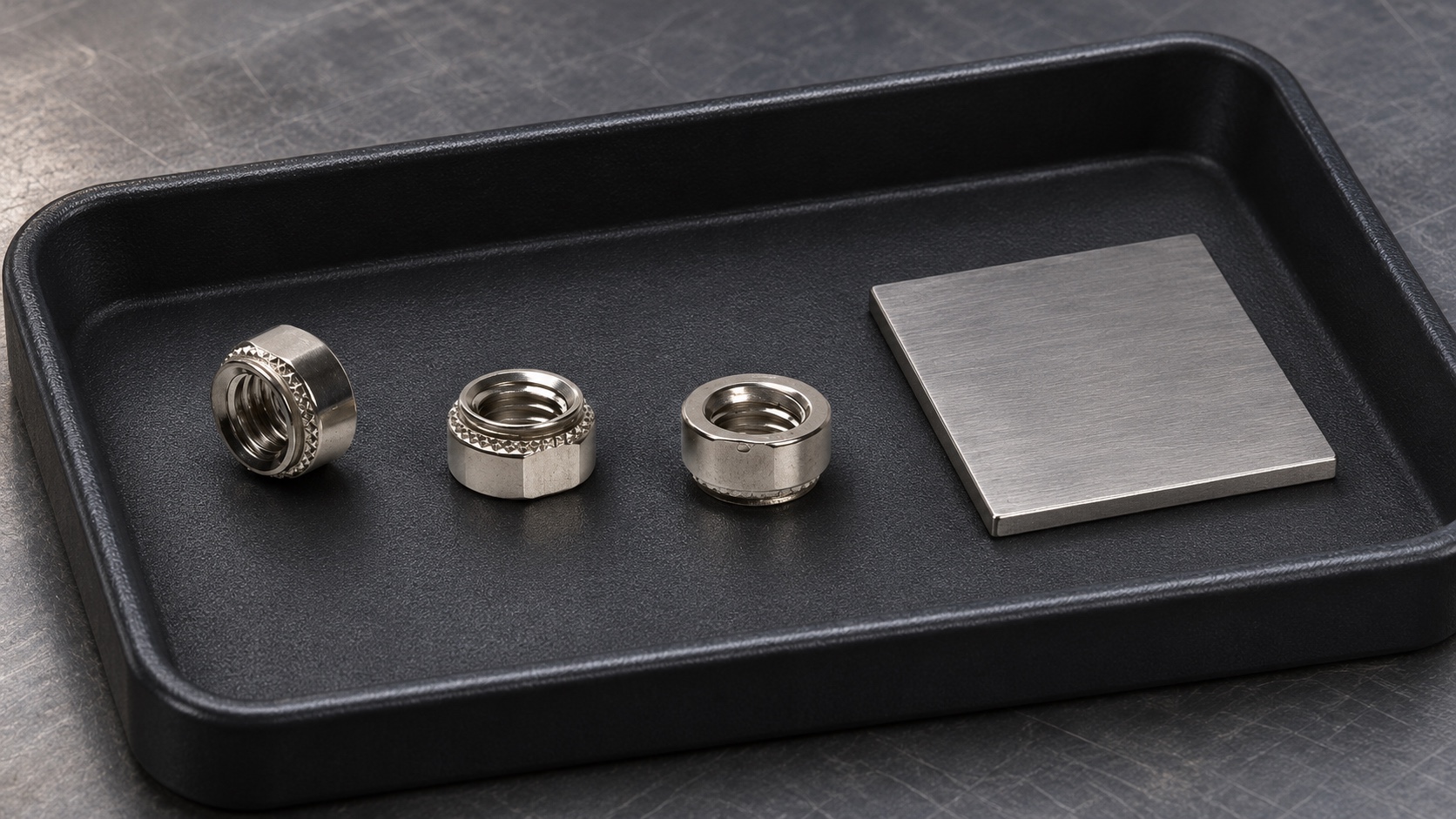
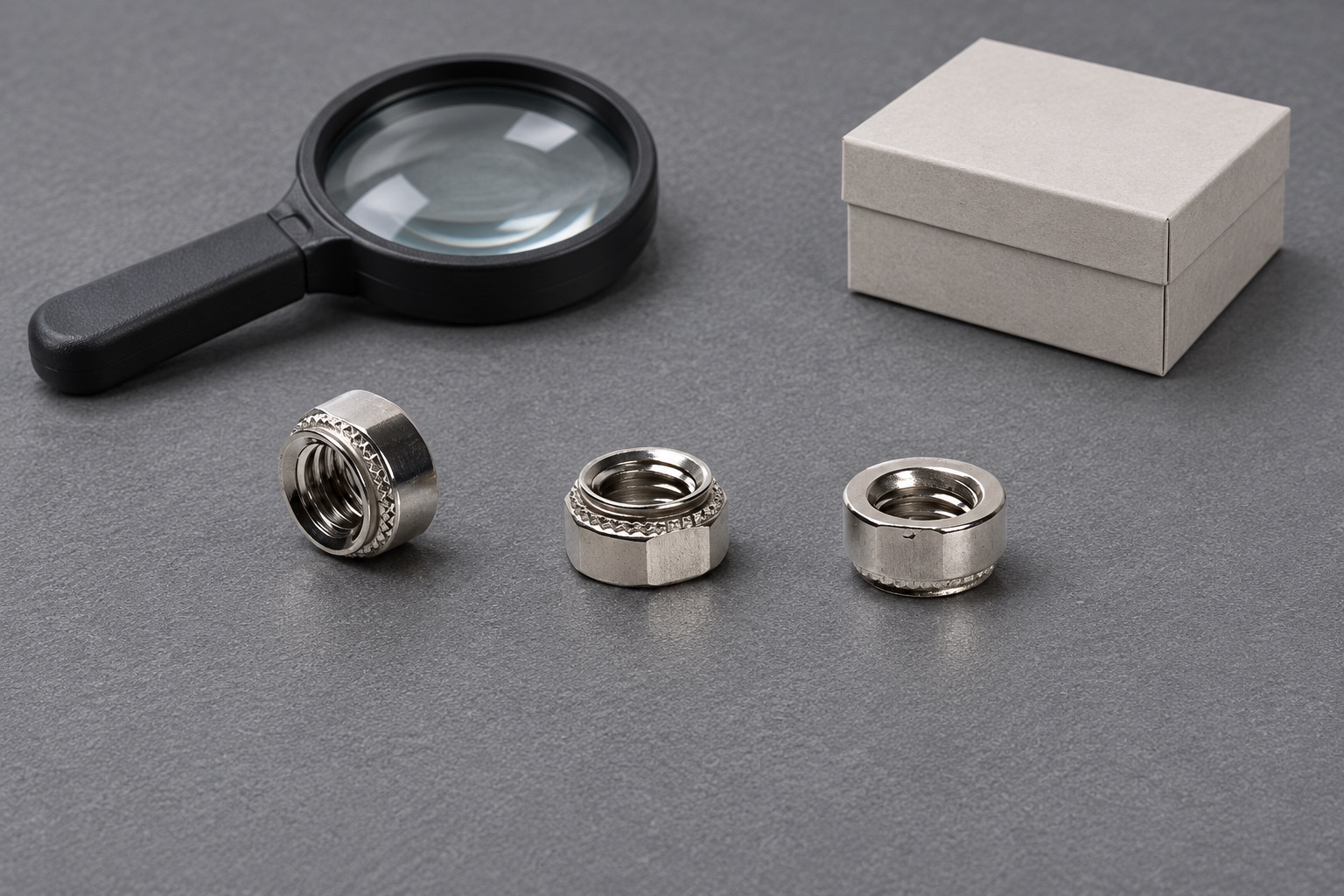
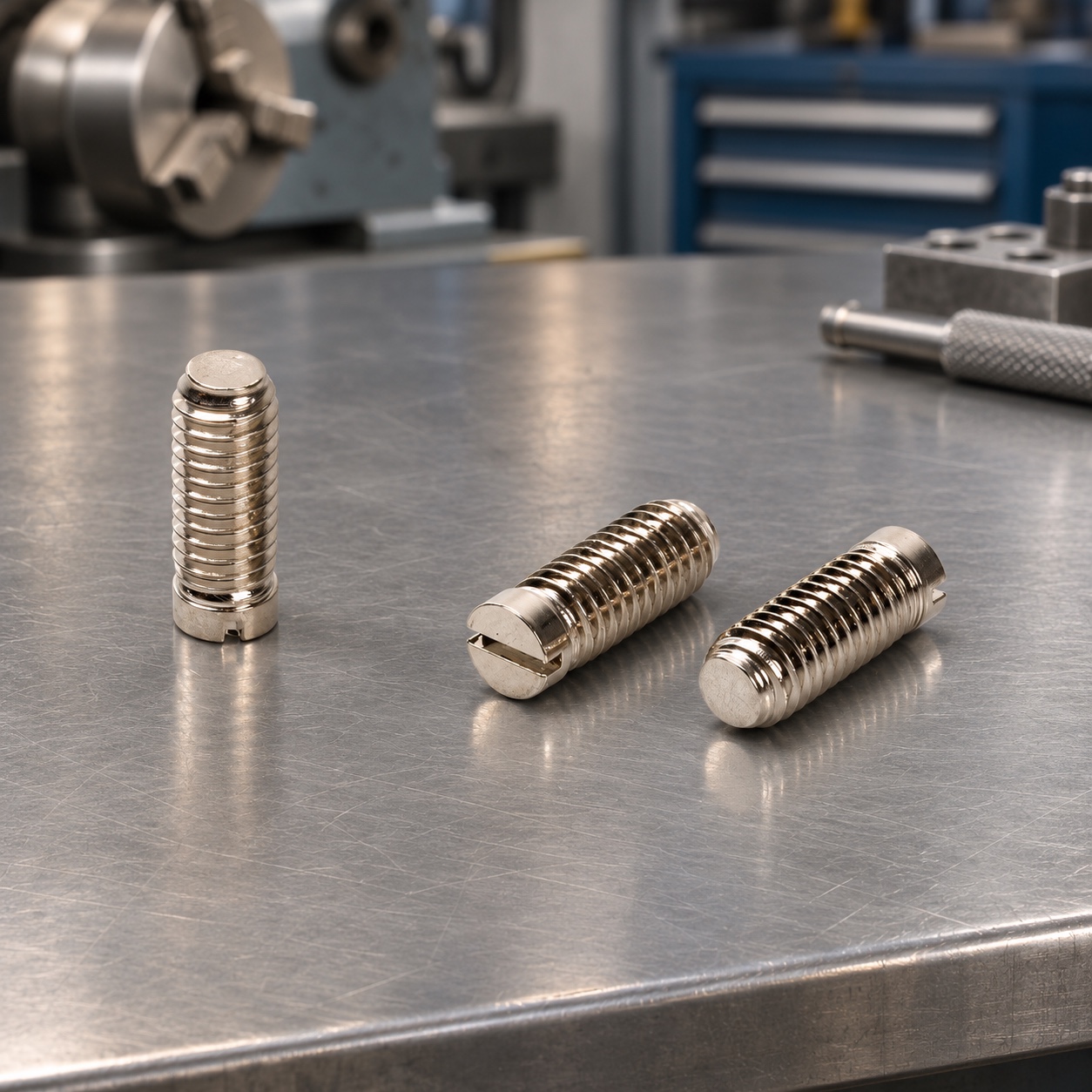
The TNHO riveting fastener family includes rivet nuts, press-riveting forms, studs, and related components. The reference used here shows short low-profile internally threaded nuts with a serrated collar and compact outer profile. The source image includes an M8/13×6-style label, but it does not provide a complete installation or repair specification.
Keep this visible form distinct from a long tubular blind rivet nut. The family name alone is not enough to select a setting, removal, or replacement method. Confirm the exact component drawing and how its retention is created in the intended parent material.
This guide addresses the replacement review for a clinching or press-riveting nut, not a universal removal instruction. If the original installed part cannot be identified confidently, hold the process and obtain the design information. An apparently familiar internal thread does not identify the retention system outside it.
Record the equipment or panel identity, fastener position, drawing revision, and the observed problem. Identify whether the concern is a loose nut, damaged internal thread, visible panel distortion, contamination, or another condition. These observations can point to different investigation and disposition routes.
Where the approved procedure requires it, retain the original fastener and relevant evidence. Document the condition before changing it. Removing or reshaping material first can make it difficult to distinguish the original defect from damage introduced during the attempted repair.
The NASA fastener procurement and storage standard record provides background for keeping hardware identity traceable. Its mission-hardware scope does not approve a repair for this TNHO nut. The practical application is to preserve the connection among the part, panel, observed condition, and final disposition.
Identify the parent material, specified thickness, hole definition, location, edge relationships, and relevant surface condition. Obtain the original requirements rather than measuring an altered opening and assuming its present size is acceptable for a replacement.
Review the area that participates in retention and any surrounding region required by the design. A local opening can look plausible while nearby sheet material is distorted, reduced, cracked, or otherwise outside the acceptance requirement. The drawing and inspection procedure should establish which conditions matter and how they are evaluated.
Do not infer hidden panel condition from a loose nut photograph. The editorial images show reference components and separate props. An actual repair decision requires the installed or removed joint evidence and a method appropriate to the parent component.
The table organizes the information needed for disposition. It supplies no universal enlarged-hole dimension, pressing force, sheet-hardness limit, or replacement-retention value.
| Review item | Evidence to obtain | Decision before installing a replacement |
|---|---|---|
| Original fastener | Drawing, variant, installation method, and lot where required | Correct retention system identified |
| Failure observation | Condition and stage at which it appeared | Investigation question defined |
| Parent sheet | Material, thickness, and specified condition | Panel requirements known |
| Mounting opening | Original definition and measured current condition | Any departure assessed through the repair route |
| Surrounding region | Relevant distortion or other damage observations | Complete retention area evaluated |
| Replacement route | Approved part, process, inspection, and acceptance | Documented disposition for the altered configuration |
Keep observation and approval separate. An inspector may identify a condition without being authorized to select a new fastener or change the panel. The work instruction should make the hold and escalation route clear so that a convenient physical fit does not become an undocumented engineering decision.
Examine accessible features through the approved visual and dimensional methods. Record the opening, relevant surfaces, and surrounding region using identified references. State any limitation when the selected view or instrument cannot establish the required condition.
The NIST measurement uncertainty guidance provides background for evaluating confidence in a result. A precise reading on one accessible diameter does not independently characterize every feature involved in a damaged clinching interface. Match the method to the acceptance question.
Use additional examination only through the approved plan. If sectioning, destructive evaluation, or another special method is needed, identify the sample and procedure. Do not alter a production panel merely to make the condition easier to photograph or to reproduce an unapproved demonstration.
Depending on the product and condition, the responsible authority may approve a defined repair, a revised fastener arrangement, replacement of the parent component, or another documented disposition. The correct route must address the actual design requirements and the evidence obtained.
Do not assume that installing the same nominal nut restores the original condition. The receiving material and opening may no longer match the configuration for which the original installation process was specified. A replacement part is only one element of the complete joint.
Likewise, a larger component or a different retention method is a design change, not an automatic repair. Review its effect on local geometry, assembly access, loads, mating parts, finish, service, and any other applicable functions. Document the accepted configuration so that later users can identify what was changed.
Define the required acceptance evidence before evaluating a proposed repair route. Use a configuration representative of the actual panel condition and selected replacement. Record the part drawings, panel identity, process, tooling, and any rework history.
Keep individual checks distinct. Thread acceptance, correct seating, retention, appearance, dimensional condition, and any electrical or environmental requirement may need different evidence. A nut that remains in the panel during handling has not automatically demonstrated every service requirement.
State the limits of the result. A trial using new undamaged sheet does not automatically represent a previously altered panel. A single sample can support only the claim justified by the approved evaluation plan. Do not present the reference illustrations as proof that the pictured nut passed a repair qualification.
Once a route is approved, identify the replacement part and any changes to the panel, tooling, or assembly process. Specify the inspection and acceptance points and preserve the record linking the disposition to the affected component. Make it possible for later service personnel to recognize the accepted configuration.
Keep repaired, rejected, and unprocessed items distinguishable until their status is resolved. If several panels are being evaluated, retain the relationship between each panel condition and its selected disposition. A mixed collection of loose nuts and unlabeled panels can obscure which result belongs to which sample.
Update the relevant drawing, bill of materials, service instruction, or deviation record as required by the organization’s change process. Do not rely on a verbal explanation that a different nut was used because the original opening was damaged.
If several assemblies develop the same condition, review the original installation inputs and process. Relevant questions may include correct part identity, panel definition, tooling setup, process control, mating screw behavior, handling, and service history. Record evidence before assigning a cause.
A successful local disposition does not establish the root cause of the original problem. Keep corrective-action investigation separate from approval of the individual panel. This distinction helps prevent a repair method from becoming a substitute for resolving a recurring production issue.
Preserve supplier communication and representative samples where required. A clear description of the observed condition and original configuration supports a more useful response than a general request for a stronger nut or more pressing force.
Provide the original fastener and panel drawings, observed damage, current inspection results, intended service requirements, and the approval route for any alternative. Explain whether the inquiry concerns a new production configuration or repair of an existing component.
Ask the supplier to identify assumptions and the evidence needed to support the proposal. A loose replacement sample and a marketing description cannot establish acceptance of the repaired joint. Request information tied to the actual part and panel condition.
For broader terminology, read the clinch nut guide. The self-clinching standoff hole-size review discusses a related preparation question, while sheet-metal clinch fasteners for electronic enclosures provides application context. Keep those topics separate from the specific approved replacement disposition.
The NPTEL lecture below provides mechanical background for identifying threaded components and their joint relationships. It is not a removal tutorial or an approval of a repair method, panel condition, or replacement fastener.

No. Fit alone does not establish the required retention or the condition of surrounding material. Evaluate the panel and opening through the approved inspection and repair-disposition process.
Only through an approved repair or design change addressing the complete configuration. An informal enlargement changes the parent component before its effect on retention and other requirements has been established.
Do not transfer methods based on a family name or nominal thread. Identify the actual fastener, retention system, panel, and approved procedure before selecting a removal or replacement route.
No. Repair acceptance and root-cause investigation answer different questions. Retain the original evidence and assess recurrence through the relevant product and process records.

 TNHO