Combination screw washer rotation clearance should be checked around the washer’s complete permitted movement, not only around the screw head. A captive square washer can occupy different space at its corners than at its sides, and retention beneath the head does not by itself define whether it is intended to turn, float or remain located. Confirm the actual assembly geometry, surrounding walls and seating arrangement before approving a compact joint. This guide explains a practical review for preassembled screw-and-washer products without assuming a washer’s locking performance, a universal gap or a tested ability to rotate in the pictured configuration.
A preassembled screw-and-washer component is supplied as a combined part, but that description does not establish every interface within it. Different products use different washer shapes, retention features and intended movements. Obtain the controlled drawing and identify the washer’s condition before and after installation.
TNHO’s two-in-one preassembled combination screw family includes several head and washer arrangements. The chosen gallery reference shows short silver combination-drive pan-head screws with square washers and visible radial surface features. Keep that square-washer variant identified. Do not silently replace it with a round washer when illustrating or discussing its envelope.
The product page lists several family sizes, including M3×7. That family listing does not independently establish every dimension of the photographed specimen. Confirm the actual screw, washer and retention details against the approved order drawing. The reference image number is not a formal model, and visible serrations are not proof of a specified locking performance.
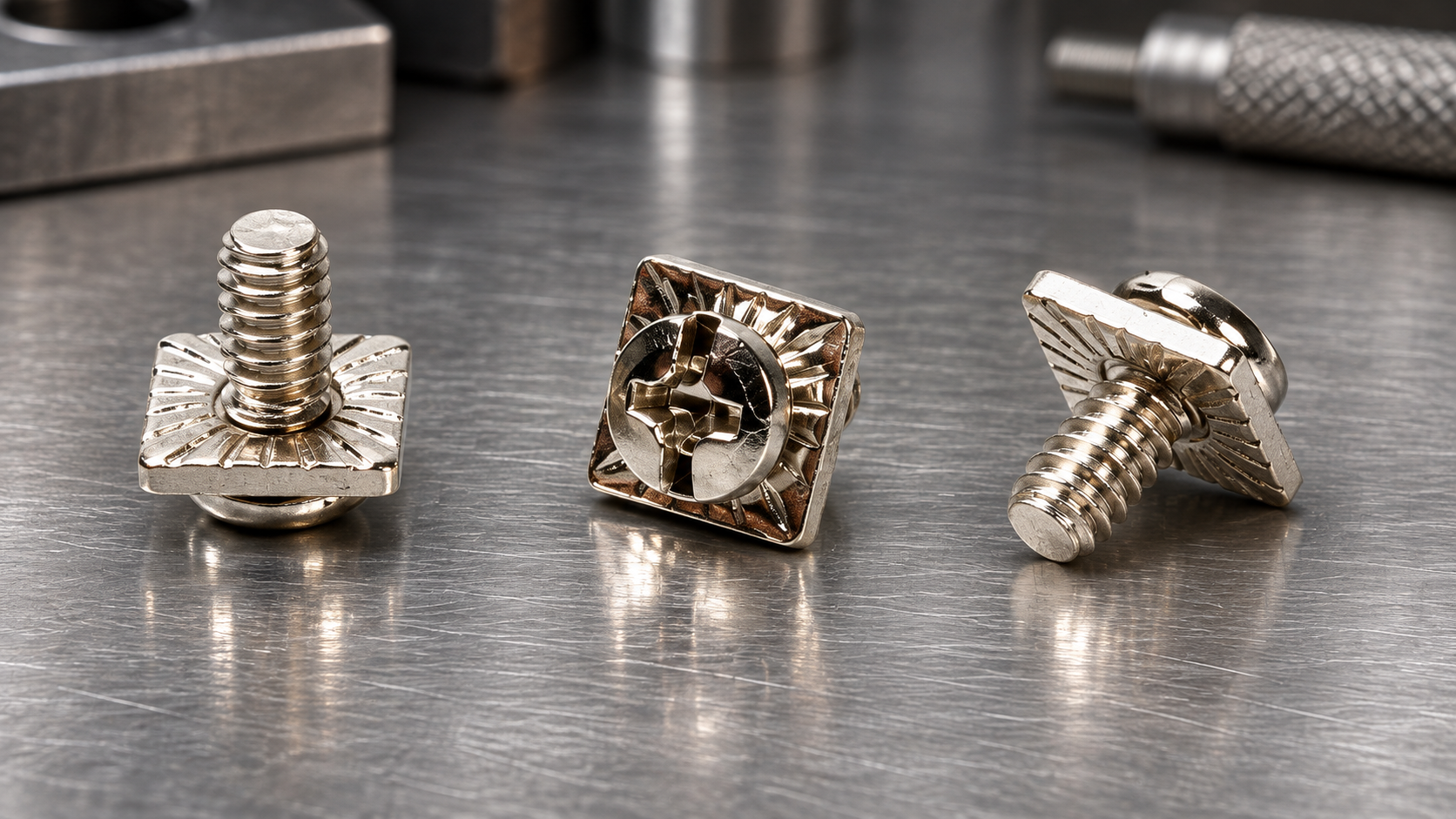
Retention answers whether the washer remains associated with the screw in a specified condition. Rotation answers how the washer and screw can move relative to one another and to the surrounding assembly. Seating answers which surfaces make the intended final contact. Those are three different questions.
Do not assume that a captive washer is fixed against rotation, or that it is supposed to spin freely under every condition. The actual design may allow movement for handling and then constrain the washer as it contacts the assembly. Define the permitted behavior from the drawing and supplier information rather than forcing a sample until it moves.
The NPTEL design-for-assembly screw-fastener lesson discusses screw-and-washer assemblies as an assembly design option. It provides general context for reducing loose-part handling. It does not establish the rotational behavior, retention strength or suitability of this TNHO washer arrangement.
A square washer presents a different edge to a nearby wall as its orientation changes. A layout assessed only with one flat side parallel to the wall may miss a corner interference. Identify the range of orientation and movement that the actual assembly permits, then compare that range with the surrounding geometry.
Use the washer drawing and an assembly view to establish the envelope. If dimensions or tolerances are unknown, record that gap instead of estimating them from a photograph. Include any axial or lateral movement permitted by the retention feature. A washer that can shift before seating may occupy a larger handling envelope than its final positioned outline.
Keep theoretical free movement distinct from movement possible in the installed assembly. An intentional locating feature may limit rotation, while an unintended collision may prevent correct seating. Both can stop the washer, but they have different meanings. The drawing should identify the intended locator or constraint so that an obstruction is not mistaken for a successful design feature.
The washer must reach its intended seat before the assembly can be assessed in the final condition. Review how the screw-and-washer component is presented to the joint and whether the washer can catch on a nearby edge. A clear final outline does not prove that the component can be introduced along the actual assembly path.
Observe which surface first contacts the surrounding part during an approved development assessment. If a corner touches a wall before the washer reaches its intended bearing surface, record the stage and location. Do not use additional tightening effort to pull the washer past an unexplained obstruction. That can conceal the interface problem rather than resolve it.
NASA PRC-9007 illustrates the importance of specifying washer quantities, locations and permitted changes in its own aerospace process context. It is not a commercial requirement for this product. The applicable principle is to define the intended washer arrangement explicitly rather than treating washers as interchangeable convenience parts.
The screw head and its drive need their own operating space. A washer may clear a wall while the screwdriver shaft or handle does not. Check the approved driver, approach direction and movement at the relevant assembly stage. Do not let a washer-envelope review stand in for a complete tool-access review.
A nearby cable channel, cover lip or locating boss may also affect the component during presentation. Use the configuration that exists when the operation is performed, not a simplified view with obstructions omitted. If a part is temporarily removed under the approved process, record that fact so that the assessment does not imply access in the fully closed configuration.
The site’s thumb screw glove-clearance article examines hand access for a different product, while the bolt tightening sequence guide discusses bringing a joint into its intended condition. They provide complementary context without establishing a tool, torque or clearance requirement for the square-washer combination screw.
The following table is a qualitative planning aid. It contains no generic gap, rotation requirement or bearing-pressure limit. Complete it using the actual component and assembly documentation.
| Review item | Question to resolve | Evidence to retain |
|---|---|---|
| Washer identity | Is the reviewed variant square, round or another form? | Controlled washer detail and product reference |
| Retention | What movement is permitted before installation? | Supplier drawing and defined handling condition |
| Corner envelope | Can a permitted orientation contact a nearby feature? | Assembly view covering the allowed range |
| Presentation path | Can the component reach its seat without catching? | Documented insertion route |
| Final seating | Which washer face and assembly surface should contact? | Section and acceptance requirement |
| Tool access | Can the approved driver complete the operation? | Driver identification and operating envelope |
| Change control | Which substitutions require reassessment? | Approved configuration and review triggers |
For every observation, state whether it concerns the loose component, presentation or final assembly. A washer’s loose movement and its installed condition may be different. A record that identifies those stages is more useful than an unqualified statement that the washer rotates correctly.
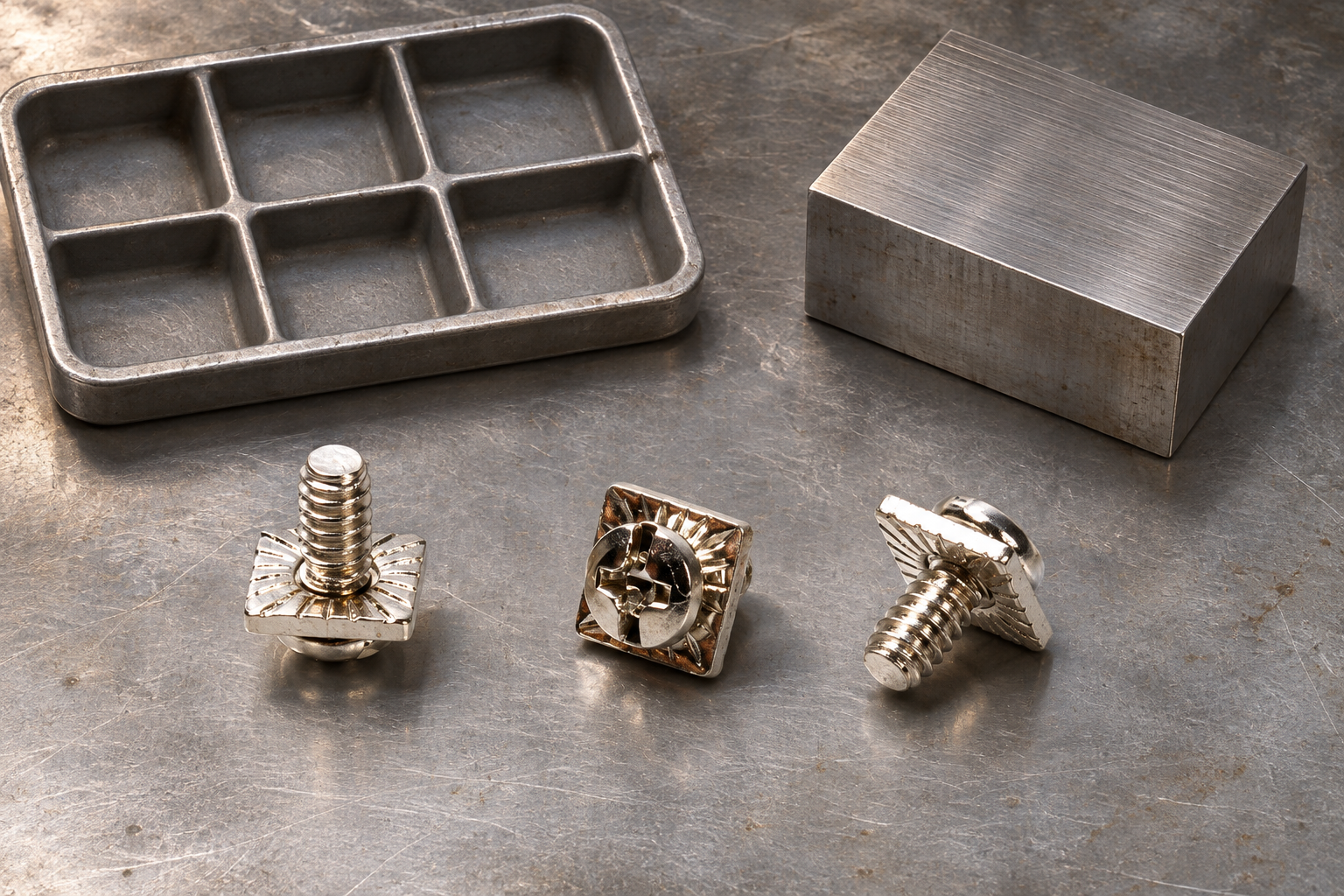
The reference washer has visible radial features, but appearance alone does not quantify friction, electrical bonding or resistance to loosening. Do not describe a clearance observation as a locking test. If the application requires a retention or electrical function, the responsible designer must define the appropriate requirements and evidence separately.
Likewise, a washer that remains attached during a casual handling observation has not automatically passed a transport or service-life requirement. Keep the conclusion tied to the actual assessment. A supplier product description may identify the intended family function, while acceptance for a particular joint remains an application decision.
The site’s carriage-bolt spinning guide provides a related example of separating anti-rotation geometry from general tightening effort. A square washer is not a carriage-bolt neck, and its behavior should not be inferred from that other interface. Use the comparison only to clarify why the actual constraining feature needs identification.
If samples are assessed, identify their drawing revision and the mating assembly used. Record the washer’s starting orientation, permitted movement, tool and final condition. If several surrounding layouts are compared, retain the observations for each rather than reporting only the version that worked.
Do not change the washer form, hole position and installation method at the same time and then attribute the result to one feature. Select the comparison that answers the engineering question. The required number of samples, operating conditions and acceptance criteria depends on the project; this article does not invent a universal validation program.
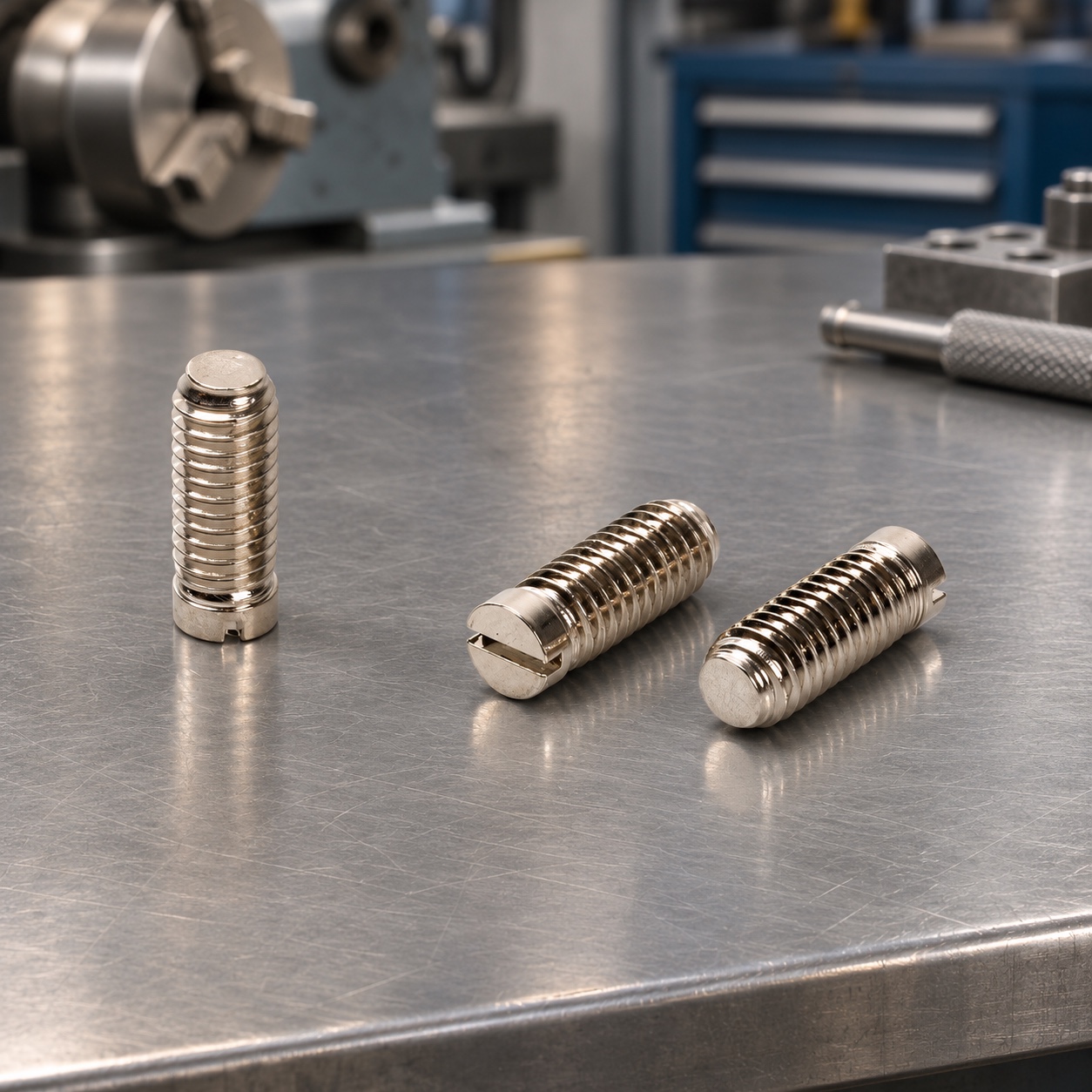
Photographs can document the position of a corner or contact point, but dimensioned manufacturing requirements belong on controlled drawings. Keep illustrations separate from assessment evidence. The workshop images here are reference-based pictures of loose components, with no completed joint, rotation test or TNHO factory visit implied.
Provide the complete screw-and-washer drawing, surrounding assembly section, intended seating surfaces and the operation to be performed. Include the approved tool and any access restrictions. Ask the supplier to identify which washer movements are intended and which dimensions govern the envelope.
Once the arrangement is approved, record the exact variant in the purchasing description. A supplier substitution from square to round, or a change in washer size, thickness or retention detail, should not inherit the original clearance conclusion automatically. Reassess the affected features and retain the decision with the assembly revision.
Avoid vague requests for a combination screw that “fits the available space.” State the space-controlling geometry and permitted operation. This gives the supplier a reviewable requirement and helps prevent an attractive gallery image from becoming an unsupported specification.
NPTEL’s IIT Kharagpur threaded-fastener lecture provides background on threaded connections. It supports understanding the screw’s role in the joint, while the actual square-washer movement and clearance remain design-specific. The lecture does not test this TNHO product or approve the illustrated arrangement.

No. Captive describes retention in a defined arrangement. Permitted rotation, float and final seating behavior must be confirmed from the actual product drawing and intended assembly.
Only if the controlled design constrains it to that assessed orientation. Otherwise, include the corners and the complete permitted movement when comparing the washer with nearby features.
No. Surface appearance identifies a visible feature, not a quantified performance result. Any required locking, bonding or retention function needs its own application-specific requirement and evidence.
No. A family listing provides available configurations. Confirm the photographed or supplied variant’s dimensions, washer form, material and finish through its controlled drawing and order documentation.

 TNHO