Knurled pin manual adjustment repeatability means returning the intended assembly feature to a sufficiently consistent position under a defined adjustment procedure. A textured knob makes a part easier to grip; it does not establish a positioning tolerance. Define the measured feature, approach direction, contact condition and acceptance requirement before evaluating repeated adjustments. Keep mechanical movement, operator action and measurement variation separate. This guide explains how to plan that review for a knob-and-threaded-pin arrangement without inventing a precision rating, treating hand feel as a measurement or claiming that the illustrated product has passed a test.
A knurled knob may turn a threaded stud, press a contact feature or operate part of a larger positioning mechanism. The term alone does not tell the reader what establishes the final position. Identify the component and its mating arrangement from the controlled drawing before discussing repeatability.
TNHO’s knurled knob, piercing pin and threaded stud family describes hand-operated components for several assembly applications. The selected gallery reference shows black cylindrical knurled knobs with silver shoulders, threaded shafts and pointed ends. This article uses that visible form as its product reference. It does not claim that the illustrated component is a calibrated micrometer, a precision positioning stage or an approved piercing tool for a particular material.
Confirm which part of the geometry is functional in the proposed assembly. If the pointed end contacts another feature, identify that feature and the allowable contact condition. If the thread establishes motion, specify its actual callout and mating interface. A photograph does not establish hidden thread details, knob material or the relationship between knob rotation and the final measured output.
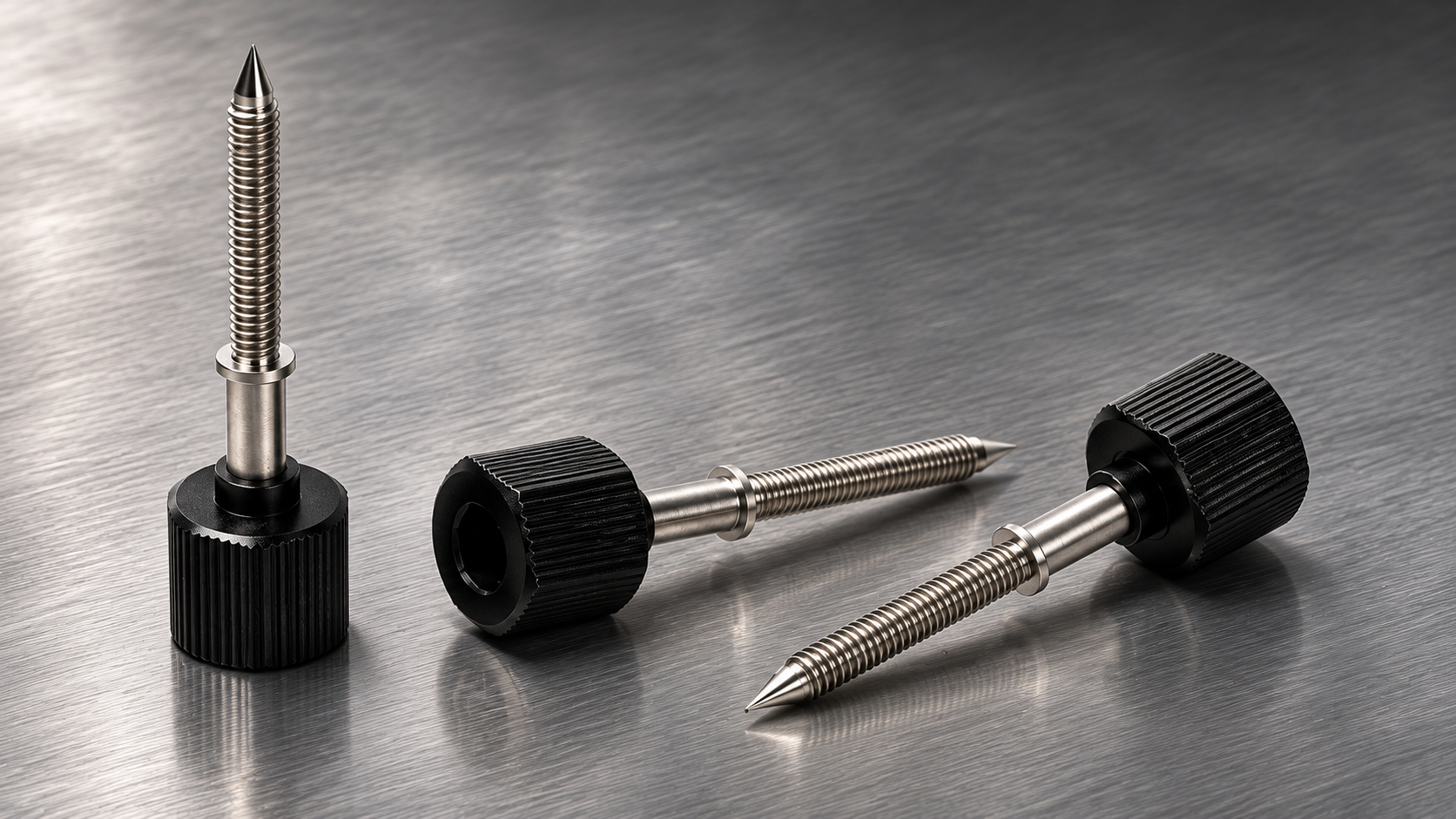
Choose a measurable characteristic that represents the actual function. It might be a position, gap or contact-related condition defined by the equipment designer. Measuring a convenient exposed shoulder is useful only if its relationship to the functional output is established. Otherwise, the assessment can repeat a measurement that does not answer the design question.
Write the characteristic with its datum, measurement direction and assembly state. State whether the reading is taken before or after any locking step. If the mechanism must carry a service load, decide whether that condition belongs in the assessment and who approves the method. Avoid a broad statement that the knob is repeatable without identifying what was repeated.
The NIST terminology discussion of repeatability distinguishes repeated measurements under the same conditions from results obtained after conditions change. Use that distinction when planning the evidence. It does not provide a product tolerance, sample size or acceptance limit for this TNHO component.
A person can stop when a knob feels firm without reaching an identical final position on every cycle. The relationship depends on the actual contact, assembly condition and operation. Do not use similar hand feel as proof of a numerical position tolerance. If hand tightening is the intended production method, assess it as an operation with observable output.
Specify the starting condition and the stopping instruction. Terms such as “light contact” or “finger tight” can be interpreted differently unless the equipment procedure defines them adequately. Ask the designer what condition the operator is meant to establish and how it will be checked. The assessment should test that instruction, not quietly replace it with an unrecorded laboratory technique.
Record any contact marks, movement of adjacent parts or unexpected resistance as observations, not automatic failure mechanisms. Their significance depends on the approved design. A pointed pin can be appropriate for one interface and unsuitable for another. Do not infer acceptable surface marking or holding performance from the product name.
Returning to a setting can involve approaching from one direction or reversing after overshoot. Those routes may not behave identically in a threaded mechanism. Define the intended procedure and keep it consistent during an initial assessment. If overshoot is relevant to real use, assess it separately rather than mixing both actions without a record.
Identify the starting position for each cycle and the movement performed before the final reading. Record whether the part is fully released, remains in contact or is reset against a separate reference. Different starting states can answer different questions. A repeated reading without a defined reset does not demonstrate that the mechanism can return to the setting after adjustment.
The site’s cone-point shaft-seat article provides complementary context on contact geometry for another pointed fastener. It does not establish the behavior of this knob-and-pin assembly. Use its distinction between geometry and application evidence when identifying what the proposed contact is expected to do.
Specify the actual parts, assembly revision, measurement method, operator procedure and acceptance owner before collecting results. The number of cycles, samples and operating conditions should be selected for the engineering question. This article supplies no universal count because a development comparison and a formal product qualification have different purposes.
Include a way to distinguish the measuring system’s variation from the mechanism’s behavior. A loose fixture, ambiguous datum or instrument that cannot resolve the relevant change can obscure the result. The CCOHS hand-tool design guidance provides complementary context on grip and hand operation. It supports considering how the knob is used, not assuming that a gripping feature establishes positioning capability. Measurement-process evaluation remains a separate requirement of the assessment.
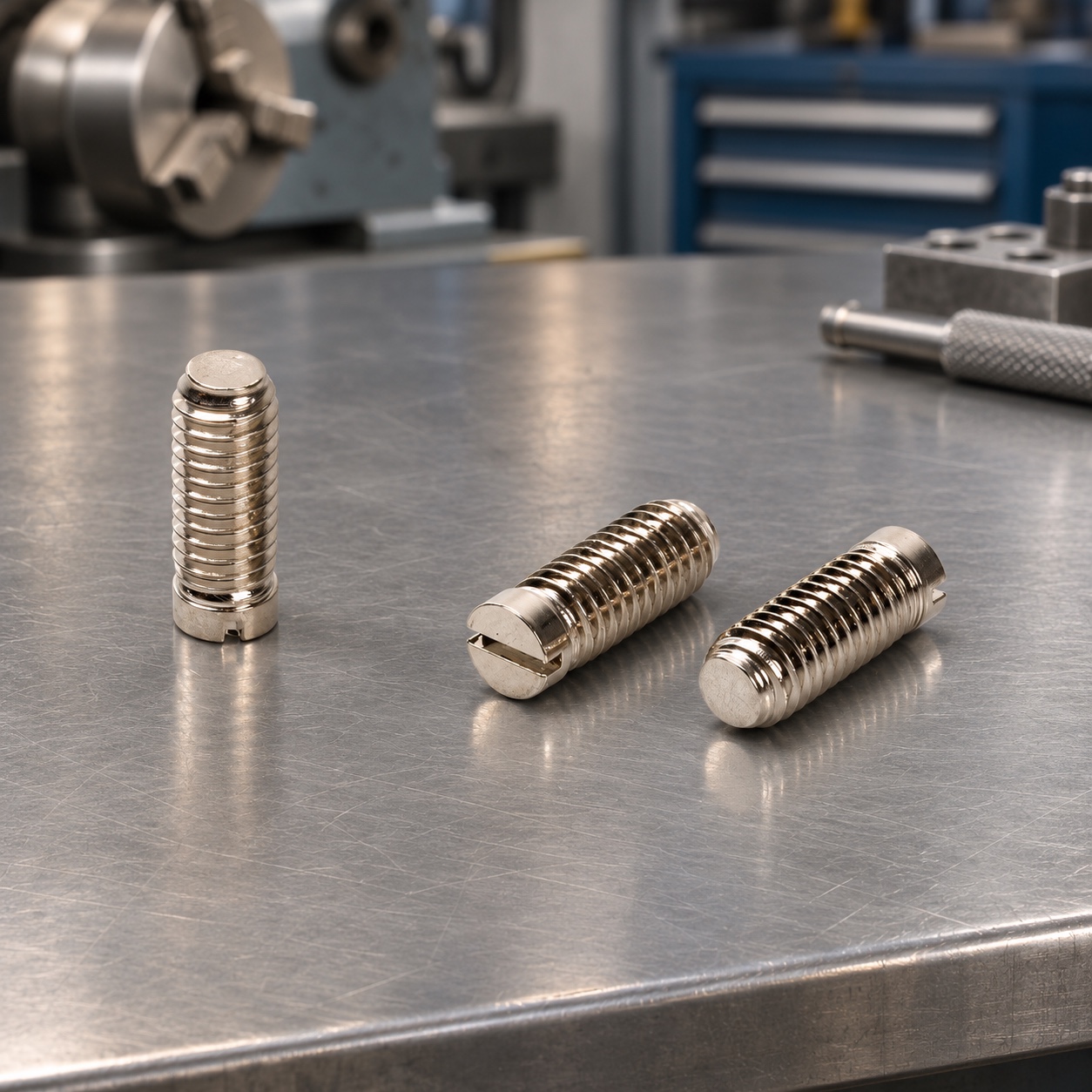
Keep individual readings and notes rather than reporting only a favorable average. If a result is excluded, record why and retain the original entry. Do not turn a development observation into a production performance claim without the required scope and approval. The illustrations in this article show loose components and no assessment being carried out.
This table organizes the required decisions. It intentionally leaves numerical requirements to the responsible designer and measurement plan. Complete it before comparing samples or changing the knob arrangement.
| Planning item | Question to answer | Record to retain |
|---|---|---|
| Functional output | What position or condition matters? | Characteristic, datum and assembly state |
| Reset operation | What happens between repeated settings? | Starting condition and movement sequence |
| Approach direction | Is the final setting reached consistently? | Direction and overshoot policy |
| Contact condition | What establishes the stopping point? | Approved operating instruction |
| Measurement | Can the method distinguish relevant changes? | Instrument, fixture and method identification |
| Operator scope | Is one person or several being evaluated? | Operator and condition records |
| Acceptance | Who defines a satisfactory result? | Approved requirement and decision owner |
Use separate records when changing an important condition. If a different operator, fixture or assembly version is introduced, note that change instead of adding the results to an undifferentiated pool. Clear records make an unfavorable result more useful because the actual conditions can be reviewed.
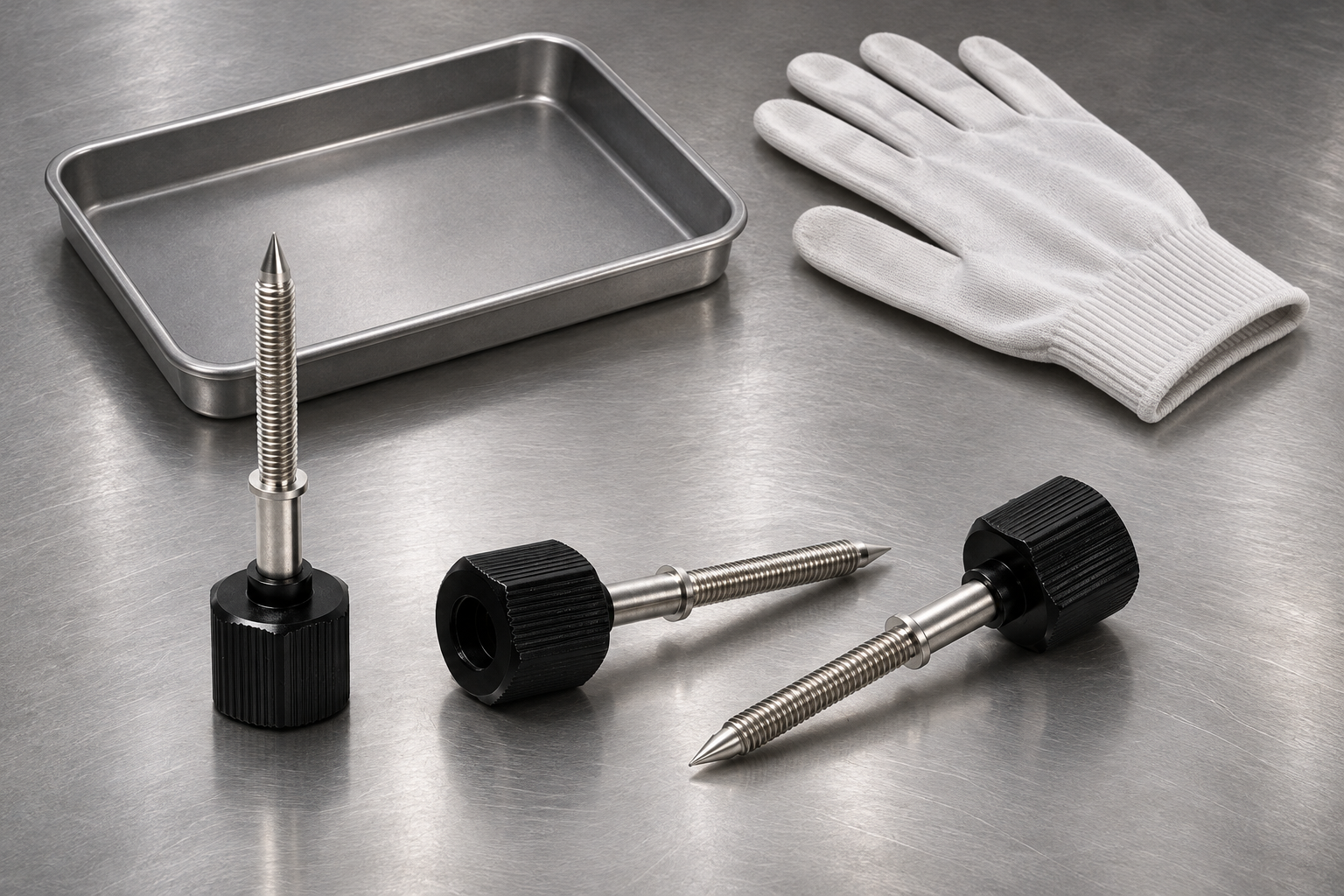
If the adjustment is followed by a locking operation, measure the relevant output at the stage that matters to the equipment. A setting that is consistent before locking may move when the lock is applied. The assessment needs to represent the released work instruction and final operating condition.
Likewise, check whether a cover, guard or nearby component changes how the hand reaches the knob. The site’s thumb screw glove-clearance guide discusses hand access around a different knurled product. That is useful context for identifying an operational change; it does not establish the repeatability of this pin.
Record the mounting condition and any support required during adjustment. If the assembly can move relative to the measurement reference, an observed position change may not belong solely to the threaded component. Avoid assigning a cause from the reading alone. Use controlled comparisons or a qualified investigation to distinguish the possible contributors.
A repeatable output can still be offset from the intended target. Conversely, an occasional reading near the target does not prove consistent return. Define both the target relationship and the allowed variation where the application requires them. Do not use the words accurate and repeatable as interchangeable marketing descriptions.
Report the actual conditions with the conclusion: the assembly revision, samples, operation, measurement method and relevant limitations. If only a short development assessment was performed, say so. Do not infer long-term wear, temperature performance or behavior under load from a small set of unloaded room-condition observations.
The bolt tightening sequence guide provides general background on staged assembly and the importance of an established final condition. Apply that principle when deciding which stage to measure. It supplies no tightening value or retention requirement for the knob and pin shown here.
Send the functional drawing, mating interface, intended adjustment procedure and the characteristic to be evaluated. Explain whether the question concerns hand operation, return position, locking movement or another defined issue. This is more answerable than requesting a “high precision knob” without an output requirement.
Ask the supplier to confirm the offered configuration against the drawing and identify any unverified feature. Keep material, finish and dimensional requirements explicit. The reference image supports visible-product correspondence, but it does not establish a formal model, tolerance class or tested capability. Record the approved configuration so that a future visual substitute does not inherit unsupported claims.
NPTEL’s IIT Kharagpur threaded-fastener lecture supplies mechanical background for understanding the threaded element in this arrangement. It is not a precision-adjustment demonstration and does not establish a TNHO performance rating. The assessment described above remains specific to the complete mechanism and its operating procedure.

No. Knurling provides a gripping surface. Consistent output depends on the whole mechanism, operating procedure, contact condition and measurement evidence, with an acceptance requirement defined for the application.
Use the stage that represents the required final condition. Where locking is part of normal operation, assess any relevant movement caused by that step and record the exact sequence.
No. Record operator and condition changes. They may answer a broader reproducibility question rather than a same-condition repeatability question, and should be interpreted with that distinction visible.
No such claim is made. The pictures are reference-based industrial illustrations of the visible product form. Numerical capability requires an approved assessment of the actual component and assembly.

 TNHO