Thermal desorption gas chromatography mass spectrometry (TD-GC-MS) can investigate volatile and semi-volatile material released under a defined heating and collection procedure. For fasteners, it may support a comparison of surface residues, packaging related emissions, or a change after cleaning. The result depends on sample collection, temperature history, trapping, transfer, separation, and identification. It does not describe every material on the screw. A useful test therefore defines which released fraction matters, includes appropriate blanks, and separates tentative compound identification from validated quantitative results.
This guide treats TD-GC-MS as a targeted investigation tool. It does not claim that a TNHO fastener emits a particular substance or that a general laboratory capability is a product certification. Select the procedure around the engineering question and the actual sample, not around an instrument name alone.
A useful question could be whether two stored batches release different organic compounds under the same controlled procedure, or whether a cleaning change affects a selected residue fraction. Specify the suspected process stage and the decision the evidence must support. An unexplained list of compounds from an unknown heating program is much less informative.
The University of Warwick GC-TOF-MS capability describes thermal desorption tubes and headspace related approaches. The Sheffield Hallam University thermal analysis facility describes automated thermal desorption coupled with GC-MS. These descriptions demonstrate possible analytical routes, but their listed applications must not be mistaken for a validated fastener procedure.
For the TNHO hex socket screw, the head, socket, and thread offer different surfaces and possible collection challenges. Product appearance establishes no emission profile or cleanliness limit. The laboratory should confirm which sampling route is suitable for the supplied component and the required decision.
A laboratory may propose heating a compatible sample directly, collecting released material from a chamber, or transferring a collected fraction to a desorption tube. These arrangements do not necessarily sample the same material with the same efficiency. Ask which route is proposed and what the result actually represents.
The dimensions and mass of a metal component can affect compatibility with a sampling arrangement. A screw that does not fit a tube may require a different collection route. Do not cut it without considering whether cutting introduces contamination, changes the available surface, or alters the residue being investigated.
If the sample is collected by wiping or extraction before analysis, record that additional step. The result then describes the collected fraction under that procedure, not every residue originally present on the whole part. Collection efficiency and blank contamination become part of the method, not incidental details.
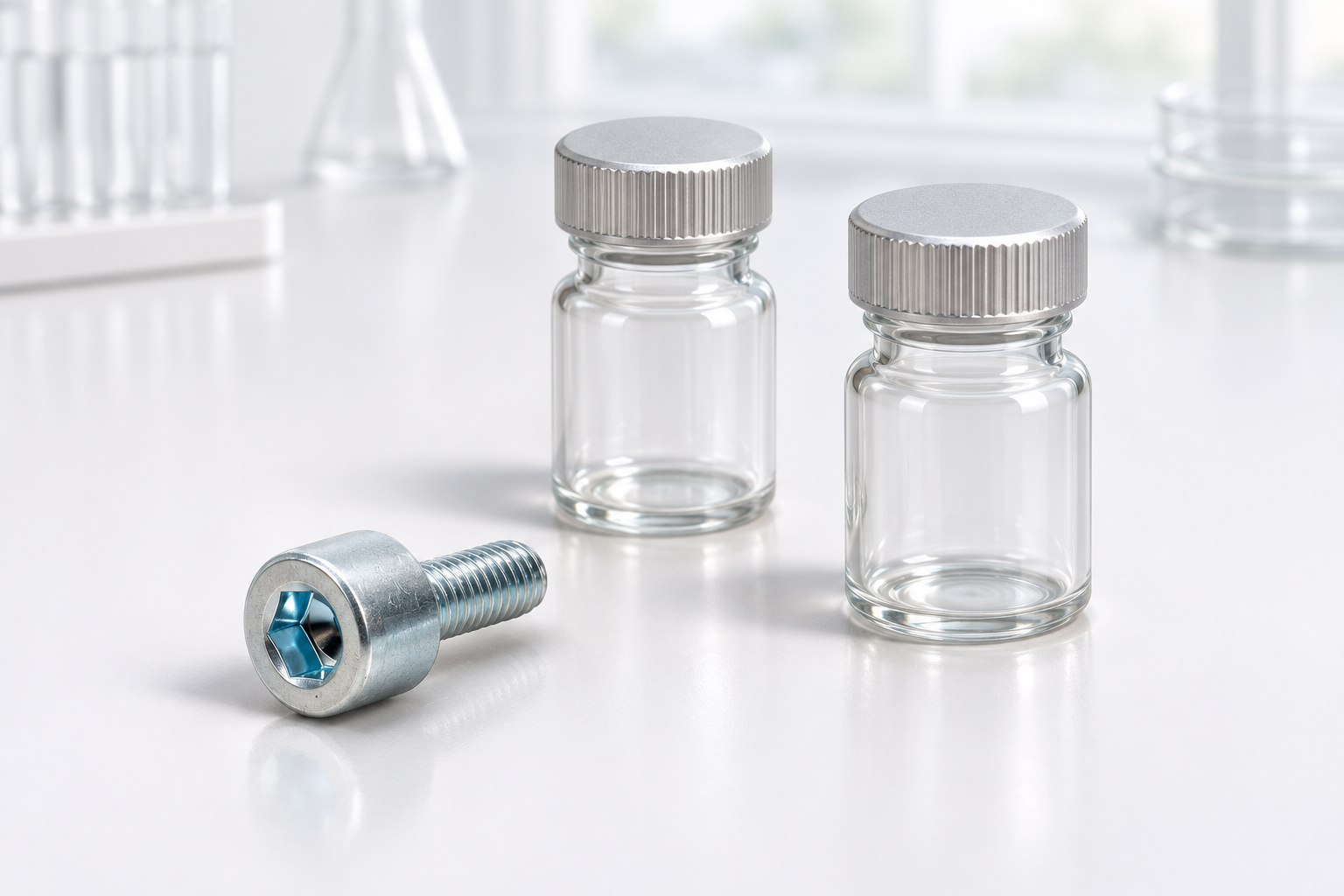
Volatile material can change during storage, and a sample can acquire material from its container or handling. Record when the part was collected, how it was stored, whether packaging was changed, and which surfaces were touched. Use a container selected with the laboratory rather than assuming any sealed bag preserves the evidence.
Keep questioned and comparison samples under matched conditions where practical. A freshly unpacked sample and a part left exposed on a bench for several days do not provide a clean process comparison. If their histories differ, retain that difference in the report and avoid attributing everything to manufacturing.
Packaging and field blanks can be especially useful. A container blank, unused collection medium, and relevant packaging reference may reveal backgrounds that otherwise look like part residues. The exact control set should fit the sampling route. Do not collect extra controls without explaining which alternative each one is intended to examine.
The temperature and duration used to release material shape the measured fraction. A more severe program may release additional material, but it can also cause changes or decomposition. It should not automatically be described as revealing the original surface composition more completely.
Ask the analyst how the selected conditions relate to the objective. A controlled comparative screen may use one reproducible procedure, while an investigation of a particular service condition may need a different design. The laboratory must assess compatibility and safety for the actual sample and collection system.
Distinguish thermal desorption from a deliberately pyrolytic experiment. Decomposition products can provide useful information in the right method, but they should not be labeled as substances proven to have existed unchanged on the original part. The report should identify when interpretation concerns released compounds, possible precursors, or products formed during the experiment.
Collection media, transfer paths, and instrument conditions can favor some compounds over others. Some material may not be collected efficiently, may be lost during transfer, or may fall outside the chosen analytical range. A negative result therefore needs a stated method scope rather than a claim that the part contains no residue.
If the purpose is comparison, consistent collection and analysis can still provide useful evidence. Confirm that samples were handled with the same procedure and that blanks were examined appropriately. If one sample requires a changed method because of overload or compatibility, document the change before comparing peak patterns.
For quantitative work, the method needs appropriate standards, recovery assessment, and a reporting basis. A peak area from an exploratory run is not automatically a mass of residue per screw. Define whether the result is reported per part, per collected sample, per surface area, or on another justified basis.
GC separates components under the selected procedure, and the mass spectrometer provides information that supports identification. A library search can suggest candidates, but a high match score alone may not resolve every alternative. Retention information, reference standards, and spectral review can provide additional support.
Request a clear distinction between tentative identifications and confirmed targets. If the analysis is exploratory, tentative findings can guide the next experiment without being presented as final proof. If a named compound will drive an acceptance or compliance decision, agree on the necessary confirmation before testing.
Do not assume equal peak areas mean equal quantities of different compounds. Instrument response can vary, and calibration is needed for a quantitative comparison. A chromatogram can support a qualitative pattern comparison while remaining insufficient for an absolute amount claim.
| Planning item | What to define | Error avoided |
|---|---|---|
| Sampling route | Direct compatible sample, chamber collection, tube, or collected fraction | Treating different sampled fractions as equivalent |
| Handling | Collection time, storage, container, and contact history | Attributing handling background to production |
| Blanks | Appropriate container, medium, field, and instrument controls | Naming background compounds as product residues |
| Thermal program | Conditions and their relationship to the objective | Confusing released material with decomposition products |
| Identification | Tentative versus confirmed assignments | Treating a library suggestion as unique proof |
| Quantification | Standards, recovery, units, and reporting basis | Converting exploratory peak area into an unsupported amount |
| Decision scope | Comparison, investigation, or specified acceptance | Creating an acceptance limit after results arrive |
FTIR residue investigation can support comparison of suitable collected or accessible material through a different molecular measurement. It may examine material that the selected thermal procedure does not release. The methods should be combined around a defined question rather than expected to produce identical lists of compounds.
SEM-EDS fastener analysis can add morphology and local elemental context for a visible deposit. It does not directly replace a volatile compound analysis. A component may carry both inorganic and organic material, and different methods can describe different fractions of that surface.
A contact angle study can examine a wetting change under controlled conditions. It does not establish which volatile compound caused that change. Use controlled process comparisons to connect chemical and functional observations when that relationship matters.
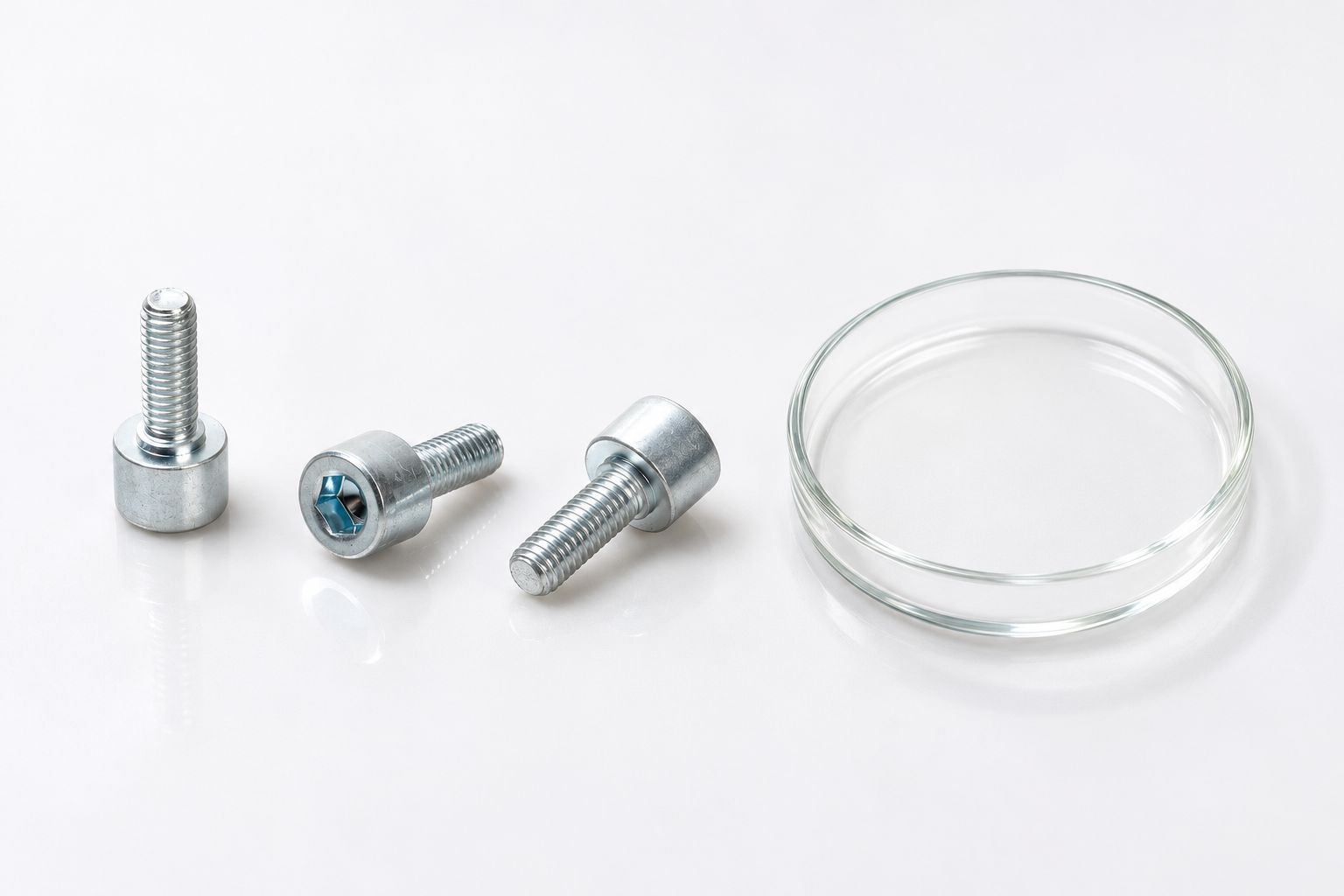
Detecting a compound in a released fraction does not show when it reached the part. Manufacturing fluids, packaging, storage, assembly, and service may all deserve investigation. Compare relevant references and process records before assigning a source. Similarity can support a hypothesis without proving the direction of transfer.
For a lot comparison, define independent component samples separately from repeat instrument injections. Repeating the analysis of one collected sample helps evaluate analytical consistency, but it does not establish shipment prevalence. The sampling plan should reflect the decision and the expected variation.
Retain the collection record, blanks, thermal program, chromatograms, identification evidence, calibration information, and residual uncertainty. A useful final summary states which fraction was examined, what differed, and what follow up would resolve the remaining question. It should not rename an exploratory screen as a complete cleanliness certificate.

The Khan Academy lesson explains gas chromatography and interpretation of separated peaks. It supports the separation principles used within GC-MS. It does not demonstrate thermal desorption of a TNHO fastener or establish a product specific analytical procedure.
No. It examines material collected and released under the chosen procedure and within the method’s analytical scope. Nonvolatile, poorly transferred, or otherwise unsuitable material may require another method.
A library match can support a tentative identification. Confirmation may require suitable retention information, reference standards, and additional review depending on the decision and method.
Only when the sampling, calibration, recovery, and reporting basis support that quantity. An exploratory peak area alone does not establish an absolute mass per component.
They help evaluate whether observed compounds may relate to packaging or collection materials. Similarity supports comparison but must be combined with handling history and controlled evidence before assigning a source.

 TNHO