Time of flight secondary ion mass spectrometry (ToF-SIMS) can investigate localized surface residues by measuring secondary ions released from a sample and mapping selected ion signals. For fasteners, its main attraction is the combination of chemical information and location. Its main interpretation challenge is that ion signals depend on fragmentation, the surrounding material, surface condition, and measurement settings. A useful investigation therefore preserves the original surface, includes meaningful controls, and reports the evidence behind proposed assignments. A bright chemical map alone does not prove a contaminant’s identity, quantity, or source.
Use this method when the unanswered question involves a small region or a surface distribution that a bulk residue measurement could miss. Do not assume that every stain requires ToF-SIMS, or that a sensitive instrument automatically provides a complete contamination diagnosis. The specimen and experiment still have to fit the decision.
A localized residue question has two parts: what information is needed about the material, and where it is located. A screw head, socket, thread, and contact face can have different histories. Give the laboratory a photograph identifying the region that matters and explain whether the concern is an isolated deposit, a distributed film, or a difference between lots.
The NIST ToF-SIMS description explains that the technique can provide elemental, isotopic, and molecular information from solid surfaces. The Henry Royce Institute ToF-SIMS facility description provides independent context for the method. Neither source establishes that a particular product has been measured or that every chemical question can be resolved.
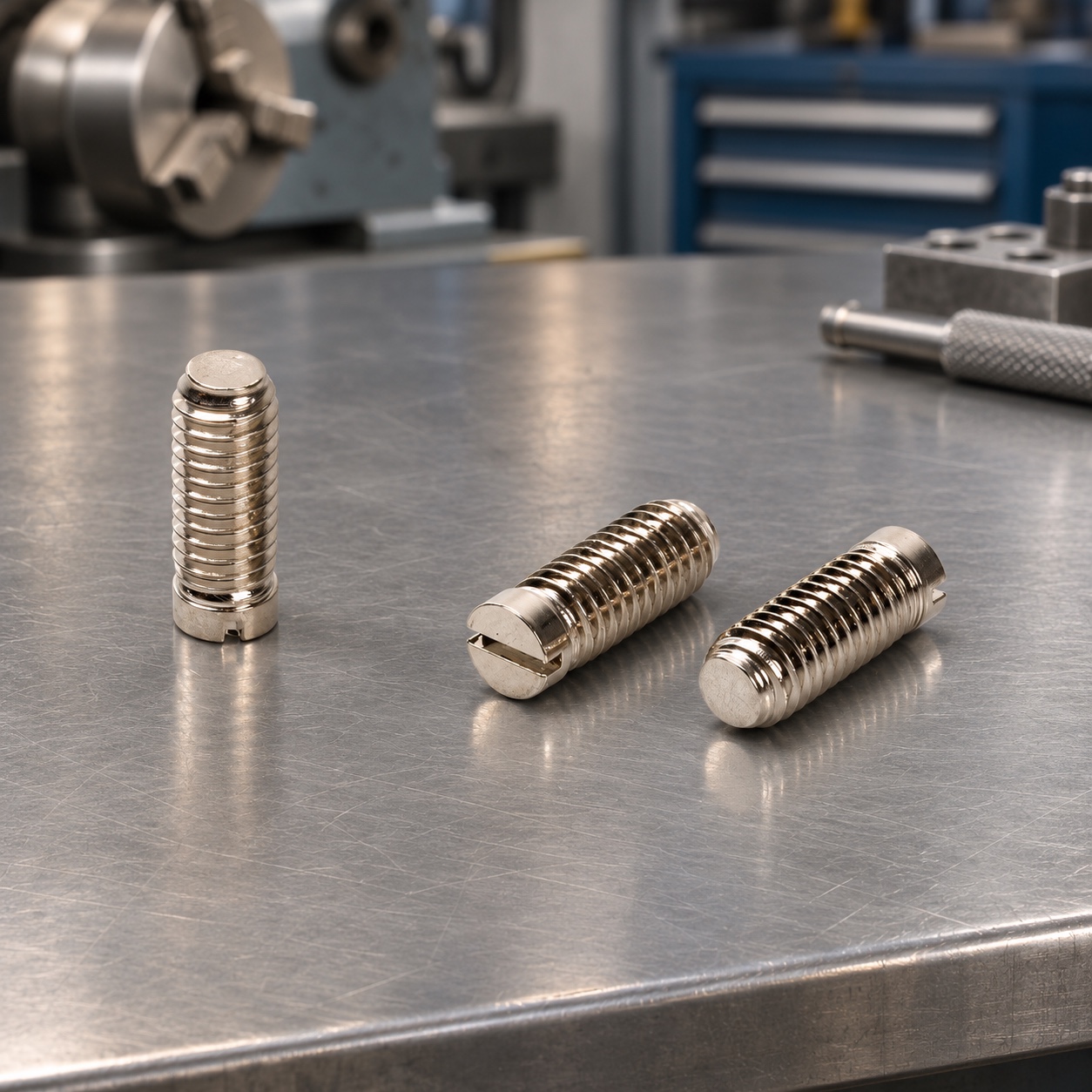
For the TNHO hex socket screw, the visible socket and short threaded shaft show why access needs review. The analytical region must be accessible under the instrument’s mounting and geometry constraints. The clean reference based illustrations here show specimen planning rather than an actual residue finding.
If a film or deposit is the subject of the investigation, undocumented cleaning can remove it or introduce a different residue. Discuss handling before unpacking, wiping, or cutting the part. Keep questioned samples separate from accepted references and record every material that contacts the analytical region.
Packaging can be an important control. A residue may come from manufacturing, storage, handling, assembly, service, or sample preparation. A packaging reference and a suitable blank can help evaluate some of those alternatives. They do not automatically prove a transfer route, but they make the investigation more discriminating than comparing one unknown spectrum with a library.
Retain an untreated part when possible. If the laboratory later proposes washing or sputtering, the original condition remains available for confirmation. Send handling notes with the sample so the analyst does not mistake a preparation artifact for the feature that originally motivated the test.
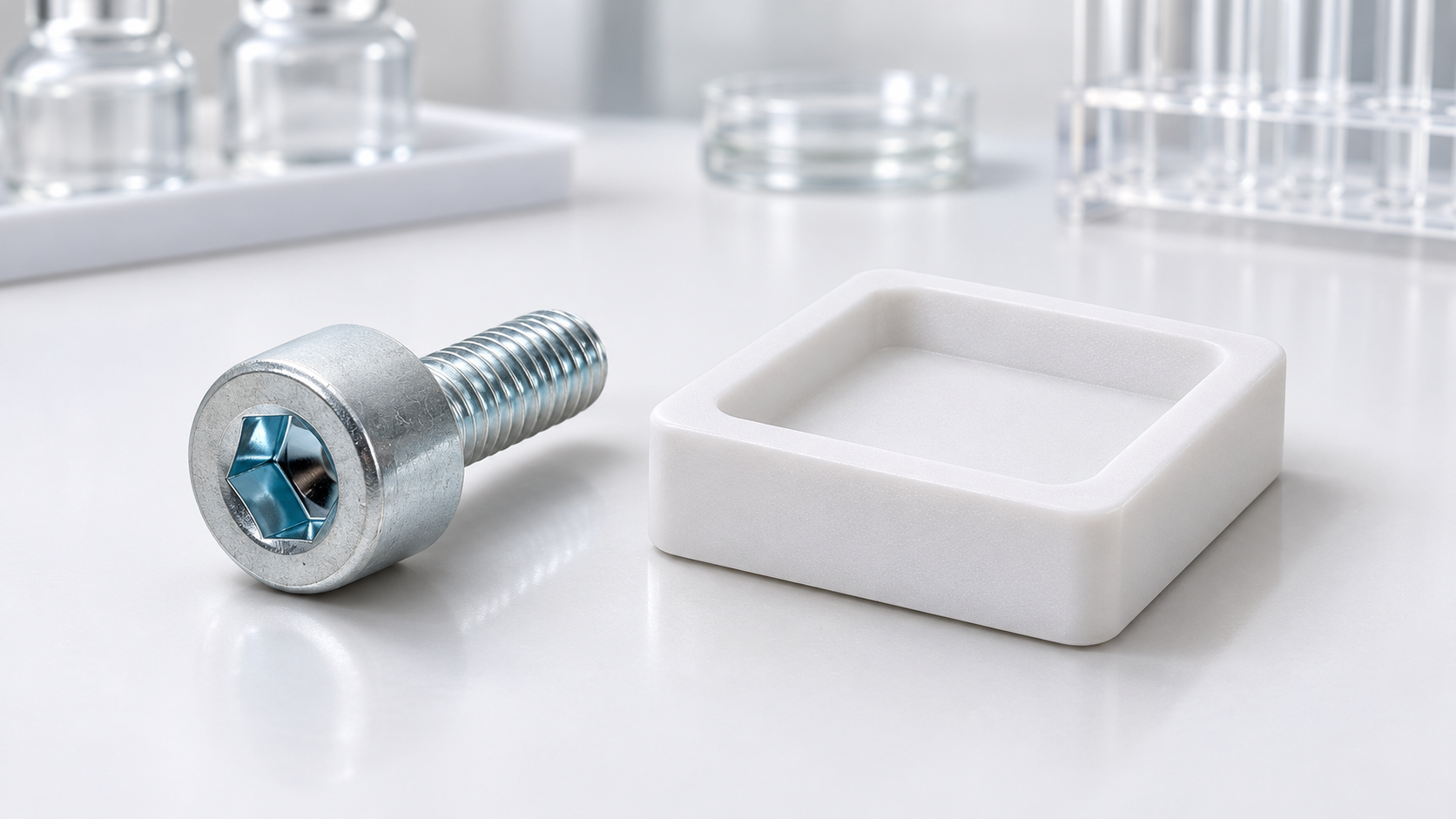
The laboratory must assess the component size, surface shape, vacuum compatibility, electrical behavior, and region access. A curved thread or recessed socket may create a more difficult experiment than a flat reference surface. Do not cut or flatten the part before discussing whether that preparation could alter the evidence.
If a collected residue is proposed instead of the intact component, record how it was collected and what location it represents. A wipe or extraction can combine information from several regions and introduce its own background. A localized map of an intact surface and a spectrum from collected material answer different questions.
Use a witness coupon only when its relationship to the product is justified. It may help examine a controlled process variable, but it does not preserve the same geometry, handling, or service history as a screw. The final report should state whether its findings apply to the submitted part or to a separate reference specimen.
ToF-SIMS measures ions characterized by mass to charge information. A signal can correspond to an element, a molecular ion, or a fragment, depending on the material and acquisition conditions. Several possible species may need to be considered. A proposed assignment should be supported by a coherent set of evidence rather than one convenient peak.
Ask how mass calibration, spectral resolution, isotope patterns, and reference samples support the interpretation. The answer can be qualitative when the purpose is exploratory identification. What matters is that the report distinguishes a tentative assignment from a confirmed comparison under a validated procedure.
The surrounding material can affect ion yield. Consequently, signal strength is not automatically proportional to surface concentration across different matrices. A stronger signal on one specimen may require careful interpretation before it is described as more contamination. A quantitative claim needs an appropriate calibration and a stated basis.
A map displays a chosen signal or processed combination of signals across the measured field. Its colors depend on the selected scale and processing. Two maps shown with independently adjusted color scales can appear similar even when their underlying signals differ, or appear different because their display settings differ.
Request a clear description of the mapped ions, field of view, spatial sampling, processing, and display scaling. Link each map to an overview image so that the reader knows which part of the screw is shown. A visually striking patch is not a complete interpretation unless the corresponding spectral evidence supports the chemical assignment.
Document regions with insufficient signal or ambiguous interpretation. Do not fill them with an inferred chemical identity merely to produce a complete colored image. Topography and geometry can affect observed distributions, so evaluate whether a pattern follows a true material difference or the measurement arrangement.
A sputter depth experiment changes the sample as it proceeds. The ion beam can remove material and alter molecular information. A depth axis also needs a justified relationship between sputtering and physical depth. The experiment should therefore be designed for a depth question, not added automatically after a surface map.
If the purpose is to identify an as received molecular residue, preserve the original surface information first. Explain which results come from the initial surface and which come after sputtering. A deeper profile may provide useful additional evidence while no longer representing the original surface chemistry.
When comparing profiles, keep the analytical conditions and specimen history controlled. Different sputter behavior, roughness, and matrix changes can complicate a simple layer interpretation. The laboratory should explain the applicable limitations rather than presenting a reconstructed chemical volume as an undisturbed photograph of the coating.
| Investigation item | Useful evidence | Limit to state |
|---|---|---|
| Localized residue | Spectrum and map from an identified component region | The observation applies to the sampled field |
| Proposed molecular assignment | Multiple consistent features and suitable references | Fragment signals may have alternative explanations |
| Comparison between lots | Matched geometry, handling, acquisition, and processing | Ion yield can depend on the matrix |
| Packaging hypothesis | Packaging reference and handling blanks | Similarity alone does not establish transfer direction |
| Depth distribution | Documented sputtering and depth conversion | Profiling can alter the material |
| Quantitative amount | Validated calibration for the relevant system | Map brightness is not a universal concentration scale |
| Root cause | Analytical evidence combined with process history | Chemical identity alone does not identify responsibility |
SEM-EDS analysis can add morphology and local elemental context. It does not provide the same molecular information as ToF-SIMS, and its sampling behavior differs. Compare locations carefully so an apparent disagreement is not simply a result of measuring different material.
FTIR residue investigation can support another molecular comparison when enough suitable material is available. A bulk or collected residue spectrum may complement a localized surface map, but it should not be described as a measurement of the same microscopic field unless that relationship is established.
A contact angle comparison examines wetting under a defined procedure. It can help evaluate a functional surface change, but it does not identify the same chemical information. Use it to address a wetting question rather than as automatic confirmation of a named residue.
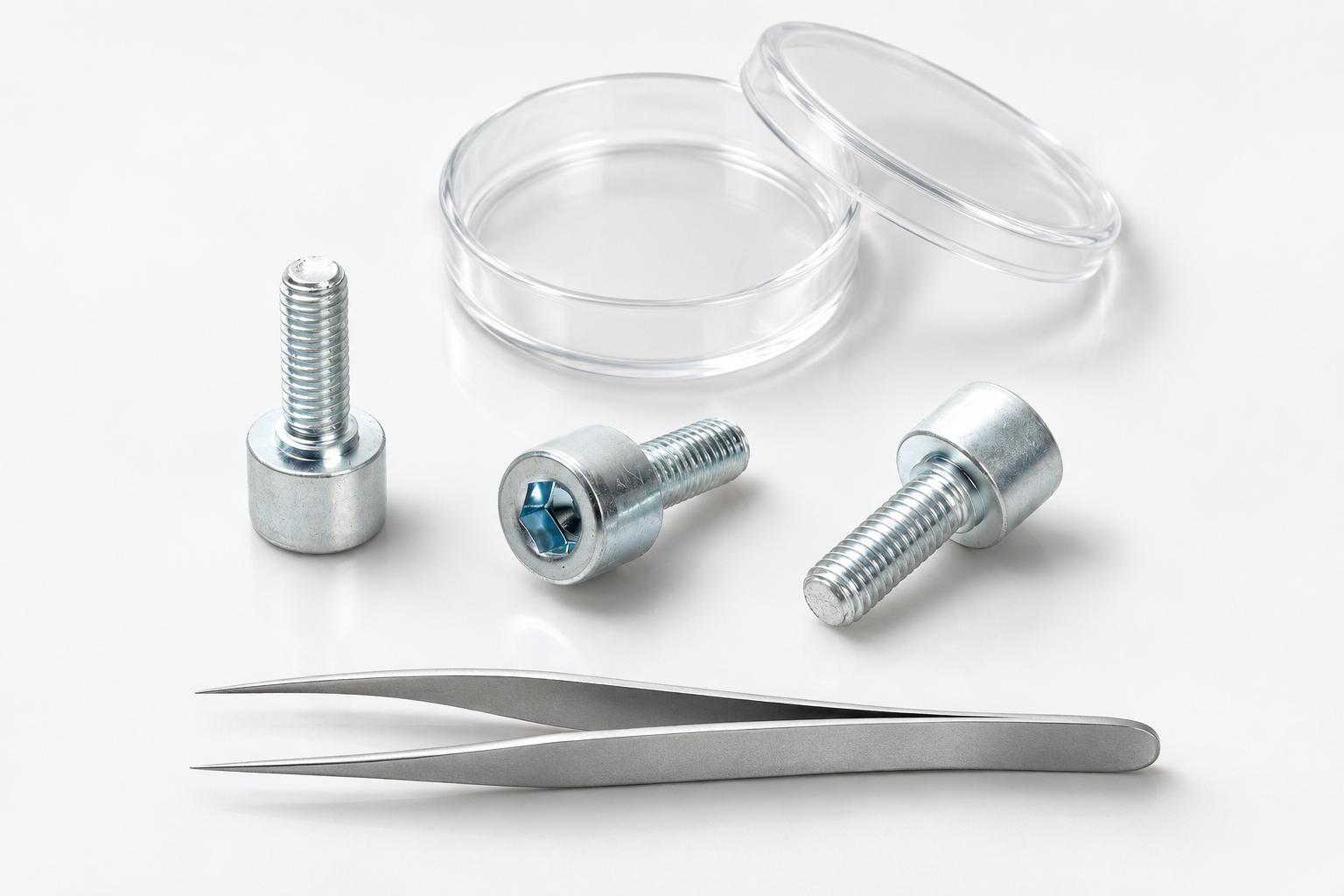
Send the product identity, region photographs, process and handling history, the observation that triggered testing, and the decision that needs support. Include matched comparison samples where possible. Ask the laboratory to confirm geometry and propose a sequence that preserves evidence for follow up work.
Agree on reporting certainty, map scaling, raw data retention, blanks, and any quantitative requirements before analysis. If the method can only support a qualitative comparison, state that outcome accurately. A well controlled comparison can guide the next process experiment without claiming a complete chemical identification or source attribution.
Keep the original spectra, maps, settings, specimen photographs, and handling records together. A short final purchasing note can then explain what differed, what evidence supports that finding, and what remains unresolved. This is more useful than a map presented without enough context to reproduce its meaning.

The Northwestern NUANCE presentation explains the principles and applications of ToF-SIMS. It is educational background, not a TNHO testing record. The specific fastener experiment still requires a suitable specimen, reference plan, and interpretation procedure.
No. Signal intensity depends on acquisition, processing, display scale, and the surrounding material. Quantitative concentration requires a suitable calibration and method for the relevant system.
Not necessarily. Fragmentation and overlapping assignments can create alternatives. A useful interpretation considers multiple features, mass calibration, and appropriate reference evidence.
Agree with the laboratory first. Washing may remove the residue being investigated or introduce a new background. Preserve an untreated sample and document all handling.
It can support comparison with possible sources, but source attribution also needs process history, blanks, and controlled evidence. A chemical similarity alone does not prove a transfer path.

 TNHO