In a flange bolt vs hex bolt comparison, the flange bolt integrates a washer-like bearing surface beneath the hex head, while a standard hex bolt has a smaller head bearing face and may use a separate washer when the joint needs more bearing area or surface protection. The flange can reduce part count and speed assembly, but it is not automatically stronger and it cannot replace every washer function. Selection depends on hole size, mating material, edge distance, surface finish, installation friction, tool clearance, joint movement, and service requirements.
A hex flange bolt has a hex wrenching head and an integral circular flange. The flange increases the bearing diameter without adding a separate part. A standard hex bolt has a conventional hex head whose underface bears on the joint or on a washer. Flange bolts may have a smooth bearing face or serrations; those variants should not be treated as equivalent because serrations change surface interaction and tightening friction.
Both product families can be fully or partially threaded depending on the standard and length. Compare the actual drawing rather than assuming the same thread coverage. The illustrated TNHO references are fully threaded, so the article images preserve that geometry. A project requiring a smooth shank across a shear plane should specify it separately.

The larger bearing diameter of a flange can spread clamp load over more area than a plain hex head. That may reduce local compressive stress in the mating material, but only when the flange is fully supported. A flange overhanging a slot, large hole, chamfer, radius, or edge can bend or load the surface unevenly. A separate washer can be selected with a larger outside diameter or special hardness when the integrated flange is insufficient.
Soft aluminum, polymers, wood, thin sheet, coatings, and slotted joints deserve particular attention. Local embedment or creep reduces clamp load even if the bolt does not rotate. Evaluate the bearing material and geometry, not just the steel fastener. A hardened washer may protect a soft or damaged surface, while an ordinary thin washer may dish and provide little benefit.
| Decision factor | Hex flange bolt | Hex bolt with separate washer | Validation question |
|---|---|---|---|
| Part count | One integrated fastener | Two components to feed and assemble | Does automation or service benefit from a captive bearing feature? |
| Bearing diameter | Fixed by the flange design | Washer outside diameter can be selected | Is the full bearing area supported around the hole? |
| Surface protection | Smooth flange may spread load; serrations may mark | Washer can isolate wrenching and distribute contact | What surface damage, coating removal, or rotation is permitted? |
| Hole or slot bridging | Limited to flange dimensions | Special washer can bridge a larger opening | Does the selected bearing part cover the worst-case opening? |
| Torque-tension behavior | Integral bearing finish controls underhead friction | Additional interfaces and washer finish affect friction | Has preload been correlated with the exact production stack? |
| Replacement service | Requires the correct flange geometry | Washer and bolt can be replaced independently | Can maintenance reliably identify and restore the approved configuration? |
The table is a selection framework, not a load or torque chart. Dimensions and mechanical requirements must follow the governing standard or controlled drawing.
Sometimes, but equivalence must be demonstrated. Compare bearing diameter, thickness, hardness, flatness, hole coverage, edge clearance, wrench access, thread length, grade, finish, and the function of the original washer. A washer might provide electrical isolation, sealing, spring action, controlled hardness, alignment, tab locking, or protection against a slot. An ordinary flange does not reproduce those functions.
If the original washer merely distributes load over a compatible flat surface, an appropriately sized smooth flange may simplify assembly. If the washer rotates during tightening while the flange does not, or vice versa, the friction system changes. Do not reuse the old torque value without confirming achieved preload.
A smooth flange provides a broad bearing surface. A serrated flange adds radial teeth intended to engage the mating surface and resist reverse rotation. Teeth can damage paint, plating, soft metal, or polymer and may produce inconsistent friction on mixed surfaces. They can also compromise corrosion protection by cutting a coating.
The distinction should appear in the part number and drawing. Do not accept “flange bolt” as a complete description. If surface marking is prohibited or the joint is reused, define the acceptable bearing face and locking method. A plain flange combined with a qualified prevailing-torque nut, adhesive, or other retention approach may be more appropriate, depending on the service environment.
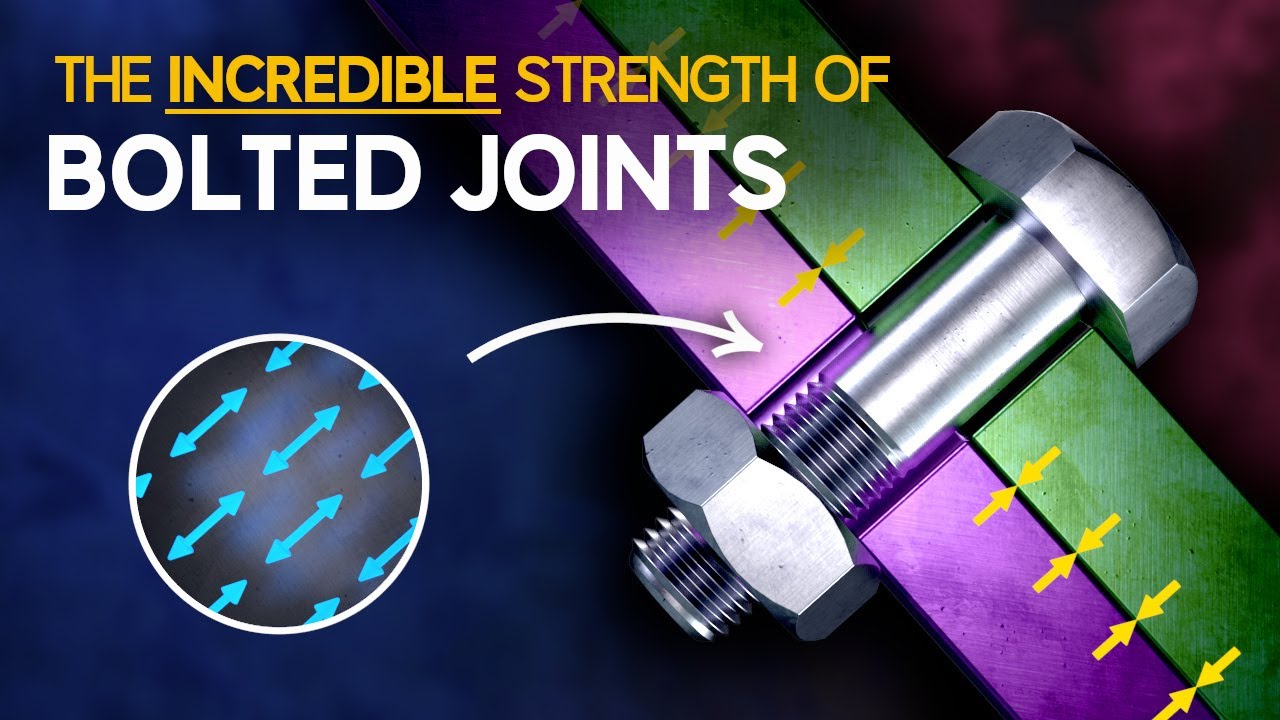
The bolt holds a joint through tension created during tightening. Applied torque is divided among thread friction, underhead or washer friction, and useful bolt stretch. Changing from a washer system to an integral flange can therefore change preload at the same wrench setting. Plating, lubricant, roughness, flange diameter, washer hardness, and tightening direction all matter.
The NASA Fastener Design Manual provides engineering background on preload, joint stiffness, fatigue, and torque-tension variability. Use a validated installation method for the exact bolt, nut or tapped hole, coating, and bearing surface. Critical joints may need direct tension verification or production correlation rather than a generic torque table.
This independent explainer shows why preload and joint stiffness dominate bolted-joint performance. It does not prescribe a torque for either head style.
The integral flange increases the radial envelope beneath the hex. Confirm that it clears ribs, walls, terminals, formed edges, weld beads, and nearby hardware. A socket usually engages the hex above the flange, but some sockets have chamfers or outside diameters that interfere with a recessed location. Model or trial the actual tool.
In automated assembly, eliminating a loose washer can reduce feeders, missed components, and cycle time. However, the fastener still needs reliable orientation, run-down, seating detection, and error proofing. If a washer is retained for a special function, a captive washer screw or preassembled fastener may achieve part control without changing the bearing design.

A bearing component needs continuous support. Compare the minimum overlap between the flange or washer and the maximum hole, slot, or edge position. Include hole location tolerance and flange outside-diameter tolerance. When a fastener sits near an edge, a larger bearing diameter may reduce remaining ligament or interfere with a bend.
Thin sheet may dish under clamp load. A washer with controlled thickness and hardness can sometimes distribute load more effectively than a thin flange, while a purpose-designed flange can outperform an undersized washer. Analyze the actual contact and validate with representative parts. For a slotted adjustment joint, consider whether the bearing surface must slide during setup and whether serrations would prevent adjustment or scar the panel.
Both systems create crevices where moisture can collect. Specify compatible materials and finishes, and account for coating damage during tightening. A washer adds two contact interfaces and can trap liquid, but it can also isolate dissimilar materials when made from an approved insulating material. A steel flange touching aluminum may need a complete corrosion-control system.
Do not treat a flange as a sealing washer. Liquid or gas sealing normally requires a defined gasket geometry, surface finish, compression range, and leak test. Likewise, electrical bonding must be validated for current, contact resistance, coating, vibration, and aging. Visible metal contact is not sufficient evidence.
Define thread size and class, length datum, thread coverage, head and flange dimensions, bearing-face type, material, property class or grade, heat treatment, finish, lubrication condition, marking, documentation, inspection, and traceability. For a bolt-and-washer system, specify the washer separately, including inside and outside diameters, thickness, hardness, material, finish, and any special function.
Provide the joint stack, hole or slot geometry, surface material, tool access, installation method, target preload basis, service environment, and reuse policy. TNHO’s custom hex and flange bolt product family shows related geometries. The quotation and approved drawing define the actual configuration. The hex bolt grades guide helps compare mechanical designations, while the bolt grip length guide addresses stack and thread positioning.
Incoming checks should cover thread, length, head dimensions, flange diameter and thickness, bearing-face condition, finish, markings, and required mechanical documentation. Confirm that the flange is not warped and that the underhead transition does not prevent seating. For a washer system, inspect both components and verify the washer cannot be omitted in the process.
When converting designs, assemble production-representative joints. Measure or correlate preload, inspect surface damage and embedment, check tool access and cycle time, and run applicable vibration, thermal, corrosion, or service testing. The FAA AC 43.13-1B is a general reference for accepted hardware practices in aircraft maintenance; application-specific engineering and approved instructions remain controlling.
Not because of the flange alone. Strength depends on diameter, material, grade, heat treatment, thread, engagement, preload, and joint geometry. The flange mainly changes the bearing interface and part count.
No. It may replace a washer used only for ordinary load distribution, but not necessarily a washer used for sealing, insulation, locking, spring action, slot bridging, controlled hardness, or surface protection.
Do not assume so. The underhead friction system changes when a washer is removed or the bearing diameter and finish change. Validate achieved preload with the exact production fastener, surface, coating, and lubricant condition.
A separate washer is useful when the joint needs a larger bearing diameter, controlled hardness or thickness, a special material, a replaceable wear surface, slot coverage, sealing, insulation, or another function that the integral flange does not provide.

 TNHO
TNHO