Hex flange nuts used in electrical fastening still need seat and clearance inputs on the RFQ; an electrical category label does not establish conductivity or joint performance.
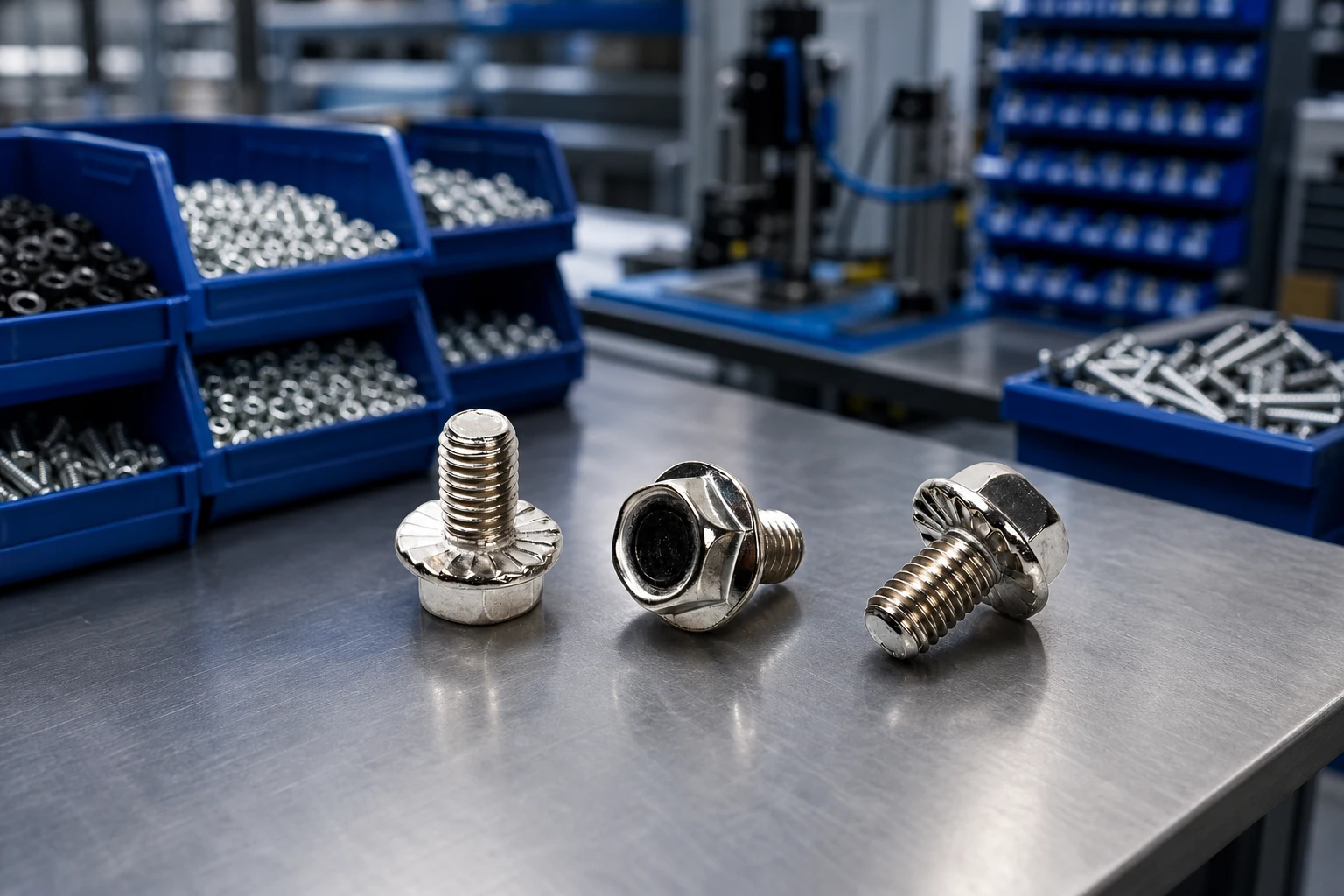
Identify the electrical assembly revision, the flange seat shown for the nut, and the approval owner. The phrase electrical fastening describes buyer search language; it is not evidence of conductivity, insulation, or short-circuit behavior for any nut.
Keep confirmed seat notes separate from open wrench-access questions.
Capture flange seat, wrench envelope, neighboring conductors or barriers, and install sequence without inventing electrical ratings.
| Fastening input | What to record | Send with quote |
|---|---|---|
| Assembly revision | Drawing controlling the hex flange nut joint | Yes |
| Flange seat callout | Seat diameter or face note if shown | Yes |
| Wrench / socket envelope | Clearance for hex drive around barriers | Yes |
| Neighbor constraints | Conductors, barriers, or covers near the flange | Yes |
| Install sequence | When the nut is tightened relative to wiring steps | Yes |
Do not fill blanks with conductivity, torque, material, or corrosion claims.
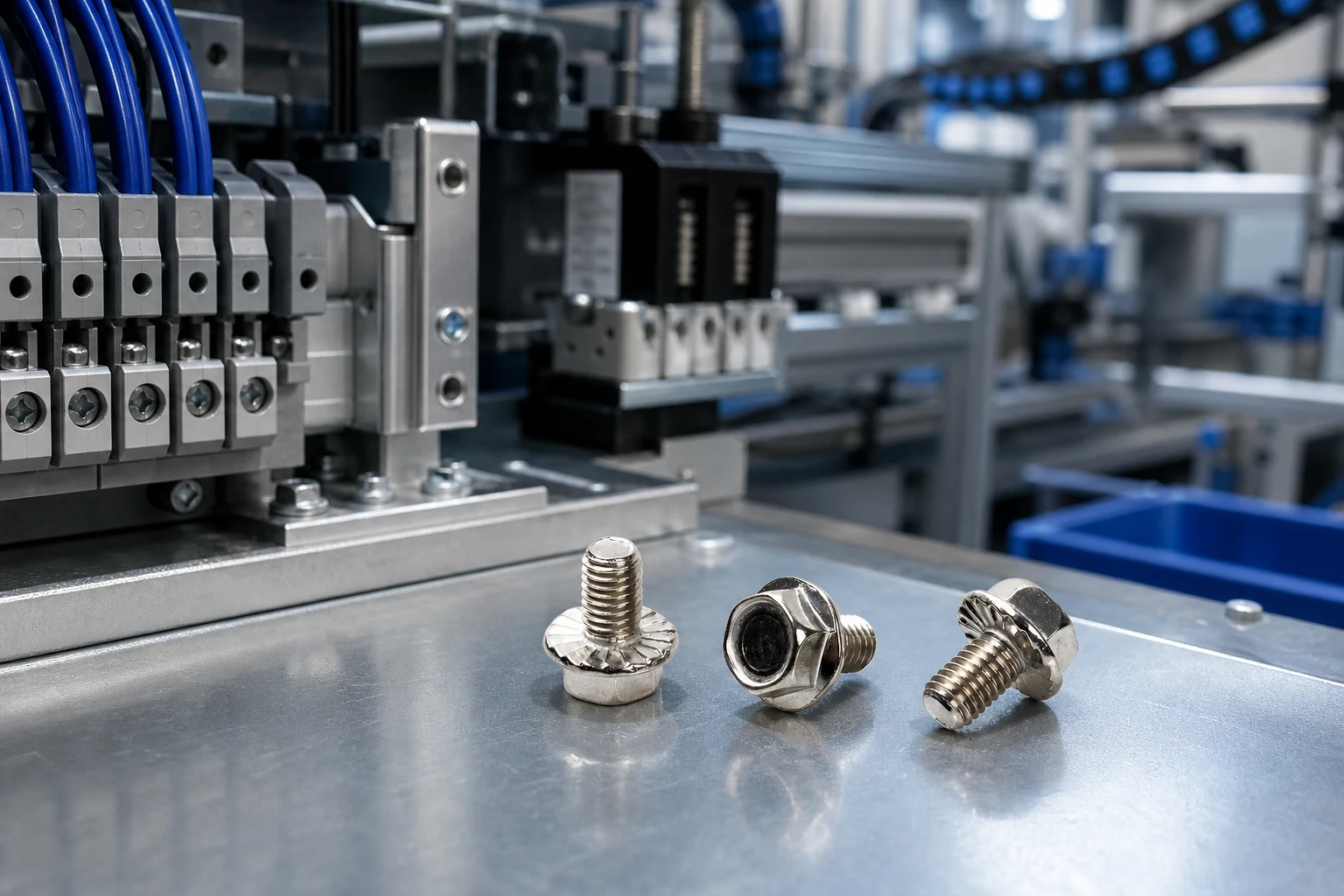
A sample can show flange diameter against a representative seat. Photograph contact, mark observations to the revision, and list unverified clearances.
Escalate samples that change flange form relative to the drawing.
Provide every supplier the same revision, fastening fields, quantities, destination, and open points. If seat geometry remains open, label it rather than inviting each quote to assume a different flange.
Attach alternatives to the fastening question they answer.
Important: Do not release a purchase description for hex flange nuts electrical fastening when the controlling drawing, interface, or approval owner is still open; keep misfit risk visible in the RFQ. — Source: ISO standards catalogue.
This input guide does not prove conductivity, insulation, short-circuit withstand, clamp load, vibration retention, corrosion performance, certification, or lifecycle. Those outcomes need product-specific evidence and the validation selected by the system owner.
Fit Boundary: pause when flange seat, wrench envelope, or approval ownership is unclear. Do not infer suitability from an electrical category name alone.
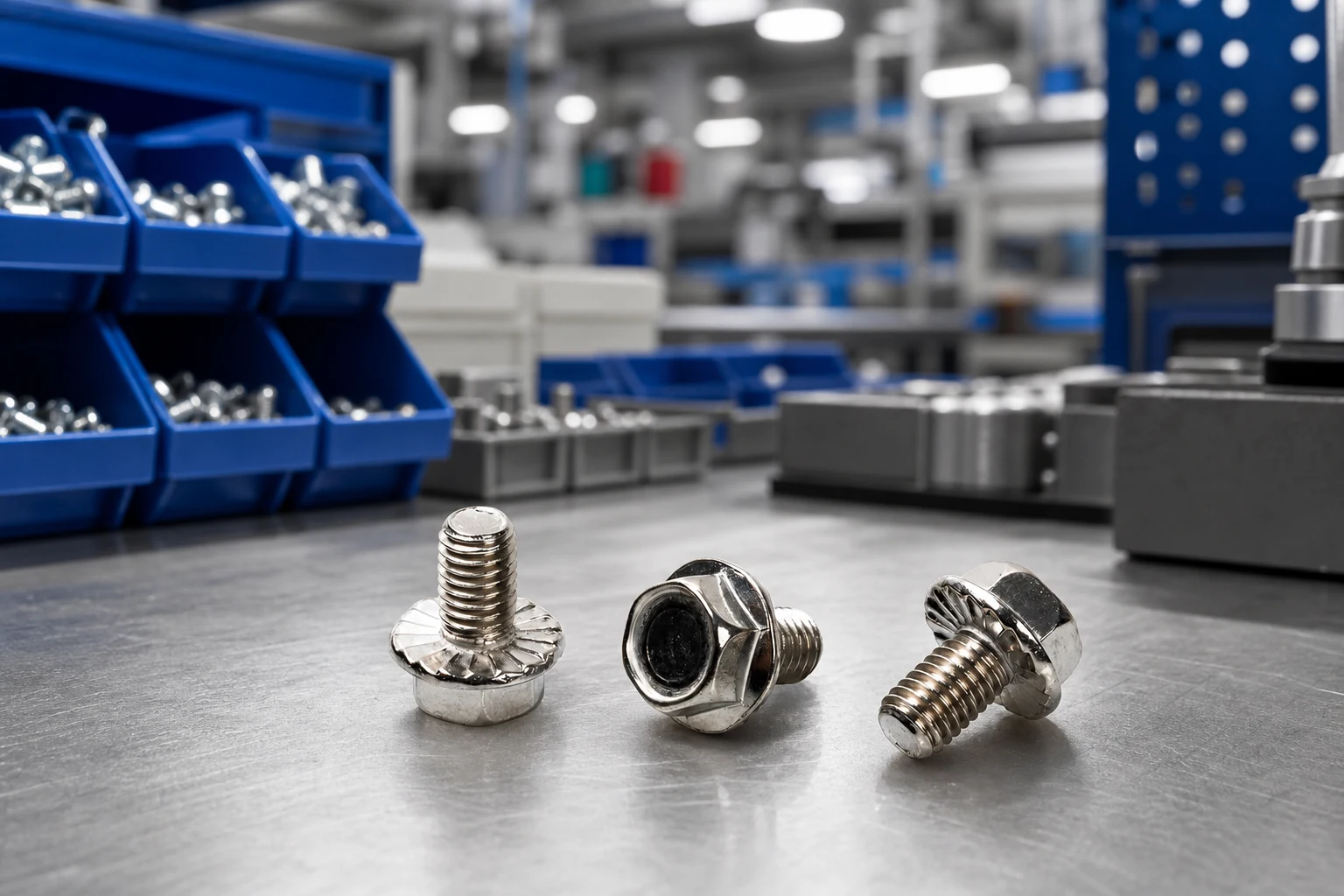
After fastening inputs are ready, use the TNHO hex flange nuts for industrial electrical fastening. Navigation confirms a related hex flange nut destination for industrial electrical fastening contexts; it does not replace the drawing or create unlisted ratings or lead times.
Send with quote / RFQ bullets:
– Assembly revision and flange seat callout
– Wrench envelope and neighbor constraints
– Install sequence and open points
– Quantities and destination
Send the controlled drawing and RFQ inputs. For flange fastening navigation, open TNHO products then continue with Electrical Fasteners: Some Basic Information.
Confirm assembly revision, flange seat, wrench envelope, and approval owner.
No. Conductivity and compliance need separate product-specific evidence.
Include fastening fields, quantities, destination, and open points.
No. Samples support observation; the drawing controls the seat.
Pause when flange seat or wrench envelope ownership is unclear.
Use the verified hex flange nut route with the fastening package.

 TNHO
TNHO 


