Meter-cover housing fixing screws need drive notes that record bit access and housing interference on the revision, rather than assuming any familiar drive will reach the seat.

Identify the cover-housing revision, the required or preferred drive, and the person who owns drive acceptance. The fixing-screw product route supports discovery; it does not prove that a prior drive style clears the next housing rib.
This article stays on drive notes for housing screws and does not reopen retained-cover or micro-screw head-height topics covered elsewhere.
Record drive type, tool path, housing ribs, and install sequence as quote inputs.
| Drive-note field | What to record | Send with quote |
|---|---|---|
| Housing revision | Drawing controlling cover-housing screw locations | Yes |
| Drive type callout | Slot, cross, hex, or other drive shown | Yes |
| Tool path / bit access | Approach needed past housing ribs or walls | Yes |
| Housing interference | Features that block or crowd the driver | Yes |
| Install sequence | When screws are driven relative to cover closure | Yes |
Do not invent torque, material, or corrosion claims to complete empty rows.

A sample can show whether a bit reaches the recess under a representative housing. Photograph access, mark observations to the revision, and list unverified clearances.
Escalate samples that require a different drive than the drawing shows.
Share the same revision, drive-note fields, quantities, destination, and open points. If drive type remains undecided, label it open instead of inviting competing assumptions.
Attach supplier alternatives to the drive question they answer.
Important: Do not release a purchase description for meter cover housing screw drive notes when the controlling drawing, interface, or approval owner is still open; keep misfit risk visible in the RFQ. — Source: ISO standards catalogue.
These drive notes do not prove clamp load, strip-out resistance, sealing, corrosion performance, electrical ratings, certification, or lifecycle. Those outcomes need product-specific evidence and the assembly owner’s validation plan.
Fit Boundary: pause when drive type, tool path, or housing interference ownership is unclear.
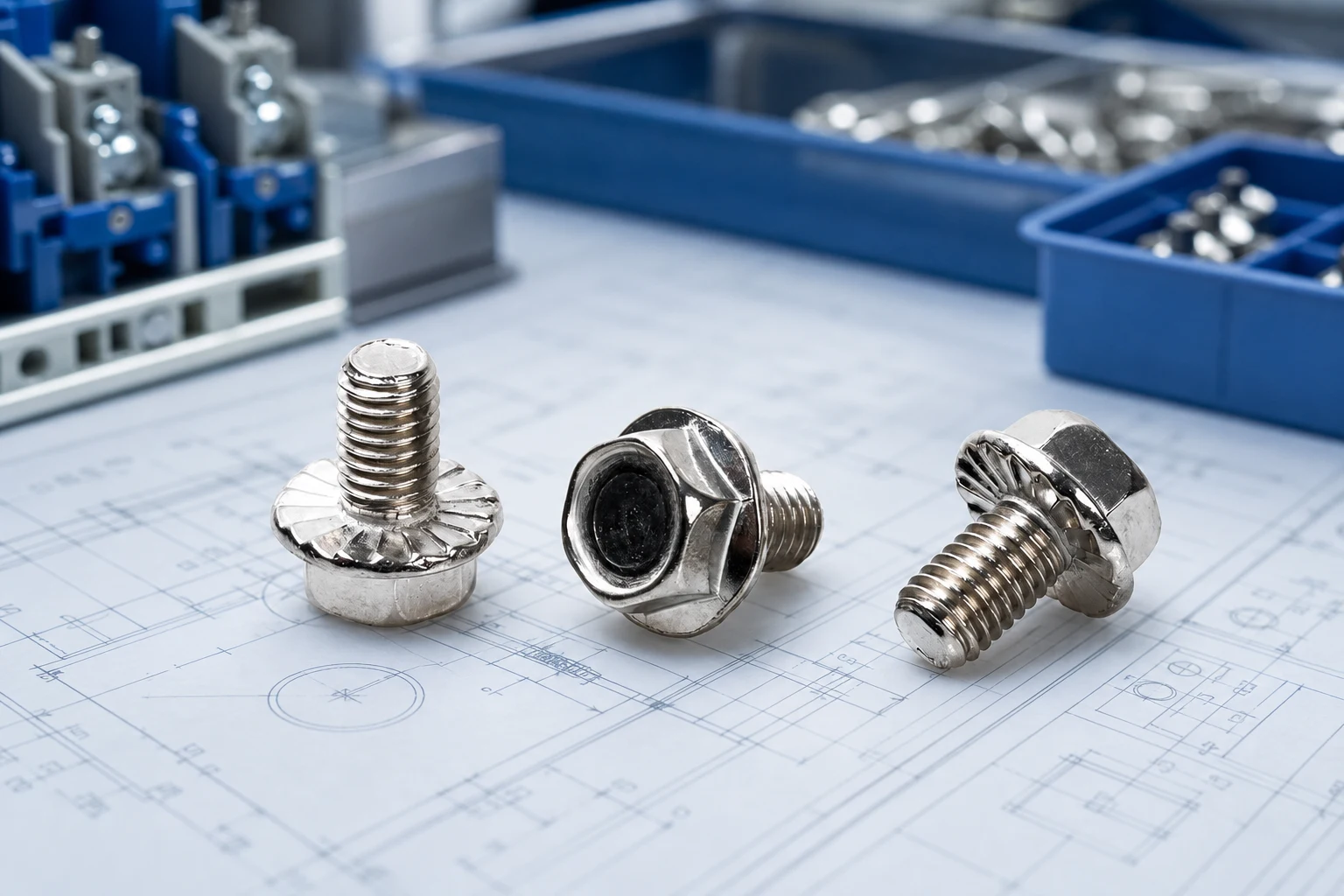
After drive notes are ready, use the TNHO fixing screws for electric meter cover housing. Navigation confirms a related fixing-screw destination for electric meter cover housings; it does not replace the drawing or create unlisted lead times.
Send with quote / RFQ bullets:
– Housing revision and drive-type callout
– Tool path and interference notes
– Install sequence and open points
– Quantities and destination
Send the controlled drawing and RFQ inputs. For housing drive-note navigation, open TNHO products then continue with Electrical Fasteners: Some Basic Information.
Confirm housing revision, drive type, tool path, and interference ownership.
No. Drive notes must follow the controlled housing drawing.
Include drive-note fields, quantities, destination, and open points.
No. Torque and compliance need project-specific evidence.
Pause when drive access or housing interference is undefined.
Use the verified housing fixing-screw route with the drive-note package.

 TNHO
TNHO 


