Meter-terminal lock-hex mating should be reviewed from the controlled drawing and seat geometry, not from a catalog nut family name alone.

Begin by identifying the meter terminal revision, the receiving thread or stud, and the person who owns mating approval. A lock-hex product page can orient a discussion, but it does not define seat diameter, wrench clearance, or acceptance for the next build.
Separate confirmed callouts from open questions. If only a photograph of a prior nut is available, mark the missing seat and thread data instead of assuming interchangeability.
Record thread designation, bearing face, nearby clearance, and installation access as separate fields so every supplier answers the same package.
| Mating field | What to record | Send with quote |
|---|---|---|
| Terminal revision | Drawing or extract that controls the stud or threaded boss | Yes |
| Thread / stud callout | Designation shown for the mating feature | Yes |
| Bearing / flange seat | Seat diameter or face note if shown | Yes |
| Wrench / socket envelope | Nearby cover or terminal features that limit tool swing | Yes |
| Approval owner | Who accepts a proposed nut geometry | Yes |
Do not convert an unanswered row into a locking, torque, or electrical-performance claim.
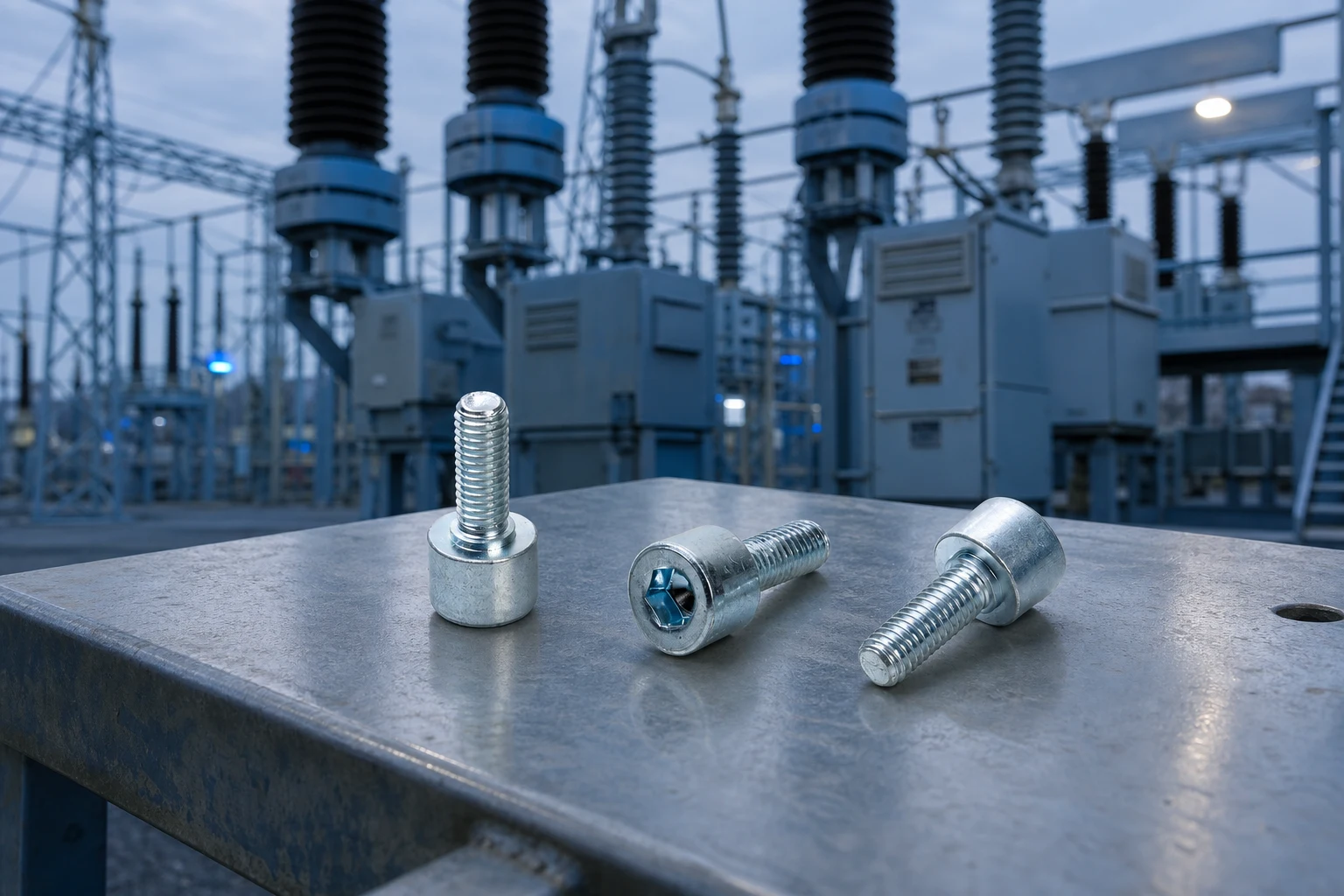
A hand sample can reveal wrench interference or an unexpected flange diameter, yet it cannot invent a missing thread callout. Photograph the bearing face against the terminal context, mark observed features to the revision, and list what remains unverified.
If a sample suggests a different hex size or flange form than the drawing shows, route that observation to the drawing owner before quotation comparison.
Ask every supplier to quote the same revision, thread callout, seat notes, quantities, destination, and open points. When seat geometry is still unknown, keep the field open rather than inviting each quote to assume a different flange.
Separate confirmed drawing requirements, supplier-proposed alternatives, and items awaiting engineering direction so price comparisons stay tied to one mating condition.
Important: Do not release a purchase description for lock hex nuts meter terminal mating when the controlling drawing, interface, or approval owner is still open; keep misfit risk visible in the RFQ. — Source: ISO standards catalogue.
This mating review does not prove load capacity, prevailing-torque behavior, vibration retention, corrosion resistance, sealing, electrical continuity, certification, or lifecycle for any assembly. Those outcomes need product-specific evidence and the validation path chosen by the system owner.
Fit Boundary: pause when the terminal revision, thread callout, seat geometry, or approval owner is unclear. Resolve those inputs before treating a product route as a selection answer.

After mating fields are assembled, use the TNHO lock hex nuts for industrial fastening as a navigation starting point. The page confirms TNHO publishes a lock-hex fastening route; it does not replace the drawing or establish unlisted dimensions, materials, torque values, or lead times.
Send with quote / RFQ bullets:
– Current terminal revision and thread/stud callout
– Bearing-seat and wrench-envelope notes
– Quantities, destination, and labeled open points
– Approval owner for any supplier alternative
For the next step, send the controlled drawing and RFQ inputs. For lock-hex navigation, open TNHO products then continue with Electrical Fasteners: Some Basic Information.
Confirm the terminal revision, thread or stud callout, seat geometry, and approval owner.
No. The controlled drawing must show the receiving feature and seat condition.
Include revision, thread/seat fields, quantities, destination, and open points.
No. Performance and compliance need project-specific evidence.
Pause when seat geometry, thread callout, or approval ownership is unclear.
Use the verified lock-hex product route with the controlled mating package.

 TNHO
TNHO 


