Engine Fasteners play a critical role in automotive fasteners programs. This guide helps U.S. OEM buyers evaluate materials, drawings, and supplier quality for engine fasteners. This guide focuses on practical evaluation steps for U.S. industrial and commercial buyers—drawings, materials, torque, and supplier quality—not generic marketing claims. Where application limits are unclear, cross-check public specifications on thfasteners.com and confirm project-specific requirements with your engineering team before mass release.
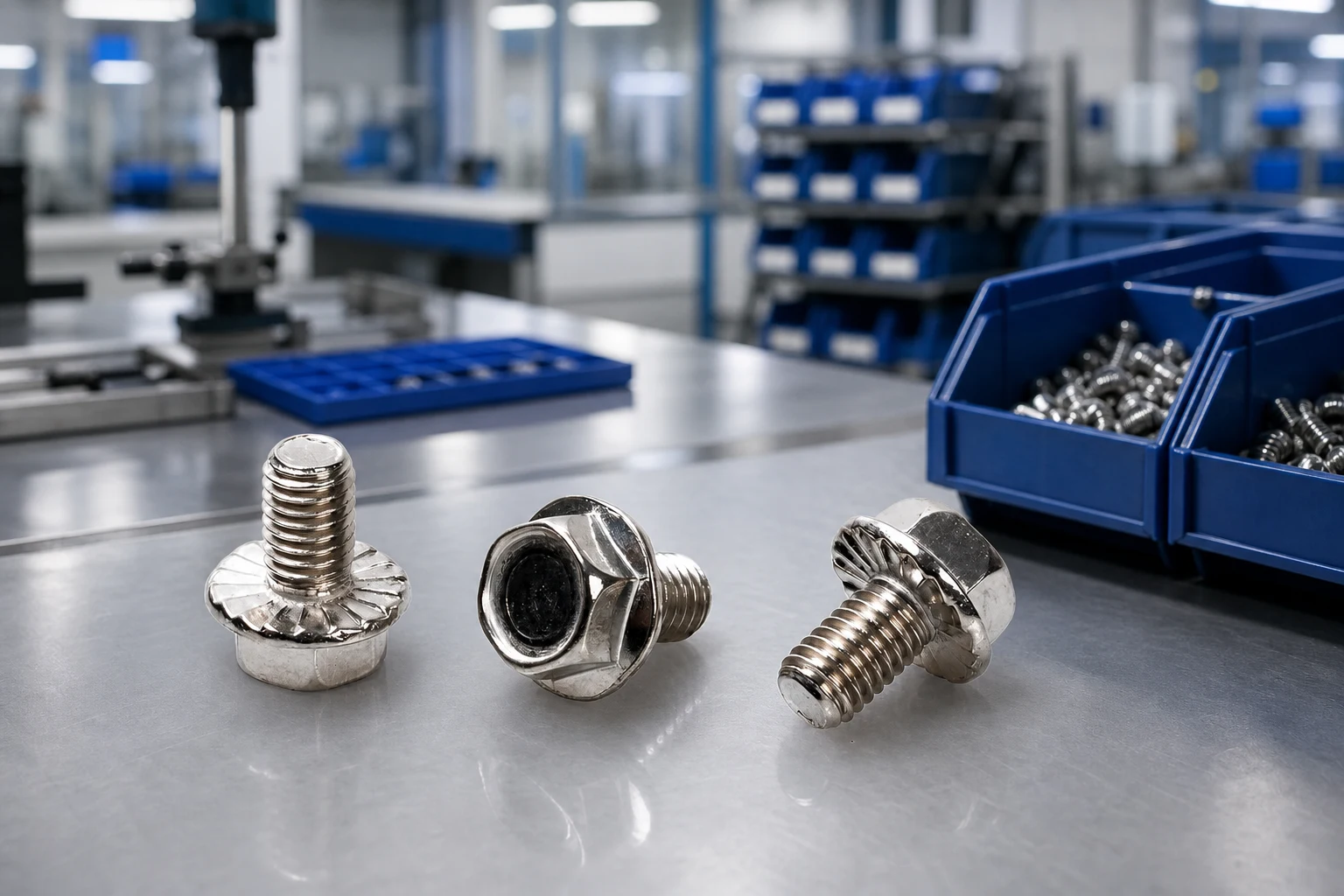
Powertrain fasteners operate at elevated temperature and cyclic load. Grade selection, thread rolling after heat treat, and lubricity classes affect clamp load retention.
U.S. buyers evaluating engine fasteners should start from the installed environment and service interval, not only unit cost.
Fastener programs succeed when design, procurement, and quality agree on drawings, torque tools, and incoming inspection before mass assembly.
Document parent material (steel, aluminum, plastic) and temperature range before final material selection.
Use conservative performance language until sample tests confirm clamp force or sealing integrity.
Include thread class, head dimensions, plating specification, and inspection criteria in the RFQ—ambiguous requests delay samples and tooling quotes.
Segregate fastener kits by SKU and drive type so field assembly teams do not mix inch and metric hardware on the same product line.
Define acceptance sampling (AQL) and torque validation steps before mass release, not only after field complaints appear.
| Factor | Why it matters | Buyer action |
|---|---|---|
| Load / vibration | Affects thread choice | Review application drawing |
| Environment | Drives material | Define corrosion zone |
| Volume | Tooling economics | Confirm MOQ and lead time |
Critical joints may use torque-to-yield bolts intended for one-time use. Reusing TTY hardware or substituting generic grade 8.8 bolts without engineering approval is unsafe.
Mixing incompatible platings or grades without engineering review can accelerate corrosion or galling in the field.
Compare quotations on Incoterms, included certifications, and kitting—not list price alone.
Internal links to TNHO product catalog and industry applications help buyers navigate related categories on thfasteners.com.
MOQ and lead time vary by tooling—confirm for export programs.
Include thread class, head dimensions, plating specification, and inspection criteria in the RFQ—ambiguous requests delay samples and tooling quotes.
Segregate fastener kits by SKU and drive type so field assembly teams do not mix inch and metric hardware on the same product line.
Define acceptance sampling (AQL) and torque validation steps before mass release, not only after field complaints appear.
| Material / finish | Typical use | Caution |
|---|---|---|
| Carbon steel + zinc | Indoor / dry sites | Limited coastal life |
| 304 stainless | Humid environments | Galling risk on stainless pairs |
| 316 stainless | Coastal / chemical | Higher cost |
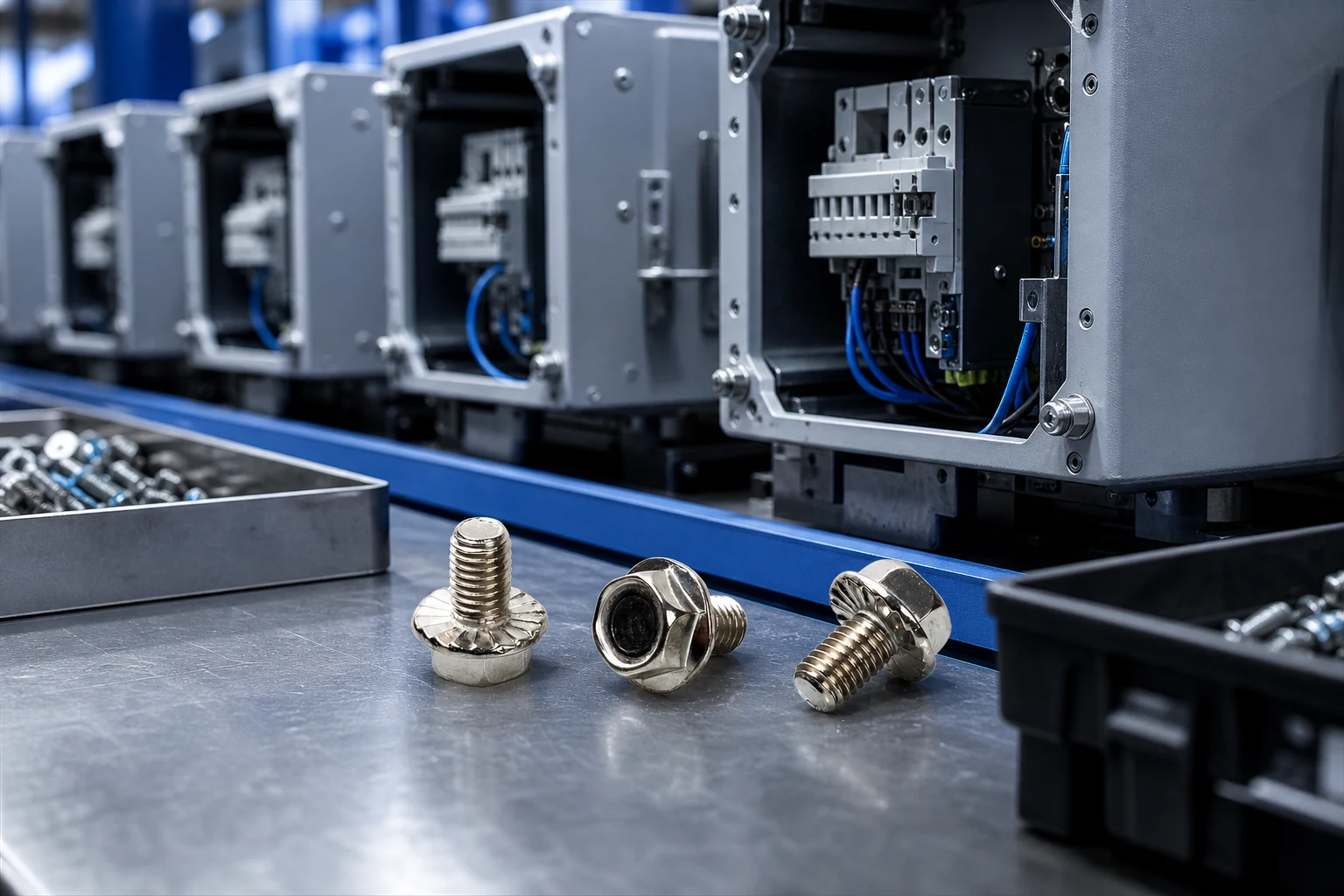
Suppliers should provide material certifications, hardness maps, and fatigue data when requested for new engine programs—not only dimensional reports.
Reliable suppliers of engine fasteners provide dimensional reports, material certificates, and controlled revision changes—not ad hoc email confirmations alone.
Incoming inspection should combine go/no-go gauges with periodic metallurgical checks for critical programs.
Engage TNHO contact when application loads or coatings exceed standard catalog assumptions.
Include thread class, head dimensions, plating specification, and inspection criteria in the RFQ—ambiguous requests delay samples and tooling quotes.
Segregate fastener kits by SKU and drive type so field assembly teams do not mix inch and metric hardware on the same product line.
Define acceptance sampling (AQL) and torque validation steps before mass release, not only after field complaints appear.
Industrial acceptance should not rely on visual checks alone—documentation proves dimensions, materials, and maintainability for the next production cycle.
Use the tables below as a starting RFQ checklist; your OEM quality system may require additional PPAP elements.
For product-specific datasheets, cross-check related TNHO product pages and request missing material or plating certificates.
Align incoming inspection with sampling plans agreed at golden sample approval.
When comparing quotations, normalize currency, Incoterms, and included certifications before ranking suppliers.
| Document / item | Purpose | When to request |
|---|---|---|
| 2D drawing with tolerances | Define thread, head, plating | Before RFQ |
| Material certificate | Prove grade (e.g. 304, 8.8) | With first article |
| Dimensional inspection report | Verify critical features | Sample approval |
| Plating / salt-spray record | Corrosion validation | Contract review |
| PPAP or quality plan | OEM audit trail | Before mass release |
| Application | Typical fastener | Buyer focus |
|---|---|---|
| Powertrain | TTY / grade bolts | Heat treat trace |
| Chassis | Flange bolts | Coating friction |
| Body | Machine screws | PPAP |
| Interior | Small screws | Driver engagement |
Incoming inspection should verify thread, head dimensions, plating thickness, and drive integrity against the approved drawing—not spot checks alone.
Assembly stations should use calibrated torque tools and bit gauges matched to the specified drive type.
Segregate fastener bins by SKU to prevent mixed-grade or mixed-finish hardware from entering the same assembly line.
Track lot numbers so field failures can be traced to specific heat treats or plating batches.
Schedule periodic supplier reviews when programs scale or when new plants are added to the supply chain.
Spare-part kits for field service should mirror production hardware exactly—no ‘equivalent’ substitutions without approval.
Engage TNHO when torque, plating, or security-drive requirements exceed standard catalog assumptions.
For project support, explore our related product line, solution options, and OEM/ODM capabilities on thfasteners.com.
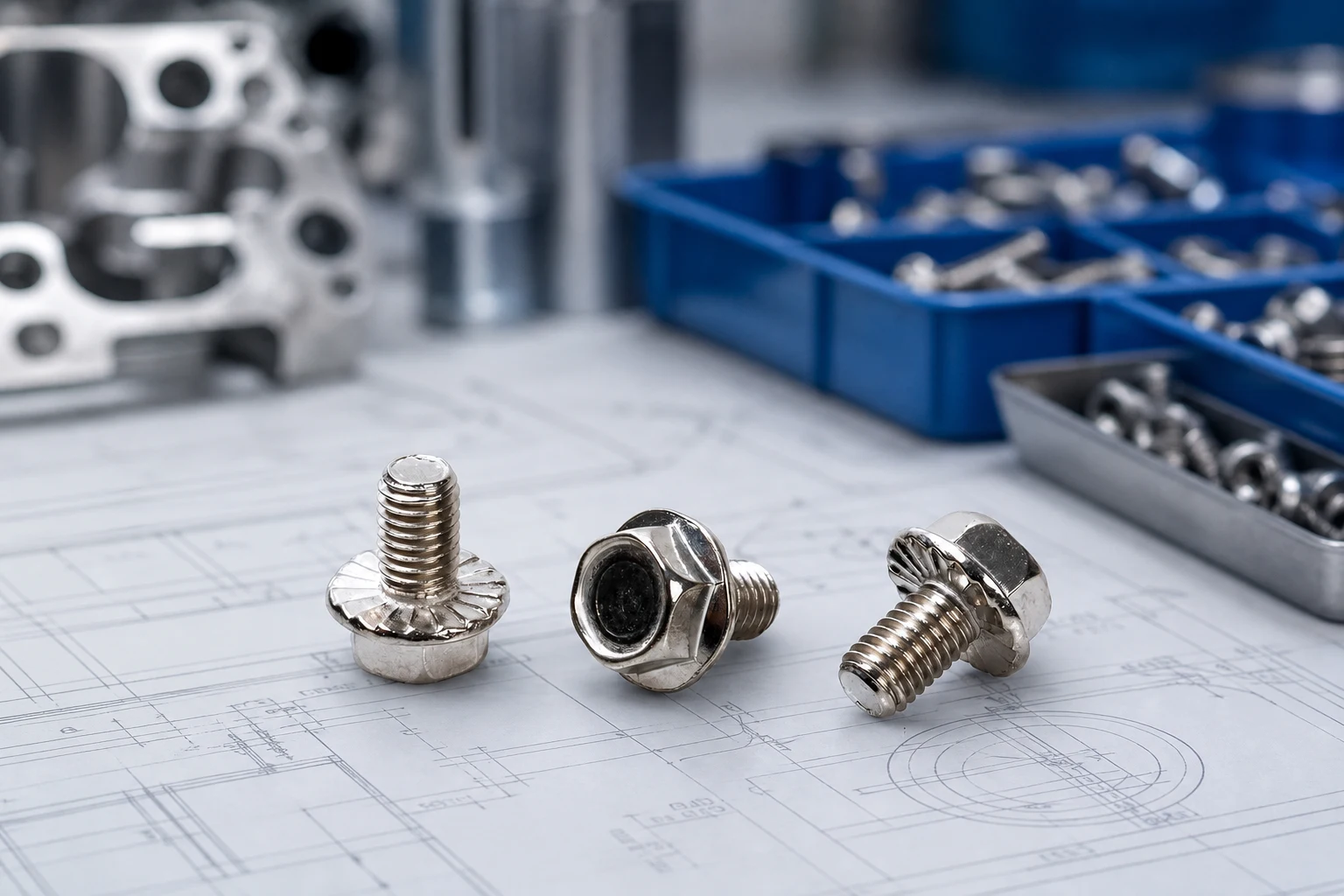
Engine Fasteners are selected based on load, corrosion exposure, assembly torque, and regulatory context; start from the application drawing and environment class.
Material choice follows environment: indoor zinc-plated steel may suffice; coastal or humid sites often require stainless or higher-performance coatings with test data.
Yes, most industrial programs support customization when drawings, volumes, and quality plans are defined—confirm MOQ and tooling lead time with the supplier.
Request dimensional reports, material certificates, plating records, and PPAP or equivalent quality documents aligned to your OEM checklist.
Use controlled torque tools, avoid mixed-grade substitutions, and segregate hardware kits by SKU to reduce field assembly errors.
Inspection should combine thread gauges, head dimensions, coating thickness, and sampling plans agreed at sample approval—not visual checks alone.
Work with suppliers that offer cold heading plus secondary operations, in-house inspection, and export documentation if shipping internationally.
Ready to discuss your project? Contact TNHO engineering support with your project parameters and technical requirements.

 TNHO
TNHO 


