Inserts with external threads, or ‘threaded Inserts,’ are a type of specialized fastening device designed to create a secure, durable and reusable thread for use in various materials (e.g., woods, metals, plastics). Threaded inserts provide a solid method for reinforcing screw connections; they help to eliminate the potential for stripped threads and extend their useful life. By providing a thread strength greater than the base material, threaded inserts are well suited for application areas where assembling and disassembling many times is common (e.g., automotive, furniture, electronics).
There are various types of threaded inserts and they are intended for a particular application or material. Knowing the different types enables you to select the appropriate insert for your project.
1. Helical Inserts: Helical inserts, or helicoils as they are commonly called, consist of coiled wire which provides threads in softer materials. Helical inserts are usually made from stainless steel and are generally used to fix stripped threads as well as create threads in softer metals like aluminum and magnesium. Their great strength has made them an option that is used regularly in high-stress applications.
2. Keyed Inserts: Keenserts (or “keyed inserts”) have tiny pins that hold them securely against their substrate (the host material) and therefore prevent their rotation or loosening when subjected to significant amounts of torque or vibration. They are typically used in high-torque, high-vibration situations and are commonly used in aviation and automotive industries because they require dependable performance.
3. Molded Inserts: When creating plastic products using a molded process, the inserts are embedded into the plastic material. Once inserted, they are permanently part of the plastic, and provide strong anchor points to connect screws or fasteners to the final product. An example of where you might use molded inserts is in injection molded parts typically found in consumer electronic devices.
4. Press-Fit Inserts: Typically, these inserts are pressed into drilled/formed holes already made, and create strong female threads without requiring adhesive bonding. They are applied to metal components frequently.”
5. Ultrasonic Inserts: Ultrasonic welding is a method for installing ultrasonic inserts that is used specifically for thermoplastics. In the case of ultrasonic welding of ultrasonic inserts, the process consists of melting the plastic surrounding the ultrasonic insert, thereby creating a strong bond.
The performance, durability, and application of a threaded insert are significantly influenced by the material used to manufacture it. Some common threaded insert materials are:
1. Stainless Steel: You know how resistant to corrosion a piece of stainless steel threaded insert is when you want to use it in some difficult places, like outside or in the ocean where there are wetness issues.
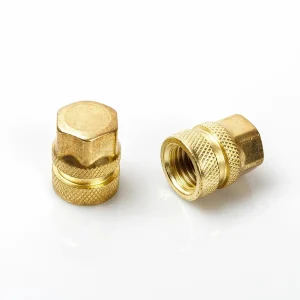
2. Brass: Brass threaded insert hardware is in high demand due to their excellent ability to be machined while also being non-magnetic. Brass threaded inserts also provide good electrical and thermal conductivity making them ideal for electronic devices, as well as precision applications of any kind.
3. Aluminum: Aluminum insert designs are used because they are a lightweight but also very durable design alternative. Applications for aluminum inserts can include areas in which weight reduction is very important (e.g. aerospace, automotive, etc.).
4. Steel: Low corrosion resistant materials, such as low-carbon or steel alloy inserts, are the least expensive options and are extremely durable; hence, they are most often found in heavy-duty applications.
5. Plastic: Plastic threaded Inserts, while not as strong as Metal inserts, are light-weight and corrosion resistant. Therefore, they’ve become a favourite substitution for use in lightweight/non-metallic assemblies.
There are a variety of reasons why professionals and hobbyists alike choose to use threaded inserts in their projects: Here is a list of the main benefits.
1. Strength and Durability: Threaded inserts can be utilized as a way to reinforce threads and extend their lifespan by attaching materials that have higher-quality strength than the original base material.
2. Enhanced Load Distribution: Using threaded inserts spreads the load across a larger surface area than a typical screw, which helps eliminate stress on the material surrounding the insert and minimizes deterioration over time.
3. Reusability: Threaded inserts unique selling point is that they provide an advantage of being reusable many times. When you use standard screws, the material will typically get damaged by repeated installation use, but threaded inserts do not lose their function through multiple reassemble/disassembling operations.
4. Compatibility with Soft Materials: Threaded inserts can be used in softer materials such as plastic, plywood and particleboard so they will have the capability to withstand heavy loads without causing deformation or breakage of the material.
5. Repair and Restoration: Threaded inserts can be utilized in restoring damaged objects that have had their threads stripped from use. They can continue to be used instead of having to buy new goods – an expensive option.
Threaded Insert Applications are numerous, and provide a vital function within each industry (and everyday items). Here are several typical uses of threaded inserts:
1. Furniture Construction: Threaded Inserts act as a long lasting anchor for machine screws, thus simplifying the assembly and disassembly of furniture parts.
2. Automotive Applications: Engines, clutches and transmissions in motor vehicles are subjected to constant vibration and extreme stress. By provides additional strength and stability to the assembly of these automotive components through the use of threaded inserts, manufacturers can be assured that these components remain connected securely.
3. Electronics and Appliances: Using threaded inserts in electrical components and consumer products is a means of attaching components to each other without damaging the delicate materials used to attach them together. Threaded inserts are commonly found in laptop cases, smartphone enclosures, and any other types of precision devices.
4. Aerospace Industry: Aerospace manufacturers rely upon using threaded inserts to create lighter yet stronger connections within airplane structures where safety and durability are critical components to consider.
5. DIY Projects: Threaded inserts allow for easy assembly or disassembly of projects such as cabinets and shelves, thus making them much more durable for hobbyists and DIYers.
Threaded inserts fundamentally provide added strength and functionality to any form of work. But why use these specialized fasteners instead of using conventional methods?
1. Prevent Damage to the Base Material: The weak base material has the heaviest burden of wear and tear, and so using threaded inserts will protect it from this damage, allowing the projects to stay intact as time passes. This is particularly relevant to softer materials, such as plastic and plywood.
2. Allow for Repeatability: When an object is often put together and taken apart (for example, assembling furniture, or having to maintain equipment frequently), using threaded inserts is a viable alternative to maintaining the structural integrity of the parent material.
3. Improve Load-Bearing Capacity: Threaded inserts add strength to the connection, making it easier to support large shelves or attach equipment to a vehicle. This helps produce a more secure connection and makes it less likely to fail.
4. Simplify Repairs and Upgrades: Threaded inserts can be used in applications such as machines or vehicles to enable the user to easily and quickly replace a damaged part without having to change the whole assembly.
5. Versatility Across Materials: There are many types of threaded inserts. They allow you to add a secure threaded connection to almost any material: wood, metal, plastic, or even concrete! That’s what makes these inserts so versatile – they can be used in almost any project or application across all industries.
What are the advantages of threaded inserts?
The main benefits include greater durability, extended life, wide compatibility with many substrates, improved load distribution and repair of damaged threads.
What are the uses of threaded inserts?
In many industries, such as furniture, automotive, aerospace, electronics, and some DIY projects, threaded inserts provide a strong and secure way to create threaded connections.
Why use threaded inserts?
Reinforcement wells support continuous use; provide added strength to help resist wear, allow easy removal after use; distribute loads evenly and afford cost-effective repairs/maintenance.
In conclusion, threaded inserts are a great way to improve the strength and longevity of screw connections in both DIY projects and heavy industrial applications. These inserts are used in many different kinds of material and provide many of the same benefits as well, including strength and durability; therefore, they are an important part of innumerable industries throughout the world. Threaded inserts also help distribute load evenly, are able to resist pull out (thread stripping), and allow for easy repair at any time; consequently, they make up a low-cost, essential tool for providing long-lasting performance and dependability on every job.

 TNHO
TNHO 


