Triangular security screw tool custody is the process for making the correct driver available to authorized people while keeping its issue, return and condition accountable. A less-common drive can discourage casual operation with ordinary tools, but it does not identify who is permitted to open an enclosure. Define the equipment owner, approved tool, authorization path and return record before distributing service kits. This guide focuses on that operational handoff for controlled-access equipment. It does not claim an unbreakable screw, provide bypass methods or treat possession of a tool as permission to remove a utility seal.
Triangular security hardware can use different external heads and internal recesses. A tool intended for one form should not be assumed to fit another. Identify the controlled drive geometry and approved matching tool before creating an inventory entry. The word triangle is not a complete tooling specification.
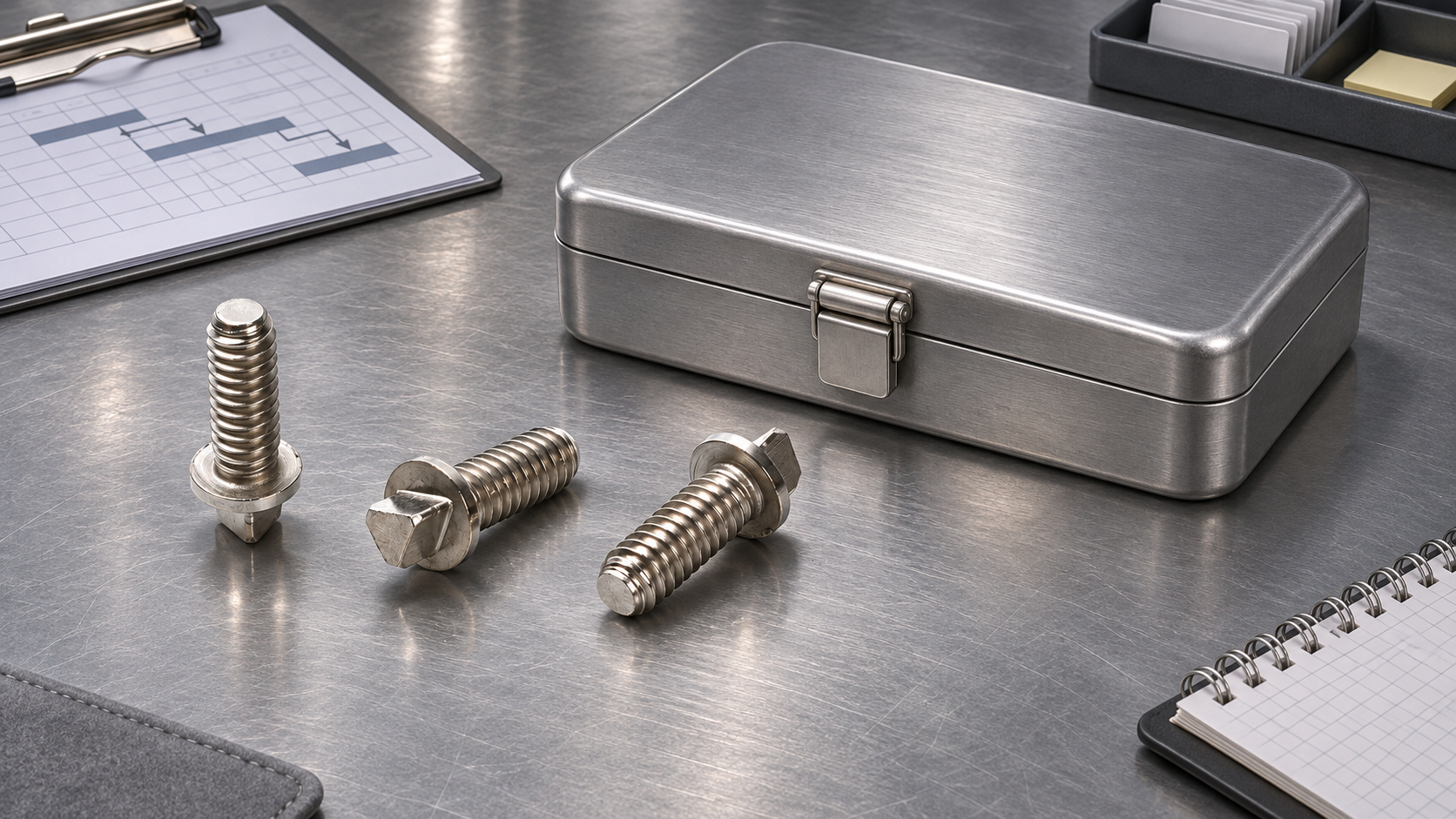
TNHO’s triangular security screw family provides the product context. The selected reference shows protruding external triangular heads above circular flange features, with short silver threaded bodies. These images therefore preserve an external head rather than substituting a triangular recess. Confirm the exact tool interface from the approved screw drawing and tool documentation.
The product page lists family specifications including M6×17 and M6×27. Those available sizes do not establish the dimensions of every pictured specimen or the proper tool for every order. An image number is a source identifier, not a formal SKU. Do not infer material chemistry, finish specification or a security rating from the silver appearance.

A person holding a matching driver may be physically able to operate a screw without being authorized to service the equipment. Keep the permission decision with the equipment owner and applicable work procedure. Tool issue should reference that decision rather than replacing it.
The HSE guidance on maintenance of work equipment emphasizes competent people, adequate information and planning with the manufacturer’s instructions. That is general UK work-equipment guidance, not a universal utility-meter access rule. It supports establishing who is prepared and authorized for the particular task before a tool is handed over.
For equipment with seals or other controlled evidence, identify the separate responsibility for disturbing and restoring that evidence. The UK government’s gas-meter stamping guidance gives an example from another metering application: disturbed gas-meter seals should be reported to the supplier. Use the actual procedure applicable to the equipment being serviced rather than treating that example as electric-meter authorization.
Record the tool identification, compatible controlled drive reference, storage location and responsible custodian. Include its status: available, issued, under inspection, damaged or withdrawn. A generic list of triangle keys is insufficient when several noninterchangeable interfaces are used across a site.
Keep compatibility evidence with the register. That may be an approved tool drawing, supplier reference or equipment-maker instruction. Do not identify tools solely by handle color or visual similarity. A tool can appear suitable while having a different engagement depth or surrounding envelope. Preserve the exact reference used in the approval decision.
If the same tool is used for several approved assemblies, record that scope explicitly. Avoid a broad statement that it fits all meter screws. When a new fastener revision is introduced, review whether the existing compatibility record still applies. The custody process should make that change visible before the wrong tool reaches the work site.
A useful issue record identifies the person, tool, equipment or job reference, authorizing role and expected return arrangement. The level of detail should suit the organization’s actual control needs. This article proposes a practical record structure; it does not claim a universal legal requirement for a particular form or retention period.
At handoff, confirm that the recipient has the correct instruction and knows the permitted scope. If the work requires another organization to remove a seal or isolate equipment, leave that dependency visible. A complete tool kit does not mean the job is ready to begin. The authorization and safe-work arrangements still need to be satisfied.
On return, record whether the tool is present and whether its condition needs review. A damaged interface should not silently go back into available stock. Use the organization’s approved inspection and replacement process. Avoid improvised reshaping that changes the engagement geometry without documentation or approval.
Tool custody is useful only if the approved tool can perform the intended operation on the assembled equipment. Review the external head, nearby cover features and the tool’s approach. Confirm that the tool can engage to the required condition without contact that prevents controlled use.
The site’s thumb screw glove-clearance guide provides a complementary access-planning example for a different product. It emphasizes reviewing the working hand and surrounding geometry together. For a triangular head, assess the actual matching tool rather than carrying over the thumb screw’s hand-operated method.
Keep access approval separate from security claims. Demonstrating that an authorized tool reaches the head does not establish resistance to every unauthorized method. Likewise, a difficult-to-reach tool path can obstruct legitimate service without proving useful protection. The design needs to support the intended maintenance and access-control concept together.
This table organizes the process without prescribing a security classification or a mandatory audit interval. Assign the actual responsibilities and record requirements through the equipment owner’s approved procedures.
| Control point | Question to answer | Record or action |
|---|---|---|
| Tool identity | Which exact tool matches the controlled drive? | Tool reference and compatibility evidence |
| Storage | Who is responsible for available stock? | Custodian and defined storage location |
| Authorization | Who permits the proposed equipment access? | Job or approval reference |
| Issue | Who received which tool for what task? | Recipient, tool and job record |
| Return | Was the tool returned in an acceptable condition? | Return status and condition disposition |
| Missing tool | Who evaluates the consequence and next action? | Incident escalation under owner policy |
| Revision change | Does existing compatibility remain valid? | Updated drive/tool review |
Use statuses that produce an action. An entry saying “tool unavailable” should distinguish issued stock from a damaged item or an unexplained absence. Those situations require different follow-up. Clear status reduces the temptation to borrow an unidentified substitute merely to complete a scheduled visit.
A missing driver should trigger the organization’s defined reporting and assessment route. Do not assume the correct response is always to replace the screws, or always to do nothing. The consequence depends on the equipment, exposure, access controls and available evidence. Assign that assessment to the responsible owner.
If tools are shared between teams, identify who holds responsibility during transfer. A tool moving informally between service kits can disappear from the original record while still being in use. Record the transfer or require a return-and-reissue step according to the chosen process. The method should be simple enough that people can follow it consistently.
Keep spare tools controlled as well as primary tools. An emergency spare with no identified custodian can undermine the practical meaning of the register. Define how authorized personnel obtain it when needed. At the same time, make legitimate access workable so that the process does not encourage undocumented copying, borrowing or substitutions.
Some service operations may require replacement of the fastener or associated evidence. Follow the actual equipment instructions rather than assuming every triangular screw is reusable indefinitely. Record the approved replacement part and any inspection or reassembly requirements. A matching drive is only one aspect of component suitability.
The site’s carriage-bolt spinning discussion illustrates why a fastening problem should be investigated at its actual interface. A triangular drive does not prevent issues with mating threads, seating or surrounding geometry. Refer unexpected conditions through the approved process instead of treating more tool effort as the solution.
The bolt tightening sequence guide also supplies general context for defining the final assembly condition. It does not specify torque for this TNHO screw. The controlled equipment instruction should govern installation, acceptance and any restoration of seals or labels after authorized work.
Avoid describing a less-common drive as impossible to remove without authorization. Authorization is a procedural status; resistance is a physical characteristic that requires a defined scope and evidence. A product photograph establishes neither. Use careful wording such as controlled-tool access where it accurately describes the intended arrangement.
Similarly, a tool register does not prove that equipment has never been opened. It records the organization’s tool-control activity within its actual coverage. Other evidence and controls may be relevant to the equipment owner. Do not turn a completed issue-and-return entry into a broader security assurance that the process cannot support.
The illustrations here show loose reference-based screws and a separate tool case. They are not photographs of a real TNHO service event or a security test. Preserve that distinction when using the images in procurement, training or maintenance planning.
Send the approved screw drawing, external drive detail, intended assembly views and required matching-tool information. Ask the supplier to identify the offered tool configuration and any compatibility limitations. Include the process owner in the handoff so that technical compatibility and custody responsibility are both resolved.
Before release, make sure the service kit, register and work instruction use consistent identifiers. A clear link between the tool and the equipment revision is more useful than a general statement that a security driver is included. Revisit that link whenever the drive, tool or surrounding enclosure changes.
NPTEL’s IIT Kharagpur threaded-fastener lecture provides mechanical background for understanding the joint operated by the controlled tool. It is not a demonstration of the TNHO triangular head, a security evaluation or an authorization procedure. The custody decisions above remain the equipment owner’s responsibility.

No. Access requires the equipment owner’s applicable authorization and safe-work arrangements. Tool compatibility establishes physical capability, not permission to disturb a cover or seal.
No. They are different interfaces. Identify the actual controlled geometry and matching tool, including engagement and access, rather than ordering solely by the word triangle.
The responsible owner should assess the incident under the applicable policy. The appropriate response depends on the equipment, exposure and controls; this article does not impose a universal replacement rule.
No. They are reference-based illustrations of the visible product form. Any claimed resistance or rating requires a defined evaluation and evidence for the actual product and application.


 TNHO