RoHS and REACH compliance for fasteners depends on the market, the finished equipment, the exact material and coating, and the supplier evidence tied to the delivered part. RoHS primarily restricts specified substances in electrical and electronic equipment, while REACH covers chemical substances and can create communication duties for articles that contain Candidate List substances. A fastener used inside an electric meter may be part of an in-scope assembly, but that does not make every loose screw subject to an identical declaration. Buyers should identify the destination market and equipment, then request evidence for the precise part, material, finish, and lot.
RoHS is the EU restriction on certain hazardous substances in electrical and electronic equipment. The European Commission describes the directive as applying to EEE, subject to its scope and exclusions, and lists restricted substance groups in the directive. A screw or nut may be a component of equipment that must satisfy the rule. The equipment manufacturer is usually responsible for the finished product’s conformity process, so the fastener supplier should provide accurate composition and process information rather than make a blanket legal conclusion for every customer’s assembly.
REACH is the EU chemicals regulation. Its obligations depend on whether the supply is a substance, mixture, or article and on the applicable restriction, authorisation, registration, and communication provisions. A metal fastener is generally supplied as an article, but its surface treatment, lubricants, sealants, or polymer patches can introduce additional material information needs. The applicable duty depends on the substance, concentration, supply-chain role, and destination market. A single statement such as “REACH compliant” does not answer every one of those questions.
For an electrical product, the same fastener can be reviewed under both frameworks for different purposes. RoHS checks specified restricted substances in the EEE context. REACH can require safe-use information or other action for listed substances in articles. A purchaser should therefore avoid treating one declaration as a substitute for the other.
Start with the finished product and its intended market. Determine whether the equipment is electrical or electronic equipment within the directive’s scope, whether a listed exclusion applies, and whether the relevant use has a current exemption. An electric meter, for example, is an electrical product, but the equipment maker must evaluate the complete product and the relevant component materials against the applicable directive and exemption conditions.
RoHS controls substance limits in homogeneous materials. The fastener’s steel or brass body, metallic coating, conversion layer, polymer patch, and any separate washer can therefore matter as distinct materials. Do not assume the total mass of a screw averages away a nonconforming coating or small component. The precise substance limits and exemptions must be checked against the current legal text and the product category. A drawing or purchase order should identify the required market, regulatory revision, and accepted evidence.
The Commission maintains information on implementation and changing exemptions. A supplier’s old declaration may refer to a past exemption, an obsolete substance list, or a different product configuration. For critical products, the buyer should record who owns the conformity decision and how changes in finish, material source, or patch formulation are reviewed.
REACH Article 33 establishes a communication duty for suppliers of an article when it contains a Candidate List substance above 0.1% by weight. The supplier must provide sufficient information available to it for safe use, including at least the substance name. A consumer request has a related response duty. The law’s article-level wording is important when a finished object contains several constituent articles; a buyer should not assume that dilution across the whole assembly removes an obligation. Use the current legal text and the applicable ECHA guidance for the exact situation.
This threshold is not a general REACH “pass limit” for every chemical in every product. Other REACH restrictions, authorisation conditions, registration duties, and market-specific rules can apply on different terms. A supplier should be clear about which question its statement answers: Candidate List communication, a specified restricted substance, the composition of a coating, or another customer requirement.
Request substance information for the exact fastener configuration. A change from plain steel to a plated version, a revised plating chemistry, a different lubricant, or a nylon locking patch may change the information that must be assessed. For complex electrical assemblies, preserve material declarations down to the supplied component and connect them to the bill of materials and lot records.
| Buyer question | RoHS review | REACH review | Useful supplier evidence |
|---|---|---|---|
| What is the scope? | Finished EEE, applicable categories, exclusions, and exemptions | Substance, mixture, or article duties and applicable restrictions | Equipment category, market, part number, and legal requirement |
| What material matters? | Each relevant homogeneous material in the equipment | Article constituents and substances covered by the specific duty | Material and finish breakdown, plating specification, patch formulation scope |
| What threshold or rule applies? | Directive annex values, measured in the defined material basis | Depends on the REACH provision; Article 33 has a Candidate List communication trigger | Statement naming the rule, revision, scope, and applied threshold |
| What record should be retained? | Technical documentation and conformity evidence for the finished EEE | Supplier communications and records supporting the applicable article duties | Signed declaration, supporting test or material evidence, revision, and lot link |
The table is a procurement aid, not a legal determination. For a current RoHS overview, consult the European Commission RoHS Directive page and Directive 2011/65/EU on EUR-Lex. For REACH, review the Commission’s REACH Regulation overview and Regulation (EC) No 1907/2006, including Article 33.
Send the supplier the part number, drawing revision, material, property class if relevant, coating, lubricants or patch, destination market, and the equipment category. Ask for a declaration that names the covered configuration and the exact rule or customer requirement. If the declaration covers a product family, request the part list and exceptions. If it relies on material declarations from sub-suppliers, ask how those records are controlled and updated.
Test reports can help support a declaration, but they need a clear link to the component tested and the material system represented. Check whether the sample had the same base metal, plating chemistry, coating thickness range, patch, and manufacturing route as the ordered part. A generic report for “steel screws” may not support a differently plated or lubricated screw. A report that has no method, sample identity, or scope is weak evidence for procurement approval.
For a custom design, agree on material and finish controls before tooling. Define whether substitutions are allowed and what notification is required if a mill, plater, lubricant, or polymer formulation changes. TNHO’s hex socket screw family illustrates a fastener used in meter and panel assemblies; the product page does not establish regulatory status for a customer’s specific order.
Check that the document has an issuing organisation, date, revision, part or family scope, market, legal reference, and a responsible signatory. Confirm whether it covers RoHS, REACH Candidate List communication, a customer restricted-substance list, or all three. Make sure exemptions are named with their intended product category and expiry or review information where applicable. Do not accept an unexplained “pass” when the evidence does not show which material or lot it covers.
Keep the declaration, supporting reports, purchase order, and receiving record together. Link them to the delivered batch using a supplier lot or shipment identifier. If a declaration is revised, record which orders are affected and whether requalification is necessary. The fastener material certificate guide explains how to connect material records to a purchase, while the fastener traceability guide covers lot-level record links. For broader specification controls, see the custom fastener manufacturing guide.
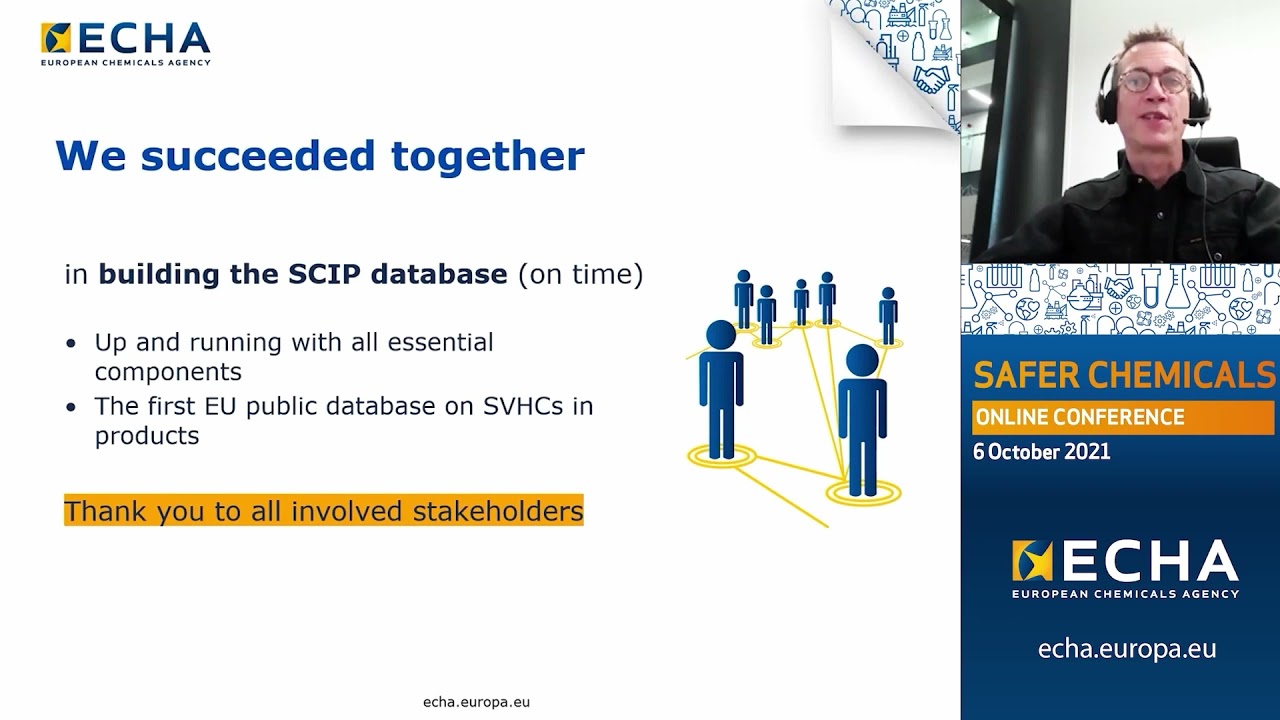
The European Chemicals Agency’s session below discusses substances of concern in products and the SCIP database. It can help purchasing and engineering teams understand why product-level chemical information must remain traceable through a supply chain. The presentation is about REACH-related product information; it does not replace the RoHS directive, its annexes, or a customer’s conformity review.
Video: ECHA’s session on substances of concern in products. Confirm current requirements against the applicable legal texts and official guidance.

Include the destination country or market, finished equipment category, drawing and revision, part number, material and finish, any patch or lubricant, applicable RoHS and REACH requirements, requested declaration format, test-report scope, and lot traceability. State who approves an exemption and who must be notified before a material, coating, or supplier change. If the buyer needs a full technical file, say whether evidence is required before first article, before shipment, or with every lot.
Do not write “RoHS/REACH compliant” on a purchase order without identifying the requirement and evidence expected. Use the current legal text, the product bill of materials, and a supplier’s documented scope. Escalate unclear exemptions, multi-material assemblies, or substances with changing regulatory status to the responsible compliance professional.

RoHS is framed around electrical and electronic equipment and its scope, exclusions, and exemptions. A fastener used as a component may be part of an equipment maker’s conformity assessment, but buyers should determine the requirement from the finished product and market rather than assume every loose fastener has the same legal scope.
No. They refer to different legal frameworks and duties. Ask the supplier to name the exact provision, part configuration, market, and evidence covered by each statement.
When the relevant Candidate List substance is present above 0.1% by weight in an article, Article 33 requires the supplier to provide information sufficient for safe use, including at least the substance name. Apply the full legal text and applicable guidance to the specific supply-chain facts.
Not by itself. A material certificate can identify a heat or material condition, but regulatory evidence also needs to cover the ordered configuration, relevant finish or patch, applicable rule, and the supplier’s documented scope.

 TNHO
TNHO