Although fasteners are widely used throughout industry and many different projects, people often do not understand how important these products actually are. Fasteners are used to hold together and stabilize construction materials during the building process, as well as provide strength to complex products with multiple moving parts (such as machinery). This article will provide an overview of what fasteners are, as well as how they are used in a variety of applications. Additionally, we will provide detailed information on each type of fastener, the tools to use to install them, and examples of fasteners used in everyday applications. Whether you’re a consumer doing minor fixes around your home or a factory manufacturer, this is an excellent resource for anyone who wants to learn more about fasteners and their significance.
Fasteners are a type of hardware device that physically hold together multiple pieces of hardware. Fasteners are intended to create non-permanent junctions, so they can be removed and reassembled without damaging any of the joined pieces. Fasteners are distinct from other ways to join two objects (welding or using glue) because these other methods are typically permanent methods to join two objects.
Many different types of fasteners exist, made from many different types of materials, including: aluminum, brass, plastic, and steel. Different materials are selected based on the strength, environment, and application of the chosen fastener. Fasteners made of stainless steel are used frequently in outdoor and marine applications due to their ability to resist corrosion.
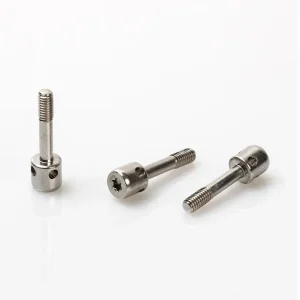
A fastener is characterized by its capacity to keep items secure together in certain contexts. A hardware tool can be considered a fastener if it has the following features:
Fasteners are extremely important and are used in almost every industry, from carpentry and automotive to furniture and aerospace manufacturing. They are simple yet versatile products that can be used in multiple applications.
There are many different kinds of fasteners, each suited for a specific use. Examples of the most common fasteners include:
One of the most common types of fasteners is a screw, which has threads on them and can be turned into wood, metal, or plastic with a screwdriver or other tool. The different types of screws include wood screws, machine screws, and self-tapping screws.
Although screws and bolts have many similarities, bolts rely primarily on nuts to hold them together. Therefore, they are usually designed for much heavier applications such as construction and machinery assembly where greater strength is necessary.
Bolts are connected to nuts to secure things together. Different kinds of nuts exist including: wing nuts, lock nuts, and hex nuts, all providing a unique use.
Washers are thin, flat disks that are placed between the head of a screw or bolt and the surface of the substrate they are being connected to, helping to disperse the load so that the material is not harmed.
Rivets are a type of fastener commonly used in metal fabrications. Rivets are permanent fasteners and are, therefore, excellent for applications requiring a secure and permanent fastening method. The major difference between rivets and other types of fasteners is that rivets are not able to be easily removed once they have been installed.
Fasteners serve a variety of functions, depending on their design. Fasteners are commonly used in construction or to hold lightweight materials together as they are being crafted. When used for crafting, fasteners can include pins or hooks that can be created or embellished on a craft project.
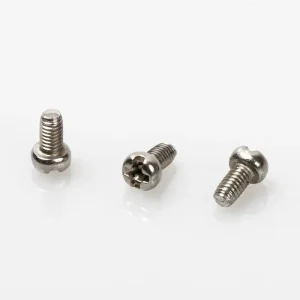
Fasteners can be broadly categorized into several types based on their applications:
These types of fasteners (like screws and bolts) are made for quick and easy removal/replacement. Most commonly used in an application where changes or fixing occur frequently.
The use of permanent fastening methods (such as “Rivet”) provides a secured connection characterized by long-term durability. As such, this type of joint is most often utilized in applications requiring high levels of both durability and strength.
Some types of fasteners that are designed specifically for specialized uses include, but are not limited to, aerospace hardware, medical device hardware, and automotive engineering hardware. Some examples would be shoulder bolts, lock nuts and special matching bolt styles.
To work with fasteners effectively, you need the right tools. Here are some common fasteners tools:
1. Screwdrivers: Essential for driving screws into surfaces.
2. Wrenches: Often used to tighten bolts and nuts.
3. Pliers: Handy for twisting or gripping specialized fasteners.
4. Torque Wrenches: Used for precision tightening to prevent over-tightening or stripping.
5. Rivet Guns: Essential for installing rivets effectively.
Different types of fasteners are designed for different types of tools; therefore, by having the appropriate tool available, it can help improve both workflow and provide a secure attachment.
Fasteners are an essential component in almost all industries and our daily lives. They help to put together structures, create automobiles and create electronics. Without fasteners the world would not operate in its current way. Also, fasteners continue to support emerging industries like renewables & advanced manufacturing; as a result, fasteners are still being actively used by many people today.
In essence, fasteners form the backbone of modern engineering, construction, and manufacturing. Their ability to join materials securely while being removable gives them an invaluable place in the industry. By knowing about the different types of fasteners, their uses, and how to install them, you will be able to make better decisions when doing personal work or managing a large industrial project. A good fastener could greatly increase the durability and safety of your structures!

 TNHO
TNHO 


