Meter Terminal Block Fasteners: Head Clearance and Tool-Access Review limits the review to head clearance and tool-access conditions on the controlled terminal-block drawing. It is not an 11-slot drive selection guide and not a photo-to-drawing procurement handoff.
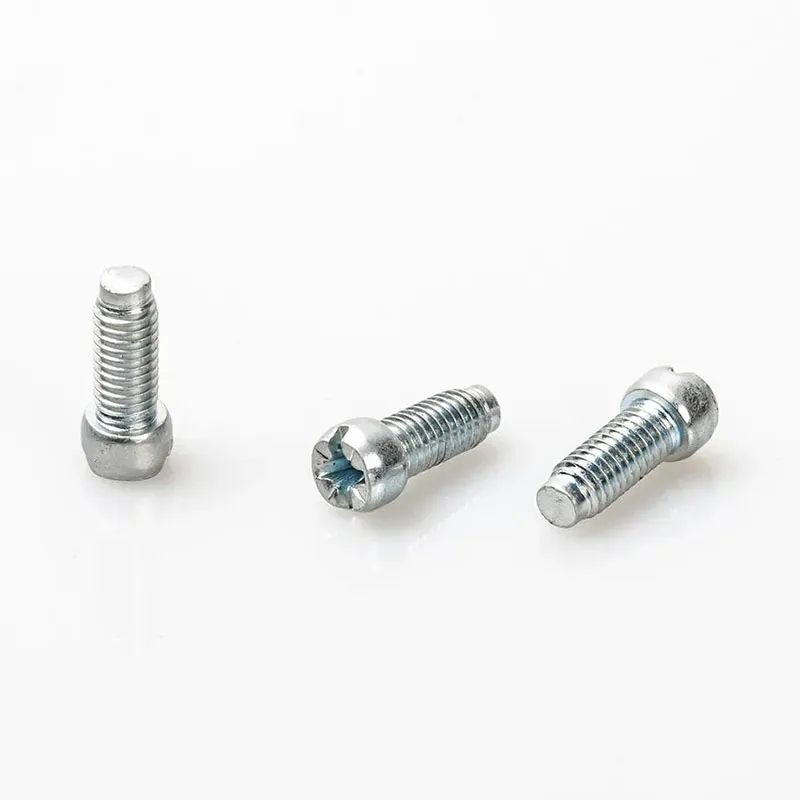
Terminal-block fastener problems often appear after a part looks interchangeable in a photo. Begin with the current terminal-block drawing revision, the occupied head envelope, and the tool approach that must remain available during assembly and later service.
Record nearby barriers such as adjacent terminals, covers, wiring routes, and walls that shorten the available swing for a driver. Name the approval owner for any change that alters head height, head diameter, or drive access. Until those inputs are listed, a product name is only a discussion label.
Treat head clearance and tool access as linked checks. A head that fits the bay can still block the driver if the approach angle is wrong. A driver that fits the approach can still collide if the head envelope grows after a revision.
| Clearance review input | Question to record |
|---|---|
| Drawing revision | Which revision controls the terminal bay geometry? |
| Head envelope | What maximum head height and diameter are shown or implied by nearby parts? |
| Tool approach | From which direction and angle must the driver enter? |
| Wiring / cover interference | Which cable, barrier, or cover reduces clearance after assembly? |
| Service revisit | Must the same tool path remain available after release? |
| Acceptance owner | Who approves a head or drive change that affects access? |
Keep unanswered rows open. Do not fill them with supplier guesses that make quotations non-comparable.

A photograph can show a crowded terminal bay, but it cannot establish released clearance dimensions. Mark the image with the revision context and list which clearance or access values remain unknown. If a prior screw is available, note only the observed head form and the views inspected.
Do not convert a photo into a substitute for head-envelope callouts. That mistake recreates the photo-to-drawing confusion this article intentionally avoids.
Provide every supplier the same clearance package: current drawing or allowed extract, quantity breaks, destination, defined packaging or inspection notes, and a technical contact. State that the review concern is head clearance and tool access, not a broad terminal-screw catalog comparison.
If a supplier proposes a different head style or drive, label it as an alternative that changes clearance or access and route it to the drawing owner. Price alone cannot decide whether the tool path still works.
Beside the RFQ, retain a one-page note that lists confirmed clearance observations, open tool-path questions, and the person who can accept a head change. The note travels with the order so later buyers do not reopen the same bay with a different informal description.
This article does not establish contact resistance, dielectric behavior, torque capacity, vibration performance, sealing, corrosion behavior, safety, certification, or lifecycle outcomes for any terminal fastener. Those results need product-specific evidence and the validation chosen by the assembly owner.
Pause when head envelope, tool approach, nearby interference, or acceptance ownership is unknown. A narrow clearance review is more useful than a long RFQ that hides access assumptions.
After clearance and access inputs are ready, use the TNHO terminal screws for meter wiring connection blocks as a starting point for a focused discussion. The page confirms a relevant terminal-screw family route. It does not invent missing clearance dimensions or prove an unlisted property.
When ready, send the controlled drawing and clearance notes with quantities, revision, head-envelope questions, and tool-access constraints. For broader navigation, see TNHO industrial fastener categories and Electrical Fasteners: Some Basic Information.
Confirm the drawing revision, head envelope limits, tool approach, nearby interference, and acceptance owner.
Drive-slot selection compares drive forms. This review only checks whether the head and tool path clear the bay.
No. A photo can locate the question, but released clearance inputs must come from the controlled drawing.
One clearance package, identical open questions, and labeled alternatives that affect head or access.
No. Performance requires product-specific evidence and assembly validation.
Use the terminal-screw route in Part 6 with the clearance and tool-access package.

 TNHO
TNHO 


