
 TNHO
TNHO Buyers throughout the electrical equipment, electronics, automotive parts, home appliance, renewable energy, machinery, and industrial enclosure sectors are increasingly cautious about their choice of materials, dimensional accuracy, thread consistency, surface treatment, quality documentation, and supplier capability. Buying decisions are based more than ever on something beyond unit pricing. Fasteners are also being evaluated by the purchaser for their suitability to the intended working environment and related tasks.
This is particularly crucial for original equipment manufacturer (OEM) applications; while standard fasteners may work acceptably well in general applications, customized assembly projects typically require special dimensions, strength grades, corrosion-resistance features, controlled coatings, and/or packaging that have been developed to enhance production line efficiency. By becoming familiar with how industrial fasteners are specified, manufactured, quality checked and sourced; users can reduce procurement risk, and create more dependable supplier partnerships. Understanding the full lifecycle of industrial fasteners is the first step toward smarter procurement decisions.
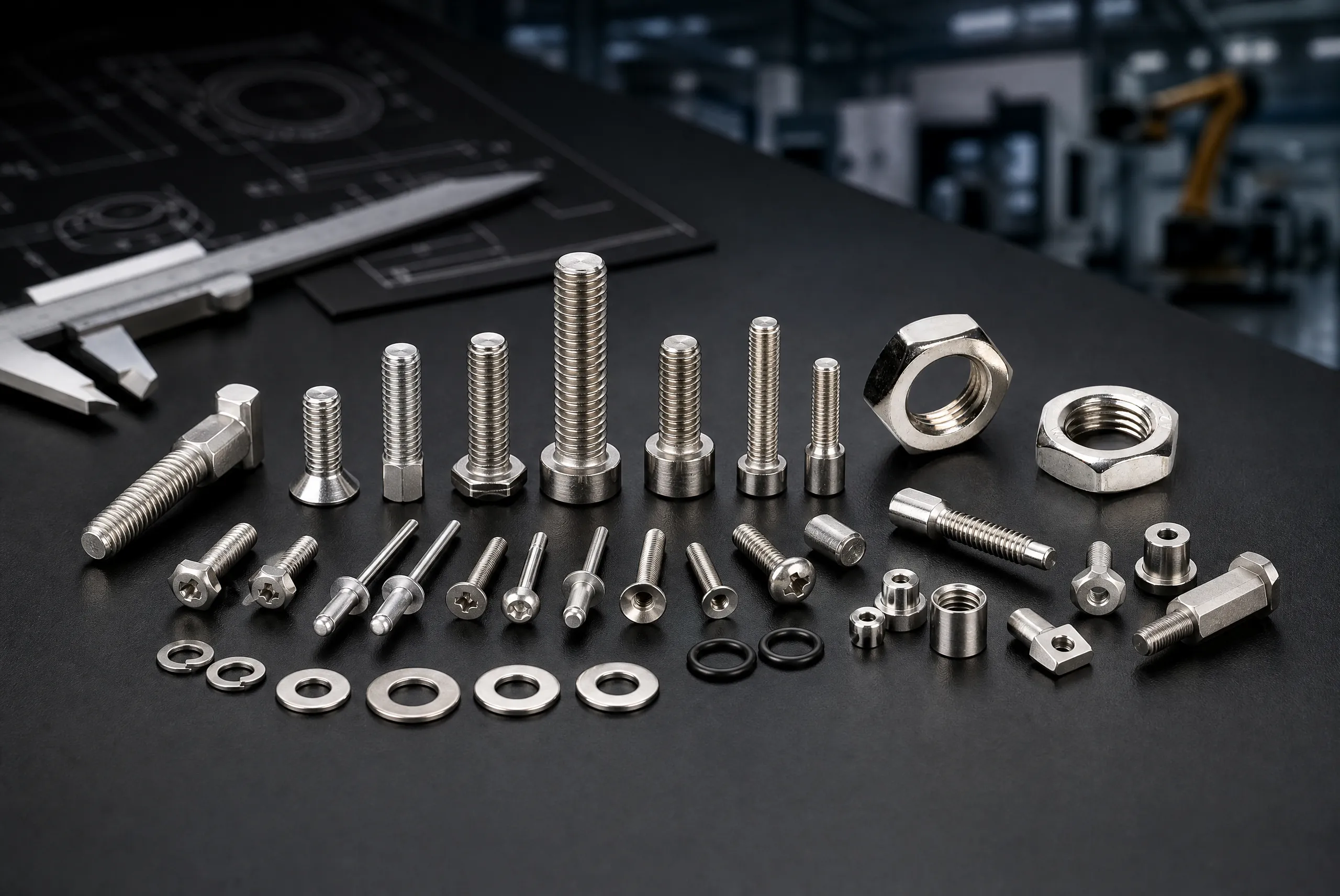
Market Demand and Industry Trends in Industrial Fasteners
Industrial fasteners are essential components of many manufacturing industries with their primary purpose of assembling, holding together, positioning, or supporting two parts. However, these fasteners are required to perform differently based upon each application. An electrical cabinet would have a clean appearance with properly formed threads that will not rust during its use as a fastener; while a bolt used on a car engine would need to have specific strength properties, be able to withstand vibrations, and have a stable torque performance. A fastener used for equipment designed to generate renewable energy could be located outdoors (exposed to the elements, and in contact with moisture), and will need to withstand a long period of service without experiencing fatigue.
The industrial fastener market is being affected by many different trends. They include the growing number of OEM products that are becoming increasingly application specific, as well as the increasing demand for fasteners to fit unique structures, assembly methods and operating conditions from buyers. In addition, the increasing use of automated and semi-automated production lines requires more consistent fastener dimensions, thread quality and packaging than ever before. Also, due to the growing trend toward international sourcing of raw materials and components, the importance of documentation and traceability has increased dramatically as companies manage quality systems in multiple geographic regions.
ISO 898-1 provides a way for customers to classify and compare different carbon steel and alloy steel bolts, screws, and studs that are manufactured in mechanical properties classes (for example, class 8.8, 10.9, 12.9) and how they can be expected to perform based on engineering standards, not simply on their appearance or price.
Note: When it comes to industrial procurement, the term “quality of fasteners” generally encompasses the type of material used; measurements; mechanical properties; surface finish; evidence of inspections and trace ability of each batch of fasteners(s).
Common Industrial Fastener Types and Applications
There are many products that are included in the industrial fasteners category. Choosing the right type of industrial fasteners requires understanding the load, installation method, and environmental conditions of each application. Every different type of fastener will perform a different function in assembly design and should be chosen based on the load, installation method, environment of the application, anticipated maintenance level, and how well they mate with the other components being used in the application.
| Fastener Type | Main Function | Typical Applications |
|---|---|---|
| Bolts and Nuts | Removable load-bearing connection | Machinery, vehicles, steel structures |
| Screws | Fixing, positioning, or clamping | Electrical cabinets, electronics, appliances |
| Washers | Load distribution and surface protection | Automotive, machinery, construction |
| Rivets | Permanent joining | Sheet metal, cabinets, equipment housings |
| Studs and Pins | Positioning or double-ended fastening | Engines, flanges, industrial equipment |
| Custom Parts | Application-specific fastening or positioning | OEM assemblies and special equipment |
An instance of using fasteners in an external/corrosive atmosphere would be to use stainless steel fasteners, while other fasteners that can withstand heavy mechanical loads would be high-strength alloy steel fasteners. If it is necessary that the method used for fastenings be permanent without the ability for removal, the use of rivets may be a suitable choice.
The buyer looking for an industrial fasteners supplier may not simply wish to browse through their catalogue. Many times a B2B customer will require additional assistance throughout the project process, including a review of the drawings, developing samples, selecting the appropriate surface treatment, providing inspection documentation, and packaging product either for storage or assembly line delivery.
Key Specifications Buyers Should Confirm Before Production
Before production starts, manufacturers and buyers should work together to line up their technical specs for industrial fasteners. Clearly defined specifications will help minimize the costs associated with sample rework, production delays, and assembly problems.
Confirming the product’s configuration is the first element that requires validating. This includes dimensions such as diameter, length, head style, drive type, thread length, thread pitch, shank configuration and tolerances. With regards to threaded fasteners, thread fit is very important because it affects the installation torque, mating function and long-term performance of the joint.
Another category of design consideration is the performance of materials/mechanical performance. Different types of materials are available in various categories – carbon steel, alloy steel, stainless steel, brass, aluminum, copper; each has a different performance characteristic (composite of both basic physical properties) that can be grouped into specified/defined performance classes – such as 8.8 Class, 10.9 Class, 12.9 Class, Grade 5, Grade 8, A2-70 and A4-80, etc…, which may vary based upon type of part and/or standards used.
It is important to define the surface finish at an early stage also. There are many methods of surface finishing, some of which include zinc plating, hot dip galvanising, black oxide, phosphate coating, nickel plating, zinc/nickel coating, passivation, and Dacromet type coatings, all of which provide varying levels of corrosion resistance, finish and appearance, frictional properties and cost-effectiveness.
Buyers should provide the following information when ordering custom fasteners – technical drawings, samples, a description of the application, material requirements, an estimated quantity, any testing required, and preferred packaging. This information will allow the manufacturer to determine tooling options, how the parts will be formed, probable tolerances, and lead times.
Key specification points that deserve special attention
In OEM sourcing, several details often have a strong impact on final performance:
- Thread accuracy and tolerance: Assembly smoothness, torque stability and compatibility with mating nuts or components can all be influenced by these factors. Misalignment of threads can produce cross-threading stripping and a loose assembly when trying to tighten the components together.
- Surface treatment compatibility: Thread tolerance and assembly requirements determine the coating thickness on the threads. An excessive coating can cause the thread fit to be compromised. Additionally, too little of a coating can leave an inadequate level of corrosion resistance.
- Material traceability: Buyers should verify that they have the appropriate material certificates, chemical compositions, and batch records before starting mass production for high load or safety-related applications.
- Packaging method: Avoiding handling errors and improving warehouse efficiency can be accomplished with clear labeling of products, separate carrying units (SKUs), and carton strength appropriate to the weight of products being moved.
Material Selection and Wire Preparation
When selecting materials for fasteners, it is important to consider several characteristics including: tensile strength, ductility, corrosion resistance, machinability, heat treatment response, and longevity of service.
Carbon steel is the most popular material for manufacturing general industrial use fasteners because of its cost and strength. Alloyed steels are used for heightened strength fasteners that will be used in the construction of machinery and equipment such as cars, cranes, and bridges.
When corrosion resistance is needed to protect the fastener from rust, stainless steel (such as 304 or 316) is the best choice. Brass, aluminium and copper alloys are frequently selected for applications requiring either electricity transmission (such as electrical and electronic) or lightweight materials.
Incoming inspection, cleaning, annealing, pickling, phosphating and drawing may be performed before bar stock/rod is formed. These processes enhance the surface quality and formability of the material, especially for cold heading applications. Improperly prepared material can result in cracking, unstable formability, premature tool wear and/or surface imperfections.
Prior to starting production on OEM projects, there will typically be a requirement to review material traceability. The buyer can ask for a mill certificate, chemical composition records, inspection of wire diameters, hardness testing, or other documentation related to incoming materials before production can begin.
Stainless steel fasteners designed to resist corrosion should conform to ISO 3506, which defines the types of stainless steel based on:
– Material groups and property classes (e.g., A2-70 and A4-80).
– Allowing buyers to match their choices of stainless steel materials to the appropriate levels of corrosion resistance and mechanical strength.
Manufacturing Processes: Cold Heading, Hot Forging, and Machining
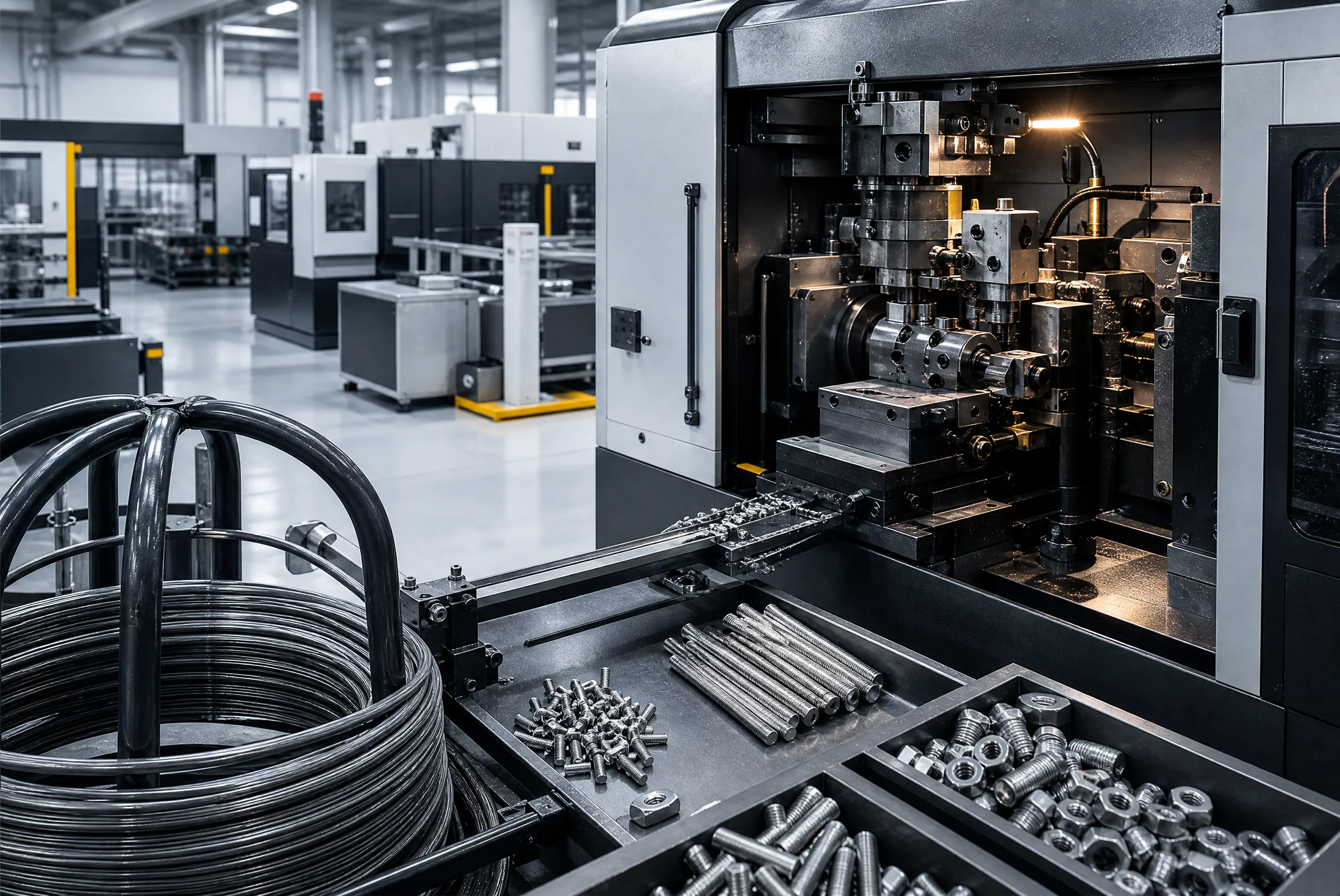
The initial steps to making a fastener involve preparing the material, which includes preparing the material. After the material is prepared, a fastener begins to be shaped through cold heading, hot forging, machining or a combination of these processes.
The process of cold heading is frequently applied to all forms of headed components such as screws, bolts, rivets, pins, etc. This technique involves the cutting and shaping of wire through a process that creates head shape and size at room temperature using force from a press. The cold heading process has good material usage and is very efficient for production of large quantities of parts. When utilizing the proper tooling and proper process control within the cold heading process, cold heading produces consistent dimensions and reliable grain flow.
Hot forging is commonly used to create larger and more complex fasteners that require a large amount of forming force. The material must be heated to a temperature high enough to allow for the formation of large heads, structural fastener components, and heavy-duty/multi-component construction before the assembly can occur. Construction equipment, mining machinery, railroad tracks and systems; wind power structures; heavy industrial assemblies are generously used as hot-forged fasteners.
Custom fasteners can be manufactured using CNC machining, turning, drilling, milling and/or slotting techniques to produce prototypes or low volume quantities with tight tolerances and complex geometries. Additionally, if the part has a special shape, CNC machining can be performed in conjunction with cold heading or forging to produce shoulders, grooves, cross holes, slots or knurling and other non-standard profiles.
OEM buyers are better served when they purchase fasteners from an experienced manufacturer capable of standard and custom production. For example, Zhejiang Tianhong Fastener Co., Ltd., was established in 1987 and was formerly referred to as Yueqing Tianhong Fastener Factory. This manufacturer produces many types of fasteners, screws, nuts, and uniquely engineered special shaped pieces for industrial use. This manufacturer has a production history that will be beneficial for buyers who require both standard fasteners and special components created for a specific application.
Thread Rolling and Thread Accuracy
One of the key components of fastening function is the thread condition; that is, while an external appearance of a fastener might be normal, if its internal threads are out of specification (incorrectly formed) it could result in cross-threading; instability in torque; stripping of the fastener; galling; lose joints or possibly failing to assemble correctly.
In thread rolling, which is a standard method of producing external threads on bolts, screws, studs, and threaded rods, the thread is created in the blank by pressing it between two dies as opposed to resulting from a cutting away of material. Thread rolling can offer good surface finish, high production efficiency, as well as, improved fatigue resistance for many industrial applications.
When a threaded component cannot be manufactured by rolling due to its material, size, shape or production volume is what thread cutting is used. Custom fasteners, larger pieces, lower volume production, and special thread are all examples of items that generally require thread cutting to create the threads.
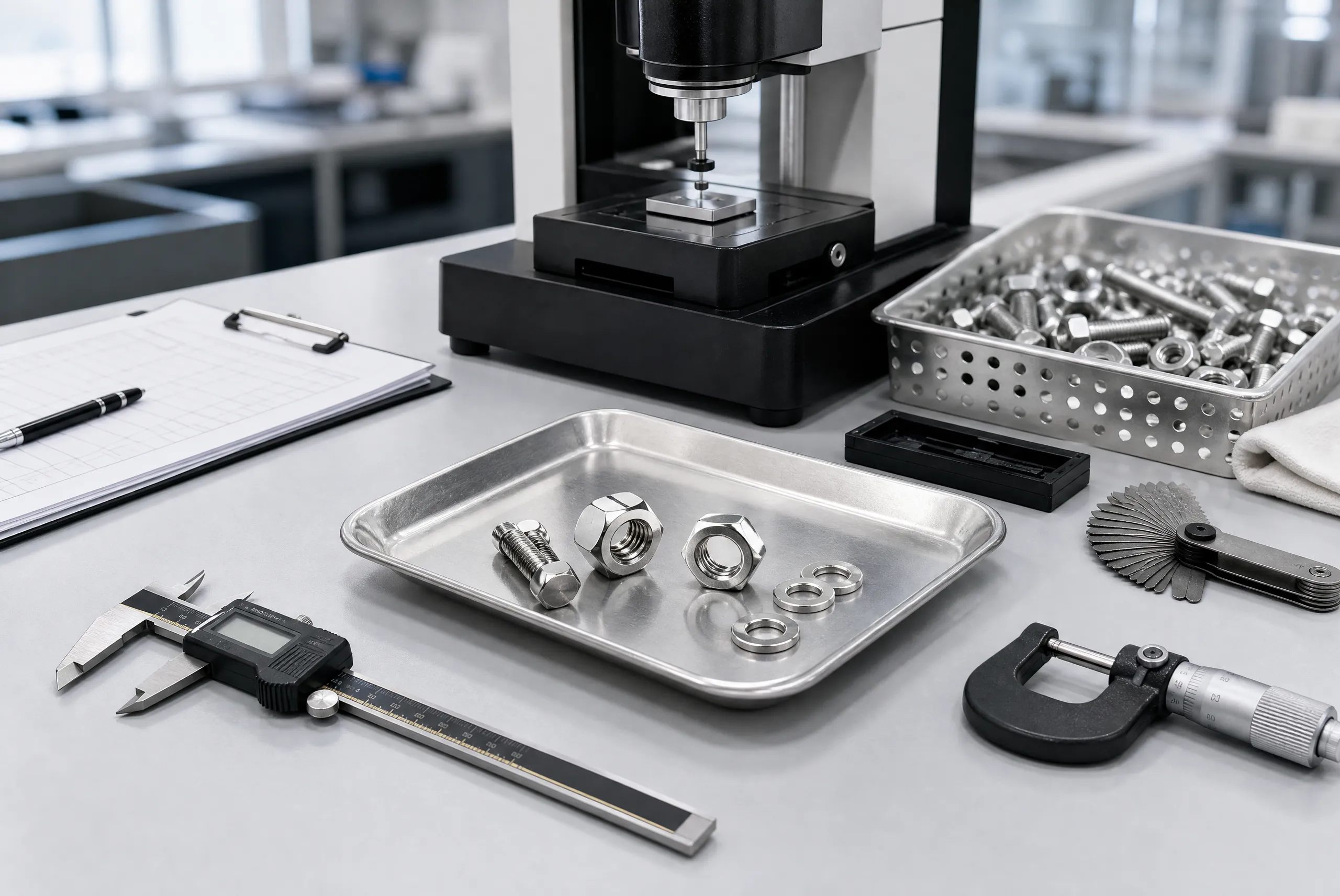
Automated and semi-automated assembly systems depend heavily on consistency of the threads being assembled. Deviations in either the pitch, diameter, thread angle or coating thickness between too different sets of components can cause disruption of assembly operations and result in higher rejection rates for assembled components. Thread verification methods used during production to evaluate thread quality using go/no-go gauges, ring gauges, plug gauges, optical inspection equipment, and profile projectors are common forms of inspection equipment used during manufacturing.
Heat Treatment and Mechanical Performance Control
Fasteners often require special mechanical characteristics following heat treatment; for instance, they may have the strength to resist tensile, hardness, toughness, wear resistance and/or fatigue. The heat treatment process is particularly important for high strength bolts/fasteners.
Processes of common heat treatment consist of cooling, heating up again, annealing, surface hardening, and relieving stress on the material being worked upon. Fasteners with a metric class rating of 8.8, 10.9, or 12.9 usually require temperature controlled heat treatment in order to reach the desired strength hardness of the finished fastener; however, increasing the hardness of a fastener beyond what’s necessary does not necessarily produce better performing fasteners. Fasteners that are too hard can be very brittle, while fasteners that have not been properly heat treated can be too weak to support their intended loads.
Mechanical performance may be verified through hardness testing, tensile testing, proof load testing, torque testing, or wedge testing, depending on the product standard and application. Furnace temperature control, batch records, and post-treatment inspection help ensure that mechanical properties remain consistent across production lots.
Note: For safety-critical or high-load applications, buyers should not rely only on nominal strength grade.
Material certificates, heat treatment records, and mechanical test reports provide stronger evidence of production consistency.
Surface Treatment and Corrosion Resistance
Surface treatment improves corrosion resistance, wear resistance, appearance, and sometimes assembly behavior. The right coating depends on the working environment and installation requirements.
Zinc plating is often used for general industrial applications. Hot-dip galvanizing is common for outdoor structures and construction-related components because it provides stronger corrosion protection. Black oxide and phosphate coatings are used in machinery and automotive-related applications where appearance, lubricity, or paint adhesion may matter. Stainless steel fasteners may require passivation to improve surface corrosion resistance. Zinc-nickel and Dacromet-type coatings are often considered for harsher environments.
Salt spray testing is commonly used to compare coating durability. Depending on the application, buyers may request 24, 96, 240, 500, or more hours of salt spray resistance. However, coating thickness and thread fit must also be controlled. A coating that is too thick may interfere with assembly, while insufficient coating may reduce corrosion protection.
In OEM programs, surface treatment requirements are often defined together with coating thickness, appearance criteria, adhesion, corrosion resistance, and post-coating thread inspection.
OEM Customization for Industrial Buyers
OEM fastener projects often require application-specific customization. Instead of selecting only from catalog items, buyers may need fasteners adjusted to match a product structure, assembly process, load requirement, or branding system.
Customization may involve dimensions, head style, drive type, thread length, thread pitch, shoulder design, shank structure, material grade, mechanical strength, surface treatment, and anti-loosening features. Some projects also require cross holes, grooves, slots, knurling, head marking, laser marking, barcode labels, private-label packaging, or assembly-line kitting.
A typical OEM process begins with drawing or sample review. The manufacturer then evaluates material selection, forming feasibility, tooling requirements, tolerance control, surface treatment, and inspection methods. After quotation and sample production, the buyer confirms dimensions, mechanical performance, coating quality, and packaging before batch production begins.
Typical OEM project review process
For many custom fastening projects, the review process usually focuses on these practical steps:
- Drawing and application review: The manufacturer checks whether the design can be produced by cold heading, machining, forging, or combined processing.
- Material and coating confirmation: The selected material and surface treatment should match load, corrosion, appearance, and assembly requirements.
- Sample production and testing: Samples are inspected for dimensions, thread quality, surface finish, hardness, and other project-specific requirements.
- Batch production control: Once approved, production records, inspection results, and packaging requirements should remain consistent across repeat orders.
This process helps OEMs reduce the risk of design mismatch, unstable quality, and assembly problems after mass production starts.
Quality Assurance from Raw Material to Final Shipment
Quality assurance in industrial fasteners manufacturing is not limited to final inspection. It is a continuous process that begins with raw material control and continues through forming, threading, heat treatment, surface treatment, packaging, and shipment—all of which determine the final quality of industrial fasteners.
| QA Stage | Inspection Focus | Buyer Value |
|---|---|---|
| Incoming Material Inspection | Material certificate, composition, wire diameter, surface condition | Confirms raw material traceability |
| In-Process Inspection | Head size, length, shank diameter, thread pitch, visual defects | Reduces dimensional variation |
| Heat Treatment Inspection | Hardness, tensile strength, proof load, batch records | Verifies mechanical performance |
| Coating Inspection | Thickness, adhesion, corrosion resistance, thread fit | Supports durability and assembly reliability |
| Final Inspection | Quantity, appearance, labels, packaging, documents | Confirms order compliance before shipment |
For international B2B buyers, documentation is a key part of quality assurance. Depending on the project, buyers may request Material Test Reports, Inspection Reports, Certificates of Conformity, Salt Spray Test Reports, Hardness Test Reports, Tensile Test Reports, PPAP documents, RoHS documentation, or REACH documentation.
Quality systems can also help buyers evaluate supplier reliability. Zhejiang Tianhong Fastener Co., Ltd. lists ISO 9001, ISO 14001,
ISO 45001, and IATF 16949-related certification information on its website, which may be relevant for buyers reviewing quality, environmental, occupational health and safety, or automotive supply chain requirements.
Packaging, Traceability, and Global Supply Considerations
Packaging is sometimes overlooked, but it can affect product protection, warehouse efficiency, and assembly-line performance. Industrial fasteners are usually small, heavy, and shipped in large quantities, so packaging must balance strength, identification, and handling convenience.
Bulk cartons, small boxes, pallets, wooden cases, barcode labels, moisture-resistant packaging, private-label boxes, and assembly kits may be used depending on buyer requirements. For distributors, clear labeling and SKU separation are important. For OEM assembly lines, kitting and batch control can reduce handling time and prevent mixed-part errors.
Traceability also matters in long-term supply. Batch numbers, production dates, material records, inspection results, and shipment documents help buyers track product history if quality questions arise later.
For global buyers, supplier export experience is practical. Tianhong has developed a domestic marketing network and expanded into international markets, including Southeast Asia. This reflects the broader role of experienced Chinese fastener manufacturers in supporting overseas buyers through repeat supply, export packaging, and documentation coordination.
How Buyers Can Evaluate an Industrial Fasteners Manufacturer
Choosing an industrial fasteners manufacturer requires more than comparing unit prices. Buyers should evaluate whether the supplier understands international standards, material selection, forming processes, thread control, heat treatment, coating requirements, and documentation needs.
A practical evaluation should include production capability, quality control procedures, engineering support, lead time stability, export experience, and responsiveness during technical communication. For OEM projects, buyers should confirm whether the supplier can review drawings, produce samples, support custom tooling, provide inspection reports, and maintain consistent batch quality over repeat orders.
The most reliable sourcing decisions usually come from comparing total value rather than only price. A lower unit cost may not reduce total cost if it leads to assembly rejects, corrosion issues, delayed production, or poor documentation. For this reason, many OEMs now evaluate fastener suppliers based on long-term reliability, not only short-term savings.
Practical Sourcing Checklist for Industrial Fasteners
Before placing an order, buyers should confirm the application environment, including load, vibration, temperature, humidity, corrosion exposure, and installation method. They should then define the material, strength grade, dimensions, thread type, tolerance, surface treatment, and required testing documents.
For custom fasteners, drawings, samples, or 3D files are especially helpful. Packaging, labeling, lead time, repeat-order capability, and traceability should also be discussed before production. A clear specification at the beginning usually leads to faster sampling, fewer revisions, and more stable batch production.
Conclusion: Reliable Fastening Starts with Better Technical Understanding
Industrial fasteners may appear simple, but their performance depends on careful material selection, controlled forming, accurate threading, proper heat treatment, suitable surface coating, and consistent inspection. For OEMs, distributors, and industrial buyers, understanding these manufacturing fundamentals makes it easier to select the right product and evaluate the right supplier.
A capable industrial fasteners manufacturer does more than provide parts. It supports drawing review, material selection, process planning, quality documentation, packaging requirements, and long-term supply consistency. For buyers working in competitive manufacturing sectors, these capabilities can help improve assembly reliability, reduce procurement risk, and support more stable production outcomes.
Zhejiang Tianhong Fastener Co., Ltd. represents the type of long-established fastener manufacturer that can be evaluated through product scope, manufacturing experience, quality systems, and application coverage rather than promotional claims alone. For buyers, this objective approach is often the most useful way to identify a supplier suited for long-term cooperation.
FAQ: Industrial Fasteners for B2B Buyers
1. What are industrial fasteners?
Industrial fasteners are components used to join, secure, or position parts in industrial products and structures. Common types include bolts, nuts, screws, washers, rivets, studs, pins, anchors, and custom special-shaped parts.
2. How do I choose the right industrial fastener?
Buyers should consider application environment, load, vibration, corrosion exposure, material, strength grade, dimensions, thread type, surface treatment, and applicable standards such as ISO, DIN, ANSI, ASTM, or JIS.
3. What is the difference between standard and custom fasteners?
Standard fasteners follow common industry specifications, while custom fasteners are produced according to buyer drawings, samples, special dimensions, materials, coatings, or assembly requirements.
4. Why is thread quality important?
Thread quality affects assembly performance, torque stability, load capacity, and joint reliability. Poor threads may cause stripping,
cross-threading, loosening, galling, or installation failure.
5. What surface treatment is best for corrosion resistance?
The best coating depends on the environment. Zinc plating is suitable for general use, hot-dip galvanizing is common for outdoor structures, and zinc-nickel or Dacromet-type coatings may be used for harsher environments.
6. Can OEM fasteners be produced from drawings or samples?
Yes. OEM fasteners can often be produced from technical drawings, samples, or 3D files. The process usually includes feasibility review, sample production, testing, approval, and batch manufacturing.
7. What documents should buyers request from a fastener supplier?
Depending on the project, buyers may request Material Test Reports, Inspection Reports, Certificates of Conformity, Salt Spray Test Reports, Hardness Test Reports, Tensile Test Reports, PPAP documents, RoHS documentation, or REACH documentation.
8. How can buyers evaluate a reliable industrial fasteners supplier?
Buyers can review manufacturing capability, material traceability, quality inspection procedures, engineering support, experience with international standards, export packaging, lead time stability, and repeat-order performance.
References
- ISO 898-1 — Mechanical properties of fasteners made of carbon steel and alloy steel
Official ISO standard page:https://www.iso.org/standard/75592.html
- ISO 3506 — Mechanical properties of corrosion-resistant stainless steel fasteners
Official ISO standard search / overview page:https://www.iso.org/search.html?q=ISO%203506
- ASTM F568M — Standard Specification for Carbon and Alloy Steel Externally Threaded Metric Fasteners
ASTM official standard page:https://www.astm.org/f0568m.html
- ASTM F593 — Standard Specification for Stainless Steel Bolts, Hex Cap Screws, and Studs
ASTM official standard page:https://www.astm.org/f0593.html
- Zhejiang Tianhong Fastener Co., Ltd. — Company and product information
Official website:https://thfasteners.com/


